
1950-1999
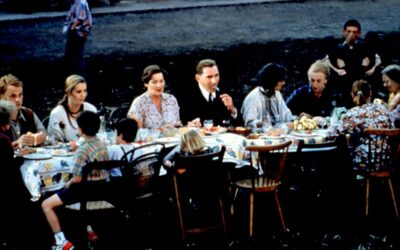
Marleen Gorris <em>Antonia’s Line</em> (1995)
Antonia is the matriarch of an extended family: her daughter, child, and partner, her friends, and castoffs who need a home. Each year, a long table is set in the barnyard for the extended family to picnic. See Marleen Gorris. Antonia’s Line (1995). Screenplay by Marleen Gorris. Also, Emma Bovary’s wedding party in Vincente Minnelli’s […] read more
Grace Metalious's <em>Peyton Place</e> (1956)
Allison McKenzie and Norman Page teenagers ride bicycles to a picnic on the Connecticut River. Metalious's picnic is similar to Carson McCullers’s in The Heart is a Lonely Hunter; during which Mick Kelly and Harry Minowitz talk about adult life and relationships. Mick and Harry make love; Allison and Norman talk and eat ham or […] read more
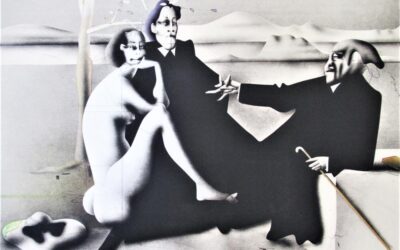
Paul Wunderlich’s <em>Das Frühstuck im Grünen</em> [<em>Luncheon on the Grass</em?] (1977)
Wunderlich’s Das Frühstuck im Grünen [Luncheon on the Grass] is a surrealistic adaptation of both Édouard Manet’s Luncheon on the Grass. Sensuality, sex, and any semblance of pleasantries are absent. Distorted, seemingly unhappy, figures sit in a barren landscape. Featured Image: Paul Wunderlich, Das Frühstuck im Grünen, #2 (1977), lithograph. (1977) read more
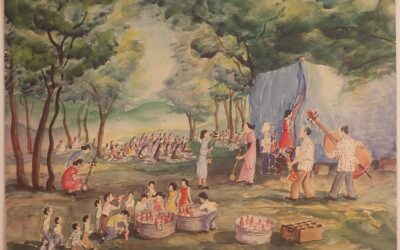
Estelle Peck Ishigo’s <em>Japanese Picnic in Elysian Park</em> (1954)
Ishigo accompanied her Japanese husband Arthur when he was interred in 1942 until World War II ended. Japanese Picnic in Elysian Park exemplifies Ishigo’s renewed spirits a decade after the hardship of unjust confinement. Elysian Park is among Los Angeles’s largest parks. Featured Image: Estelle Ishigo’s Japanese Picnic in Elysian Park (1954). watercolor on paper. UCLA […] read more
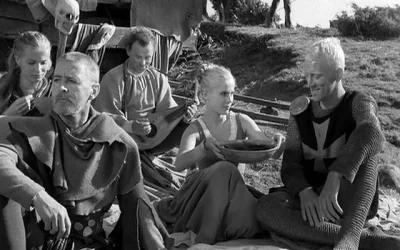
Ingmar Bergman’s <em>The Seventh Seal </em> (1957)
Bergman’s picnics in The Seventh Seal [Det Sjunde Inseglet], are moments of relief in an otherwise deadly serious drama about death and the meaning of God. When Block interrupts his game of chess with Death, he joins Jof (Nils Poppe) and Mia (Bibi Andersson) travelling performers, for a picnic-style lunch. for Block, a knight errant […] read more
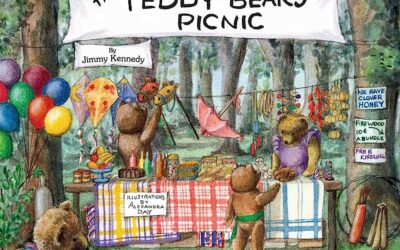
Alexandra Day’s <em> The Teddy Bears Picnic </em> (1983)
As they should, Day’s illustrations for The Teddy Bears’ Picnic emphasize a picnic where the bears are stocked with honey, bananas, pears, oranges, cake, soda, jellybeans, marshmallows, and chips. Inexplicably included are garlands of red peppers and garlic. See Alexandra Day. The Teddy Bear’s Picnic (London, 1983) read more
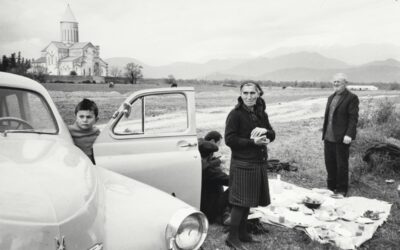
Henri Carter-Bresson’s <em>Alverdi Monastery</em> (1972)
Cartier-Bresson’s Alaverdi Monastery, Geprgis, (USSR) records a family having a roadside picnic while celebrating St. George’s Day. In the midground beyond them looms the Alaverdi Monastery. In the foreground, picnic food is neatly placed on a picnic blanket. read more
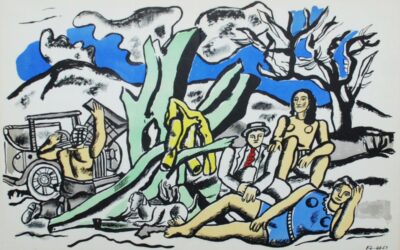
Fernand Leger's <em>Partie de Campagne</em> (1951)
Leger’s style is unmistakable and memorable. Partie de Campagne, a series variously translated as The Picnic or The Country Outing, is a series of variations, and part of a project he called the Great Parade. As lithographs, these were among Léger s most famous works. Léger’s picnickers are interested in food. In the oil paintings, […] read more
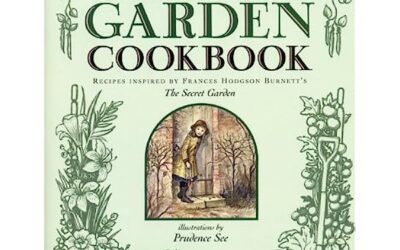
Amy Colter’s <em>The Secret Garden Cookbook </em> (1999)
Colter’s The Secret Garden Cookbook is mainly a collection of high calory, sugary and fatty foods. She starts with Burnet’s essential food path and never wanders far off. “You can trifle with your breakfast and seem to disdain your dinner,” Burnet writes, “if you are full to the brim with roasted eggs and potatoes and […] read more
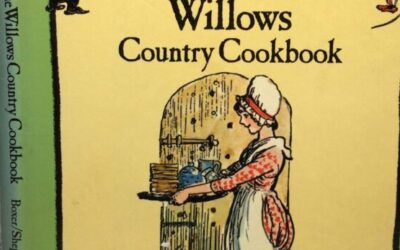
Arabella Boxer’s <em>The Wind in the Willows Country Cookbook</em> (1983)
Boxer’s “Food for Excursions” is mainly a collection of carbohydrates, sweets, and fatty meats. Her suggestions include Riverside Sandwich, Sausage Sandwich, Potted Shrimp Sandwich, Toad Hall Steak Sandwich, Stuffed Eggs, River-Bankers Lunch, hard-cooked Eggs with Nutty spice island Mixture, Sausage Rolls Leafy Summer, Lettuce Snacks, Cornish pasties, Hot meat pasties, Rabbit pasties, Easy Meat Loaf, […] read more
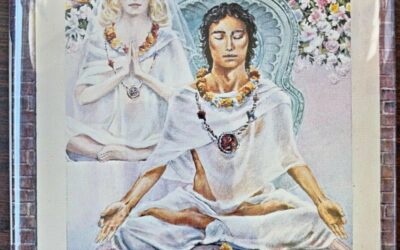
Drunken Behavior and Sexual Liaisons in Ruth Prawer Jhabvala’s “Picnic with Moonlight and Mangos” (1976)
“Picnic with Moonlight and Mangos” from Jhabvala’sHow I Became a Holy Mother (1976) is about a drunken picnic in the garden of Moti Bagh, a 17th-century palace in a suburb of New Delhi. This annual event is often an excuse for sexual liaisons. The pattern is always the same: friends and families visit Moti Bagh […] read more
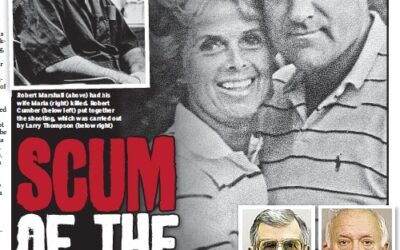
Joe McGuiness’s <em>Blind Faith</em> (1989)
McGinnis’s’ Blind Faith is dramatized reportage of a New Jersey murder case in which Rob Marshall was accused of hiring hitmen to free himself to marry his flamboyant mistress. According to McGuiness, when Marshall thought something was wrong with one of his tires, he pulled off the Garden State Parkway into a pitch-black, deserted picnic […] read more
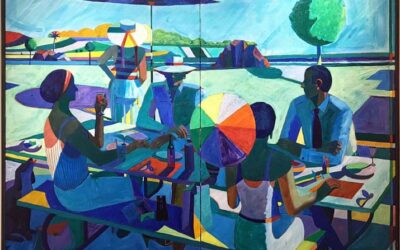
Roland Peterson’s Picnics(1960s ...on)
Petersen’s delightful obsession makes him happy. “Each painting,” he says, “has a different kind of mathematical solution; I’m not always able to solve it, but I try to work out a pattern of shapes.” Petersen’s esthetic is to amalgamate abstraction with realism and develop his theme in an architectural layout, in this case, a picnic. […] read more
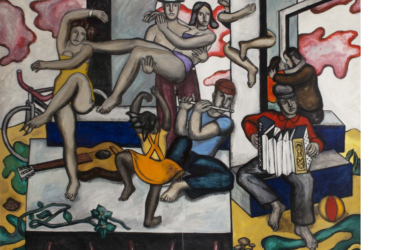
Alexander Moffat’s <em>The Picnics</em> (1963)
Moffat’s picnics, all titled Picnic and all completed in 1963, are influenced by Fernand Leger’s Partie de champagne series o paintings. Featured Image: The Picnic at the New Bridge read more
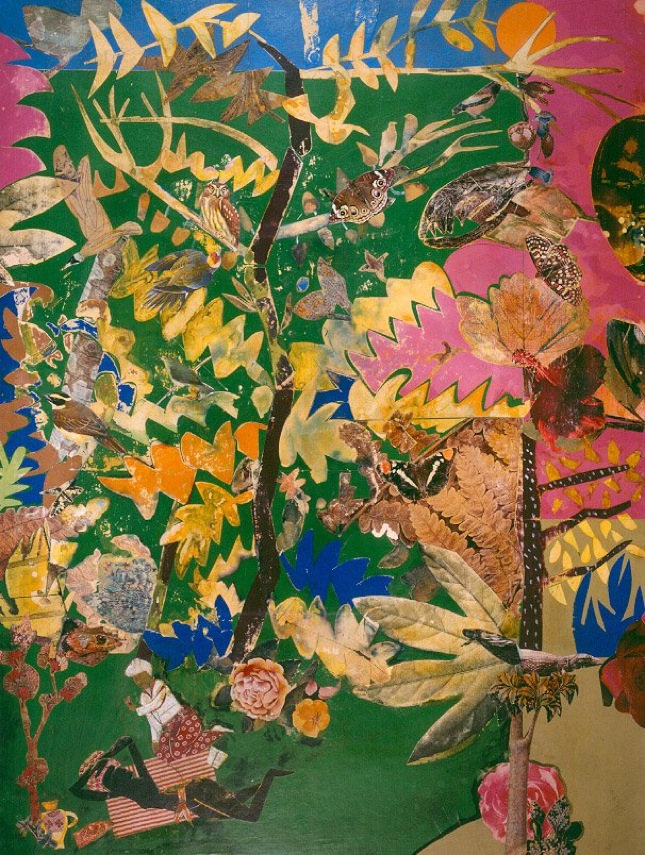
Romare Bearden’s <em>Khayam and the Black Girl</em> (1971)
Bearden transports Omar Khayyám’s Persia to the Tropics for his take on “Quatrain XI” from The Rubáiyát of Omar Khayyám. But the man is Persian and the woman is black. Though the poem suggests sensuality, Bearden presents the poet clothed but the woman naked, except for a body sash and a head turban. It’s still […] read more
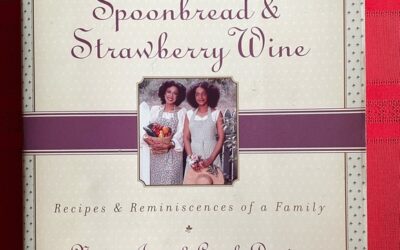
Norma Jean Darden and Carole Darden's <em>Spoonbread and Strawberry Wine</em>(1994)
Norma Jean Darden and Carole Darden’s sisters have written a family food memoir. Spoonbread and Strawberry Wine is a short biography of their father, Bud Darden, Walter T. Darden, MD, with a picnic menu attached. The sisters’ family picnic memories at their home in Newark, New Jersey. The Dardans include some tips for a picnic, […] read more
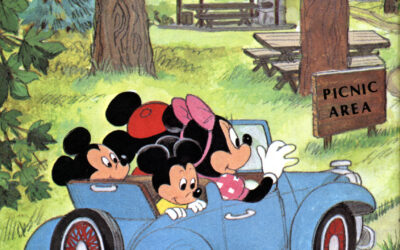
Walt Disney <em>A Picnic in the Woods</em> (1983)
Among the best picnics, adult or otherwise, A Picnic in the Woods sets an example of optimistic picnic fun. It begins with the usual refrain: “It’s a beautiful day for a picnic!” as Mickey Mouse, Minnie Mouse, and Mickey’s nephews Ferdy and Morty cram into the blue convertible for a day in the country. Soon, […] read more
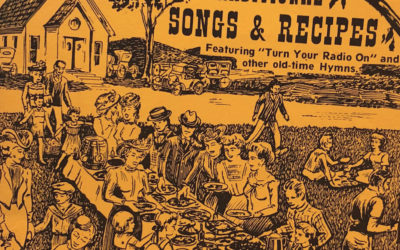
Albert E. Brumley’s <em>All-Day Singin' and Dinner on the Ground[s]</em> (1972)
Camp meetings are an American tradition, the first of which seems to have been organized by James McGready (c.1760–1817) based on the Scottish Presbyterian outdoor revival meetings. These meetings were introduced to England in 1807, especially by the Methodists. The camp meetings were marathons that lasted several days. A short version of the camp meeting […] read more
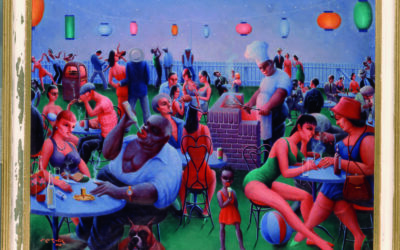
Archibald J. Motley Jr.’s <em> Barbecue</em> (1960)
Motley’s A rooftop party is a variation of a tar beach picnic. Couples are sitting at tables eating and drinking. Good spirits prevail. Motley’s typical attitude and his paintings invariable show African Americans happy in a world of easy living. “I’ve always wanted to paint my people,” he said in an interview, “just the way […] read more
Beryl Bainbridge’s <em> The Bottle Factory Outing </em> (1974)
Bainbridge’s idea of picnic fun is a biting satire of an English company picnic during which everything that can go awry does, including murder. Two friends, Brendass and Freda, organize a picnic for the employees at an Italian wine and spirits shop on Hope Street in London. An ulterior motive is Freda’s dreamy intention of […] read more
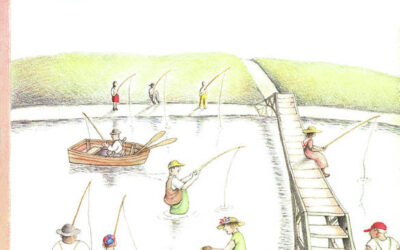
Anne Burgess’s <em>Picnic by a River </em> 1982)
Burgess’s Picnic by a River is The New Yorker’s August cover. By the side of a placid river, a mother, father, and son sit on a plate of cheese, a bowl of salad, a loaf of bread, fruits, and lemonade, Mother has a plate, and the son has a sandwich. Shoes off, they fish with […] read more
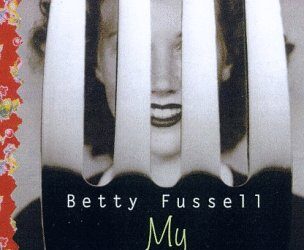
Betty Fussell <em>he Kitchen Wars </em> (1999)
“Hot Grills” is a chapter that puns on picnic cookery and adultery; unpacking the picnic basket is a metaphor for undressing; eating is a metaphor for sexual intercourse. Picnics are he release from everyday routine and the displeasures of a sour academic marriage. “Picnickers who are determined to picnic will always find a spot somewhere. […] read more
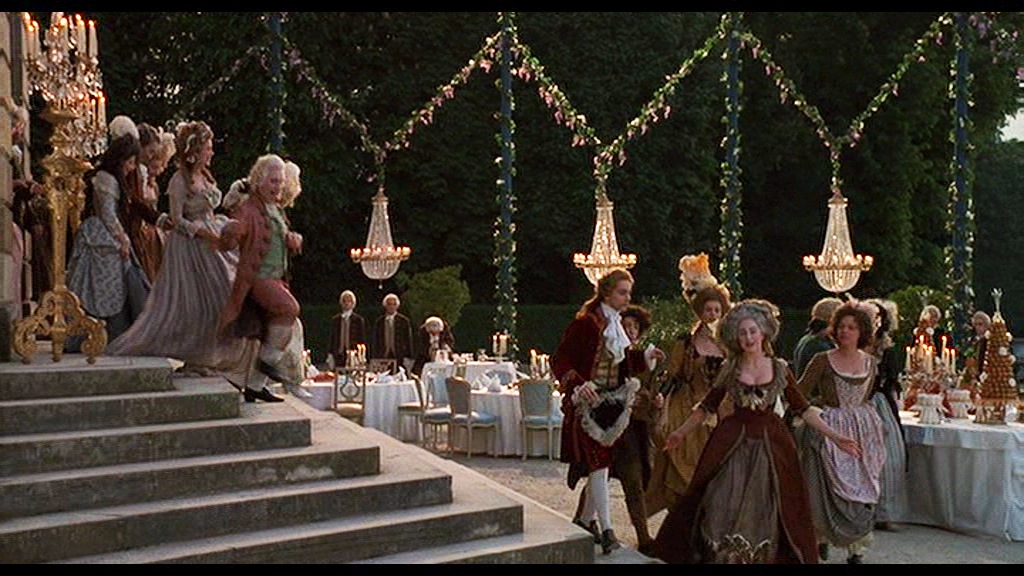
James Ivory’s <em>Jefferson in Paris,/em> (1995)
Ivory and Jhabvala imagine a “typical” gala Parisian garden party circa 1784. It was hosted by the Marquis de Lafayette for Thomas, then acting as American ambassador. Though de Lafayette was philosophically democratic, he was required to cultivate relationships with the Parisian fashionistas and aristocratic hedonism of pre-revolutionary France. The gala is fluff meant only […] read more
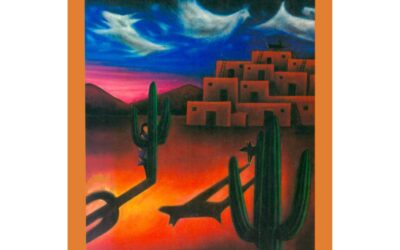
Barbara Kingsolver’s <em>Animal Dreams </em> (1990)
Animal Dreams describes a celebration of All Souls’ Day in Grace, Arizona. The cemetery is on a hill above the town. Once there, the graves are cleaned and decorated, after which the family enjoys a picnic. The protagonist Codi says, “We were a harvester-ant clan ourselves, burdened not only with flowers but with food and […] read more
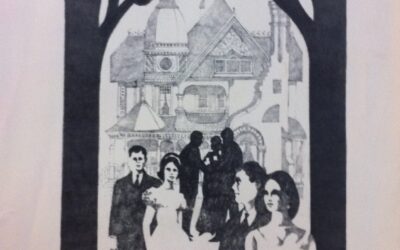
Jacqueline Wheldon’s <em> Mrs. Bratbe's August Picnic </em> (1966)
When a child is murdered at Bratbe’s picnic, a public and family scandal erupts. Then it begins to rain. Hytha Bratbe’s picnic is an annual event for about 800 invited guests, including the Prime Minister, at her estate in the West Sussex Downs, surpassing Mrs. Isabella Beeton’s picnic for forty persons—and crushing it. The over-the-top […] read more
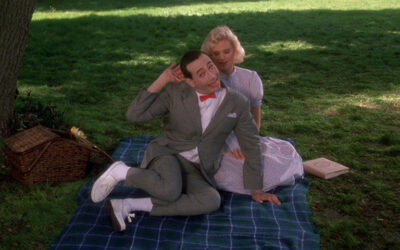
Randal Kleiser’s <em>Big Top Pee-Wee </em> (1988)
Among the silly escapades in Big Top Pee-wee is Pee-Wee’s klutzy relationship with his financé Winnie Johnson. Every day, Pee-wee and Winnie meet for a lunchtime picnic, for which she makes egg salad sandwiches that Pee-wee hates. Pee-wee endures this because it’s a chance to spoon. However, Winnie rebuffs every romance. She is insistent, and […] read more
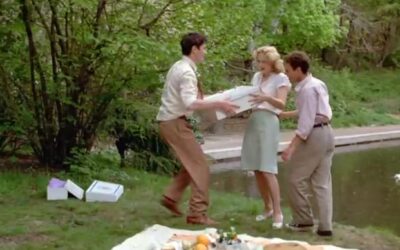
William Styron’s <em>Sophie’s Choice</em> (1979)
Brooklyn’s Prospect Park is where Sophie Zawistowska is sometimes picnicked. Stingo, the narrator, associates Sophie’s park outings as one of Watteau and Fragonard a fête champêtres. He supposes that it was a “pleasant game” for Sophie to buy “heroic sandwiches” at one of the “glorious delicatessens” on Flatbush Avenue, Brooklyn. She would stand at the […] read more
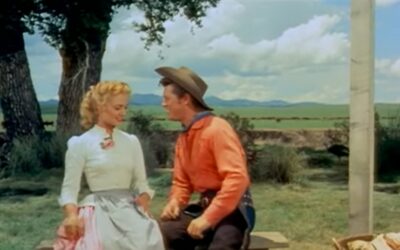
Fred Zinnemann’s <em>Oklahoma!</em> (1955)
Fred Zinnemann’s Oklahoma! is an adaptation of Richard Rodgers and Oscar Hammerstein II’s Oklahoma! (1943) is an adaptation of Lynn Riggs’ Green Grow the Lilacs (1931). Hammerstein wrote one (Act 2) to intensify the rivalry between Curly McClain and Jud Fry for Laurey Williams. Riggs’ Green Grow the Lilacs has a party without a box […] read more
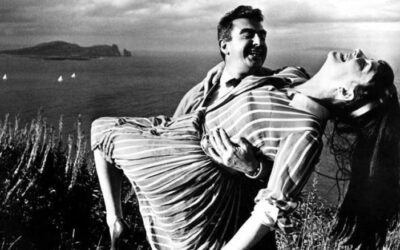
Joseph Strick's <em>Ulysses</em> (1967)
On June 16, 1906, unknown to each other, Leopold Bloom and Molly Bloom remember the picnic on the Hill of Howth when they agreed to marry sixteen years earlier. a popular park outside of Dublin. As part of her soliloquy in which Molly recalls the day, she remembers the seedcake, but Strick is disinterested in […] read more
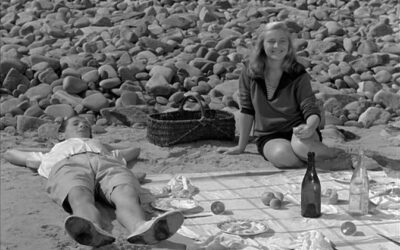
Claude Autant-Lara’s <em>The Ripening Seed </em> (1954)
Autant-Lara’s Le Blé en herbe is good at separating the dual aspects of love in Colette’s novel about adolescents and friends for years and learning about love while vacationing in Normandy. There are two parts to the narrative. In the first part, teenagers Philippe and Vinca fall in love and endure the pleasure and rough […] read more
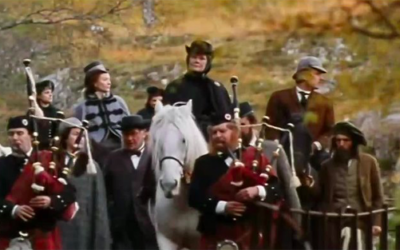
John Madden's <em>Mrs. Brown</em> (1997)
John Madden’s picnic in a glen is a short episode designed to show how Queen Victoria’s dependence on her gillie, John Brown’s guardianship. *He ensures the Queen’s privacy by chasing snooping journalists. It’s After Albert’s death, Victoria’s choice of wearing black became a personal and symbolic gesture so ingrained that it was usual to recall […] read more
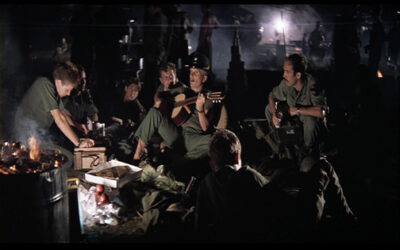
Francis Ford Coppola’s <em>Apocalypse Now</em> (1979)
Coppola’s Apocalypse Now is inspired by Conrad’s The Heart of Darkness. Coppola adapted the action and characters to his conception of the “insane” war in Vietnam, and the beach party picnic is his addition to the narrative. Coppola ensures nothing is quite right in his narrative, especially Lt. Col. Bill Kilgore’s war in Vietnam. As […] read more
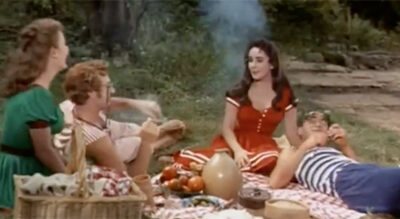
Edward Dmytryk’s <em>Raintree County</em> (1957)
Dmytryk’s picnic is a traditional affair on the rocky ledge of the Shawmucky River: a blanket, food, and a demijohn of corn liquor. It begins happily and ends with a kiss. The day’s happiness is a prelude to John Shawnessey’s love affair and unfortunate marriage to Susanna Drake, a southern belle with a wobbly character […] read more
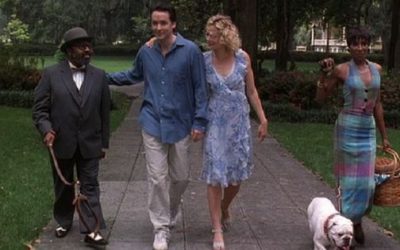
Clint Eastwood’s<em>Midnight in the Garden of Good and Evil</em> (1997)
The authoritative recommendation of Minerva, the Voodoo spiritualist in Eastwood’s Midnight in the Garden of Good and Evil says that when planning a picnic for witches, you must feed them pork because “witches loves pork meat.” When Minerva is performing spells on behalf of Jim Williams to save him from being convicted of murder, she […] read more

Matt Groening's <em>The Simpsons' There is No Disgrace Like Home</em> (1990)
If the Simpsons ever do any right, it’s a miracle, and the picnic at Mr. Bruns’s mansion is a typical disaster. Thinking that the boss likes dessert, Homer, Marge, Bart, and Lisa bring gelatin dessert to the picnic. (So does everyone else.) It’s an honest attempt to please the boss but Burns hates the jello […] read more
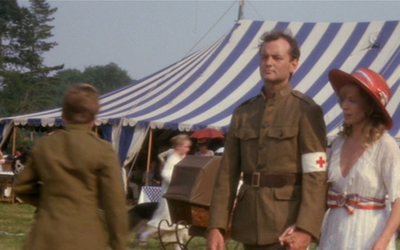
John Byrum’s <em>The Razor’s Edge (/em> (1984)
At Byrum’s July Fourth picnic, lovers cuddle, kiss, and roll on the grass. Larry Darrell wants more, but Isabel Bradley wants to wait. At the lover’s picnic in Maugham’s The Razor’s Edge, never touch or kiss or even hold hands As in Maugham’s picnic, Isabel tries to coerce Larry into a conventional marriage and a […] read more
Agnes Varda’s <em>Le Bonheur</em> (1964)
Varda’s satirical idea is that family happiness depends on male arrogance and female docility. She suggests that if wives are replaceable, a man can lose one and simply replace it with another. Voila, happiness. François Chevalier supposes that a husband needs a mistress to keep his masculinity and have better sex with his wife, Thérèse. […] read more
Don Taylor’s <em>The Adventures of Tom Sawyer</em> (1973)
Just shy of the centenary of Twain’s Tom Sawyer, Taylor and the Shermans film is a musical. Becky Thatcher’s birthday picnic is recreated as rollicking July Fourth holiday picnic. It’s not Twain’s classic, but it’s light-hearted fun. While Twain’s details about the rollicking good time are scanty, Taylor’s are effusive. The day begins with a […] read more
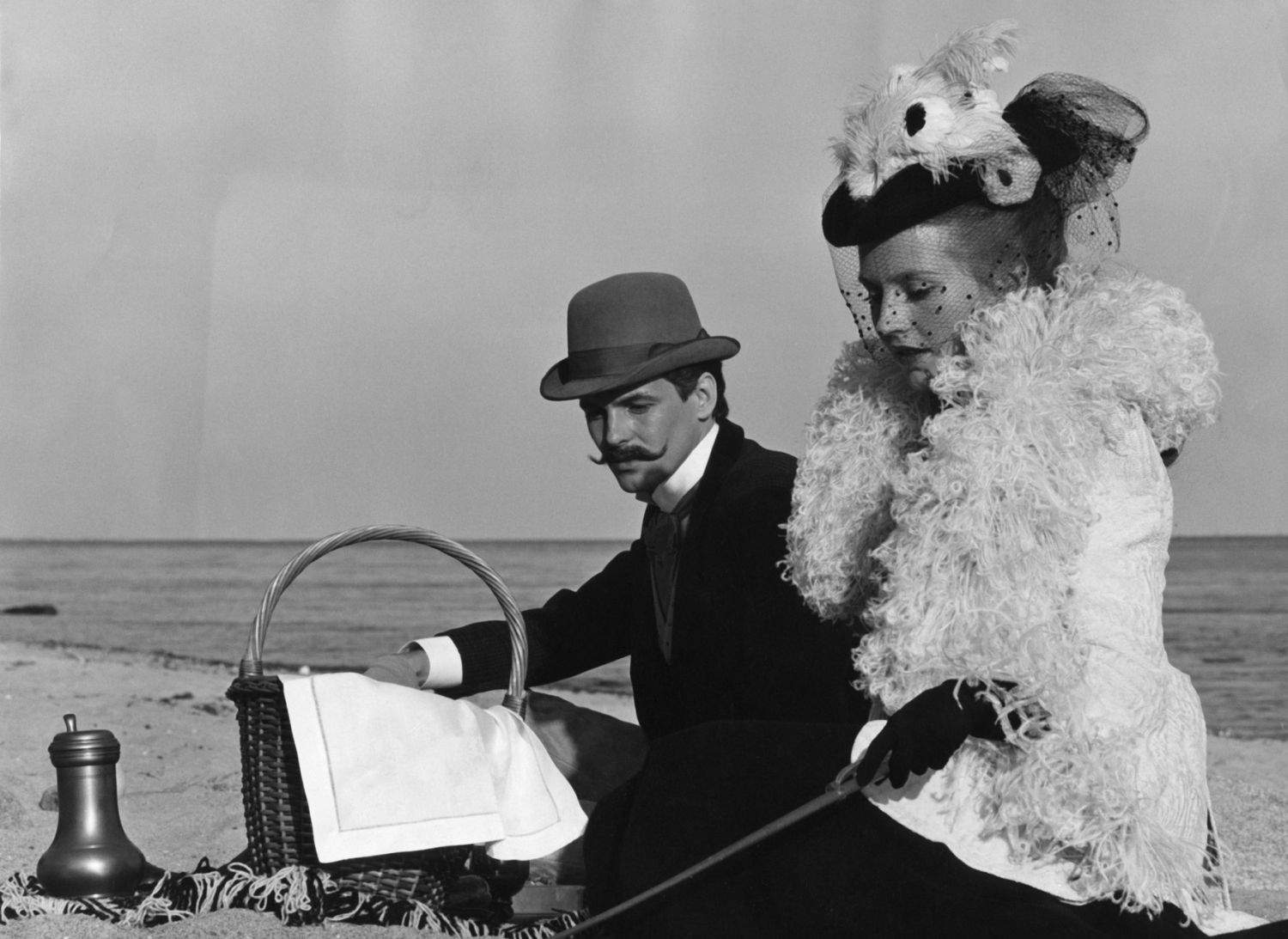
Rainer Werner Fassbinder’s <em>Effi Briest</em> (1975)
Theodor Fontane’s Effi Briest has been successfully adapted by Rainer Werner Fassbinder, whose slow-moving narrative presents the youthful heroine’s adulterous affair and how it wrecks her life. Only one of Fontane’s picnics is articulated. Effi and her lover, Major von Crampas, eat at a crude wooden table behind the dunes to avoid the Baltic’s gusty […] read more
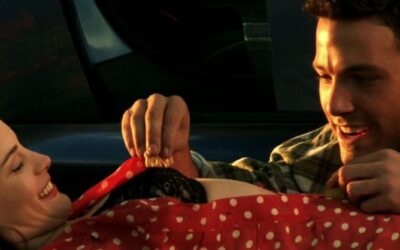
Michael Bray’s <em>Armageddon</em> (1998)
All hell might break loose. Earth may be obliterated, but A. J. Frost and his sweetheart Grace Stamper ignore their food preferring sex foreplay instead. “Do you think,” asks Grace, “that anyone else in the world is doing this very same thing at the same moment?” A.J.’s the ready answer is, “I hope so… Otherwise, […] read more
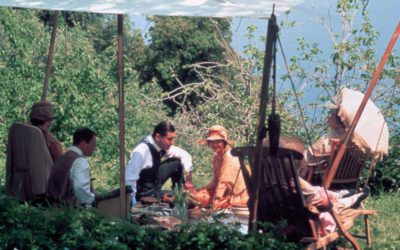
Mike Newell’s <em>Enchanted April</em> (1992)
The picnic at the Castello San Salvatore in Portofino’s vicinity is a happy fairy tale. * Saint Salvatore suggests salvation for the four women, all suffering from emotional depression and finding friendship and renewal of love. Mike Newell’s Enchanted April eliminates the definite article of Von Arnim’s novel The Enchanted April. Deciding von Arnim’s lack […] read more
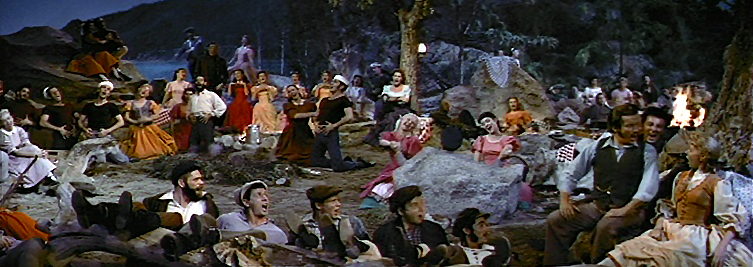
Henry King’s <em>Carousel</em> (1956)
King’s Carousel “A Real Nice Clambake” is full of picnicky camaraderie and good spirits, but it takes a nose-dive when the news comes that Julie Jordan’s lover Billy Bigelow, botched robbery is dead. King is casual about having the actors capture the vernacular diction of Maine. But the clambake is surely familiar and cleverly provides […] read more
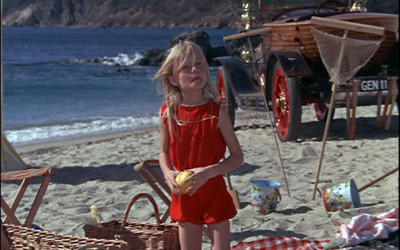
Ken Hughes's <em>Chitty Chitty Bang Bang</em> (1968)
Hughes’ Chitty Chitty Bang Bang is a romantic musical comedy so loosely based on the novel that Fleming would have difficulty recognizing it. Of course, Chitty Chitty Bang Bang, the magical automobile, is present. Commander Potts and his children Jemima and Jeremy, too. But Mom is replaced by Truly Scrumptious, a beautiful young woman […] read more
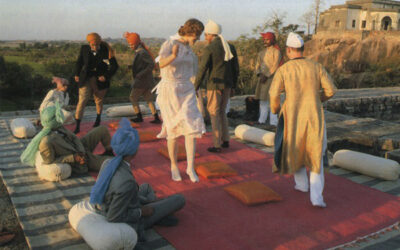
James Ivory’s <em>Heat and Dust</em> (1983)
Ruth Prawer Jhabvala’s Heat and Dust has two picnics. But as the screenwriter for James Ivory’s film, she included only Olivia Rivers, a British colonial wife, picnic with the Nawab, the local ruler of a small state in central India. Bored with her husband, Rivers allows herself to be seduced by the Nawab, an inept […] read more
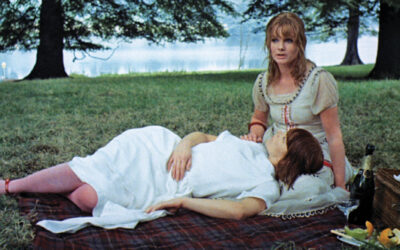
Ken Russell’s <em>Women in Love</em> (1969)
As in Lawrence’s Women in Love, Russell’s water party, a euphemism for a picnic, begins happily in the bright light of the early afternoon but ends dismally in the evening, partially illuminated by gaudy party lights. More like a country fair than an informal picnic, the water party is a busy affair demonstrating the Crich […] read more
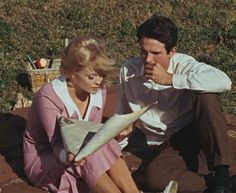
Arthur Penn's <em>Bonnie and Clyde</em> (1967)
Arthur Penn’s picnics seem ordinary. Penn figured that picnics make good human interest episodes and would humanize Bonnie and Clyde’s selfishness and essential nastiness. The Parker family picnic is a temporary lull for Bonnie and Clyde, who are graciously welcomed as local heroes. When the group settles to say grace, Bonnie sits with the family, […] read more
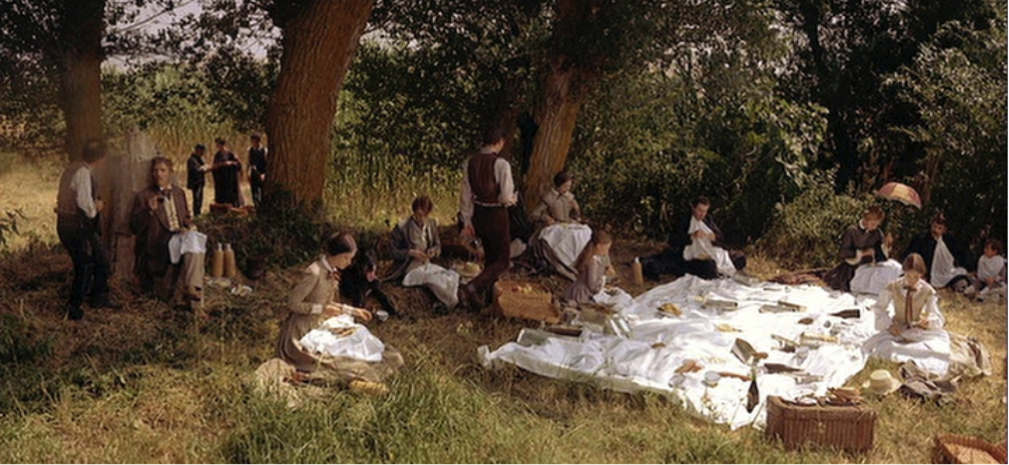
Luchino Visconti's <em>The Leopard</em> (1963)
Lampedusa wanted the picnic in The Leopard to be a metaphor for Don Fabrizio’s outward pleasant condition masking his inward and disillusionment. Visconti wishes it to be a respite on a long dusty ride. Lampedusa describes a “funereal countryside, yellow with stubble, black with burned patches; the lament of cicadas filled the sky. It was […] read more
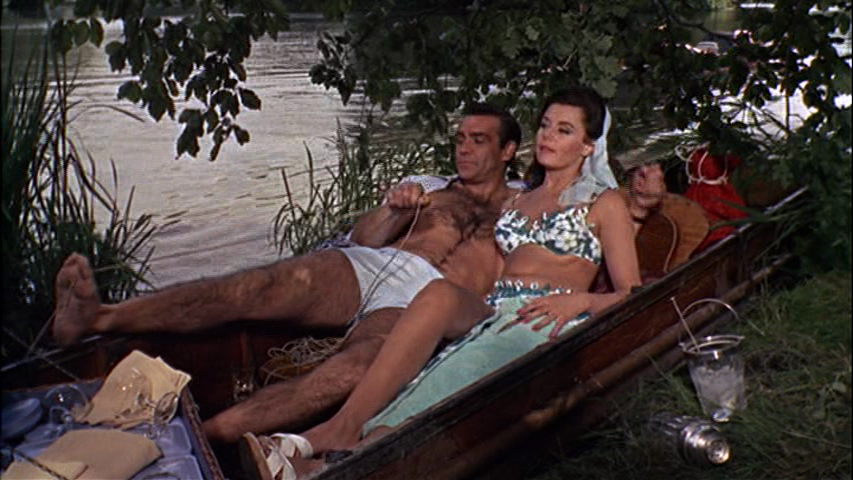
Terrence Young’s <em>From Russia, With Love </em> (1963)
Terrence Young’s picnic in From Russia With Love does not happen in Ian Fleming’s novel. It’s inconsequential, shaken but not stirred. Young’s picnic begins when Bond and his current lover, Sylvia Trench, are punting in a boat on /River Cherwell in Oxford. It’s summer. They are tied up in the shade, dressed in bathing suits, […] read more
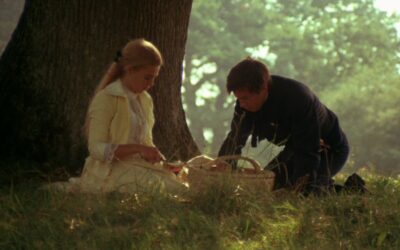
Bo Widerberg <em>Elvira Madigan’s</em> (1967)
Widerberg’s Elvira Madigan has two picnics. The first is a lover’s idyll; the second is sad and deadly. When Elvira Madigan, aka Hedvig Jensen, a circus performer, and Count Sixten Sparre, a married cavalry officer, eloped, their life together was a picnic. Their moment of happiness was brief, and when their picnic fizzled, they died […] read more
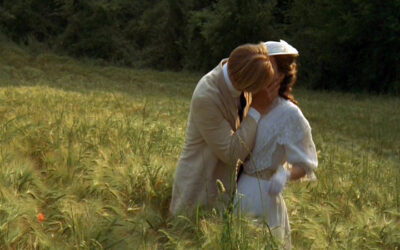
E.M. Foster’s <em>A Room with a View</em> (1985)
.M. Forster’s narrator calls the outcome of this picnic a “social contretemps.” Due to George Emmerson’s exuberance and Lucy Honeychurch’s reticence. He associates the perplexity to the presence of Pan, the god of chaos: Some complicated game had been playing up and down the hillside all the afternoon. What it was and exactly how the […] read more