
Fiction
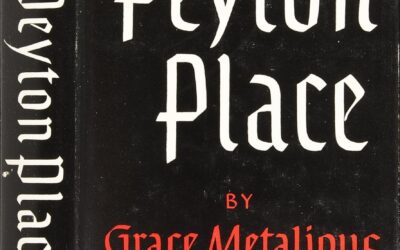
Grace Metalious's <em>Peyton Place</e> (1956)
Allison McKenzie and Norman Page teenagers ride bicycles to a picnic on the Connecticut River. Metalious's picnic is similar to Carson McCullers’s in The Heart is a Lonely Hunter; during which Mick Kelly and Harry Minowitz talk about adult life and relationships. Mick and Harry make love; Allison and Norman talk and eat ham or […] read more
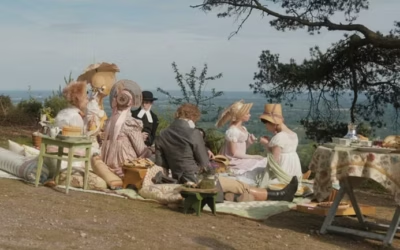
Jane Austen’s <em>Emma</em) (1816)
Austen’s Emma has two picnic episodes, one of which never happens * and the other a proper picnic at Box Hill. During strawberry season, Emma Woodhouse and her crowd gather in Knightley’s Donwell Abbey garden. Mrs. Elston’s enthusiastic plan for a “pic-nic parade” is cutesy. Addressing Knightley, she says, “It is to be a morning […] read more
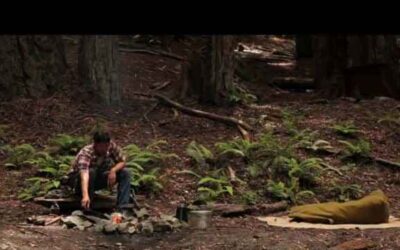
Ernest Hemingway's "Big Two-Heated River, Part Two" (1925)
It resembles a picnic; it’s recreational, but it’s lunch on a trout-fishing excursion on Michigan’s Upper Peninsula. In Ernest Hemingway’s story “Big Two-Hearted River, Part Two,” Nick Adams breaks to have a sandwich. Nick is depressed and trying desperately to get over his war memories and a nagging injury. Fishing for trout in a cold […] read more
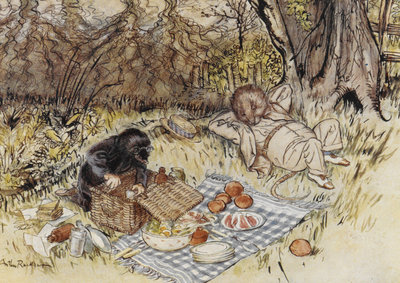
Kenneth Grahame's <em>Wind in the Willows</em> (1908)
Grahame’s picnic in The Wind in the Willows (1908) is a wonder. What child (or adult) could ever conceive of a picnic for one eating basket full of “cold chicken. . .‘coldtonguecoldhamcoldbeefpickledgherkinssaladfrenchrollscresssandwichespottedmeatgingerbeerlemonadesodawater——’?” * It’s the adults that prefer oceans of food for picnics believing that this is the best way (some think the only way) […] read more
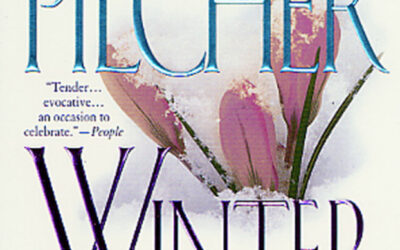
Rosamunde Pilcher's <em>Winter Solstice, A Novel</em> (2000)
After much tribulation, Elfirida Phipps Oscar Blundell and friends gathered at a Christmas Eve picnic for the start of a happy future. The timing purposefully combines the celebration of the birth of Jesus Christ and the winter solstice that is the beginning of the celestial new year; both bring tidings of good cheer. As Pilcher […] read more
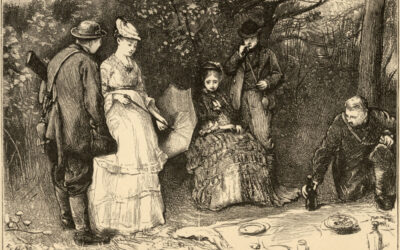
Anthony Trollope’s <em>Phineas Redux</em> (1874)
Trollope’s Phineas Redux is the fourth book in the Phineas Finn Series. It was among his most popular novels. Numerous hunt scenes and references suggest Finn’s plight evading his enemies. A halt during a fox hunt provides the opportunity for a simple picnic lunch in the field. Featured Image: Frank Holl’s illustration caption is “You […] read more
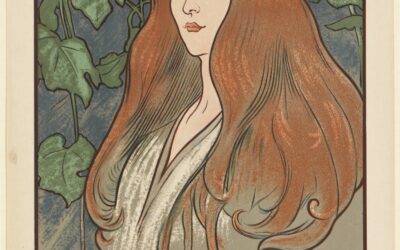
Harold Frederic’s <em>The Damnation of Theron Ware </em> (1896)
Frederic’s The Damnation of Theron Ware, or Illumination, is a satire of American Methodism. The narrative explores the mid-life crisis of Theron Ware, a married Methodist Episcopal pastor who falls for Celia Madden, an Irish Catholic, in a small town in New York State. During a staid, conservative Methodist camp meeting, Ware sneaks off to […] read more
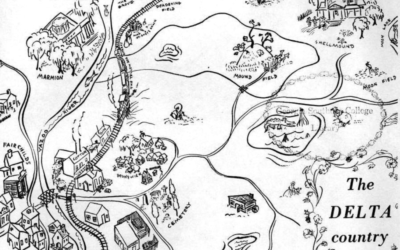
Eudora Welty's <em>Delta Wedding</em> (1946)
Under a magical starry sky, Welty’s picnic at the Grove calms the frayed edges of family life after a momentous wedding. Though it is held at night, the air is cool and still summery warm, the stars twinkles as shooting stars burst across the sky, and the sound of the horse and wagon is reassuring. […] read more
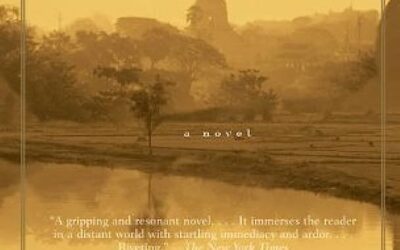
Daniel Mason’s <em>The Piano Tuner</em> (2002)
Mason’s The Piano Tuner is an adaptation of Conrad’s The Heart of Darkness. Edgar Drake, the piano tuner, is Charlie Marlow, and Anthony Carroll, Surgeon-Major in the British Army, then annexing Burma. Carroll is accused of setting up his state in defiance of British authority, and Drake is an unwitting dupe in the conflict. Unlike […] read more

Drunken Behavior and Sexual Liaisons in Ruth Prawer Jhabvala’s “Picnic with Moonlight and Mangos” (1976)
“Picnic with Moonlight and Mangos” from Jhabvala’sHow I Became a Holy Mother (1976) is about a drunken picnic in the garden of Moti Bagh, a 17th-century palace in a suburb of New Delhi. This annual event is often an excuse for sexual liaisons. The pattern is always the same: friends and families visit Moti Bagh […] read more
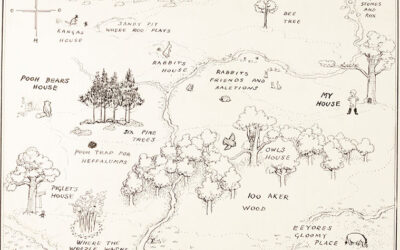
A.A. Milne”s <em>Winnie-the-Pooh</em> (1926)
A.A. Milne’s picnics in Winnie-the-Pooh (1926) are happy and leisurely held in “The Hundred Aker Wood.” It’s a location just above the “Sandy Pit where Roo Plays” with a sign that says “a Nice Place for Piknicks.” No doubt, where Christopher Robin holds a formal picnic party for which Pooh agrees to attend because pink […] read more

Kenneth Grahame’s <em>Dream Days</em> (1898)
Grahame’s Dream Days are more evidence of his affinity for boats and picnics. Before Ratty’s picnic in Wind in the Willows, Grahame relates a pleasant dream about boating on a river in an Arcadian world. “I just go. But generally, it begins by–well, you’re going up a broad, clear river in a sort of a […] read more
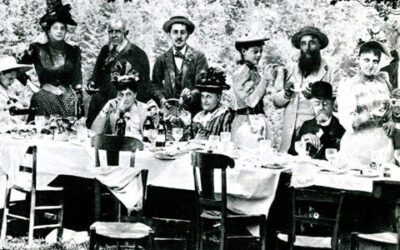
Marcel Proust's <em>Within a Budding Grove</em> (1914)
Proust’s Within a Budding Grove [aka In the Shadow of Young Girls in Flower] is sometimes remembered for young Marcel’s picnics on the bluffs at Balbec, a fictional town in Normandy. (Proust does not use pique-nique because this is an outdoor meal.) With a “little band” of teenage friends, Albertine, Andrée, Delphine, and Rosemonde, Marcel […] read more
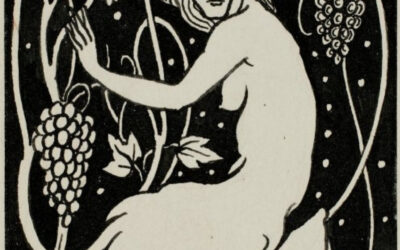
Foster, E. M. "The Curate's Friend" (1904)
“The Curate’s Friend” is one of two of Forster’s coming-out stories published in The Celestial Omnibus. In “The Story of a Panic,” Pan appears in a whirlwind and rapes a young boy. In “The Curate’s Friend,” a Faun enamors Harry the Curate and becomes a life-long friend. Telling this story long after, Harry leaves the […] read more
Edith Wharton's <em>Summer</em> (1917)
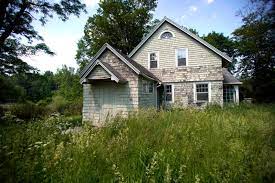
Wharton’s Summer is the story of a summer romance doomed to failure that begins with seduction at a picnic. When Charity Royall, a small-town girl of seventeen, falls for Lucius Harney, a socially upscale architect, she loses her innocence at a picnic. The outing and picnic lunch are critical moments in the narrative suggesting the […] read more
Edith Wharton’s <em>Ethan Frome</em> (1911)
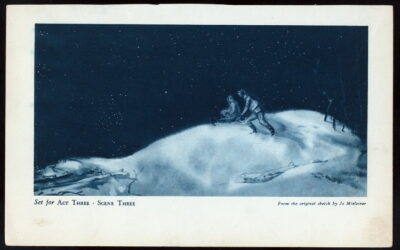
An exception to the unremitting cold in Wharton’s Ethan Frome is a summer church picnic when Ethan and Mattie Silver first feel love for one another. When Mattie is forced to leave, Frome drives her to the train station. Along the way, they stop by the frozen Shadow Pond and look out on the frozen […] read more
Beryl Bainbridge’s <em> The Bottle Factory Outing </em> (1974)
Bainbridge’s idea of picnic fun is a biting satire of an English company picnic during which everything that can go awry does, including murder. Two friends, Brendass and Freda, organize a picnic for the employees at an Italian wine and spirits shop on Hope Street in London. An ulterior motive is Freda’s dreamy intention of […] read more
Barbara Kingsolver’s <em>Animal Dreams </em> (1990)
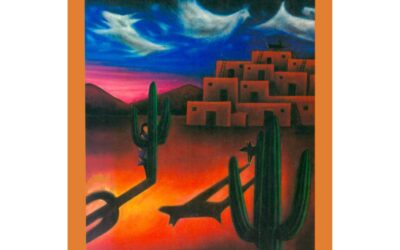
Animal Dreams describes a celebration of All Souls’ Day in Grace, Arizona. The cemetery is on a hill above the town. Once there, the graves are cleaned and decorated, after which the family enjoys a picnic. The protagonist Codi says, “We were a harvester-ant clan ourselves, burdened not only with flowers but with food and […] read more

Somerset Maugham’s <em>Of Human Bondage</em> (1915)
During a luncheon on the grass at a suitably sylvan in Fontainebleau, Philip Carey, the protagonist Of Human Bondage, suffers a momentary fear that love will pass him by. It does in this instance, but after much hardship and bondage in an unrequited love affair, he is fulfilled. “One Sunday, they had all gone with […] read more
Katherine Mansfield's "The Garden Party" (1922)
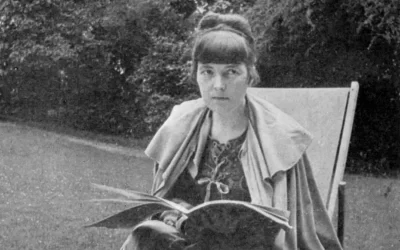
Mansfield’s “The Garden Party” describes the Sheridan family’s Wellington, New Zealand, summer picnic garden party. The day is early summer, the weather ideal, the air warm and windless, and the blue sky has a veil of gold: “They could not have had a perfect day for a garden party if they had ordered it—Windless, warm, […] read more
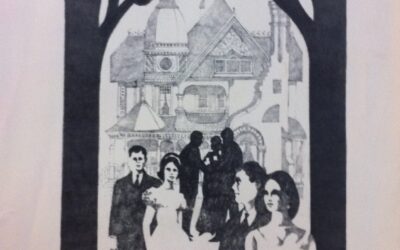
Jacqueline Wheldon’s <em> Mrs. Bratbe's August Picnic </em> (1966)
When a child is murdered at Bratbe’s picnic, a public and family scandal erupts. Then it begins to rain. Hytha Bratbe’s picnic is an annual event for about 800 invited guests, including the Prime Minister, at her estate in the West Sussex Downs, surpassing Mrs. Isabella Beeton’s picnic for forty persons—and crushing it. The over-the-top […] read more
William Boyd’s <em>Sweet Caress </em> (2015)
Amory Clay, the central character, describes a solitary picnic for herself. She is recovering from childbirth trauma. A healthy baby suddenly dies. Amory is depressed, but one day she takes a moment to find solace. “Today was one of those weird Mediterranean moments you are sometimes blessed with on the west coast of Scotland. A […] read more
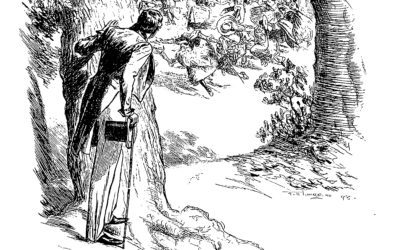
Nathaniel Hawthorne's <em>The Blithedale Romance</em> (1852)
Hawthorne’s memories of Brook Farm were a childish and boisterous masquerade picnic party for a six-year-old boy. Hawthorne refused to participate and “lay under the trees and looked on.” A decade later, Hawthorne refashioned this party an unpleasant “satanic” masquerade picnic for The Blithedale Romance.” Hawthorne refashioned a birthday picnic when he was a member […] read more
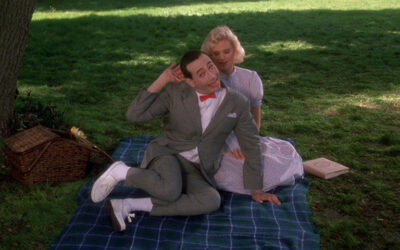
Randal Kleiser’s <em>Big Top Pee-Wee </em> (1988)
Among the silly escapades in Big Top Pee-wee is Pee-Wee’s klutzy relationship with his financé Winnie Johnson. Every day, Pee-wee and Winnie meet for a lunchtime picnic, for which she makes egg salad sandwiches that Pee-wee hates. Pee-wee endures this because it’s a chance to spoon. However, Winnie rebuffs every romance. She is insistent, and […] read more
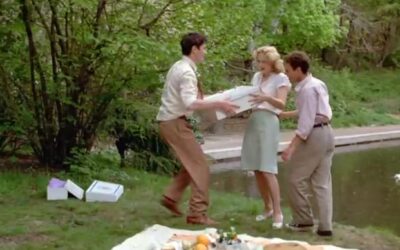
William Styron’s <em>Sophie’s Choice</em> (1979)
Brooklyn’s Prospect Park is where Sophie Zawistowska is sometimes picnicked. Stingo, the narrator, associates Sophie’s park outings as one of Watteau and Fragonard a fête champêtres. He supposes that it was a “pleasant game” for Sophie to buy “heroic sandwiches” at one of the “glorious delicatessens” on Flatbush Avenue, Brooklyn. She would stand at the […] read more
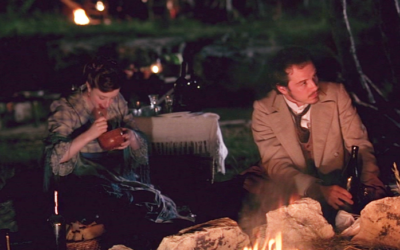
Anton Chekhov’s <em>The Duel</em> (1891)
Two people regard the same picnic as if from different worlds. The Deacon, a young clergyman, thinks, “My God, how nice it is! People, rocks, the fire, the twilight, a monstrous tree—nothing more, and yet how fine it is. “Laevsky, a man on the verge of a nervous breakdown, unhappy in love, deep in debt, […] read more
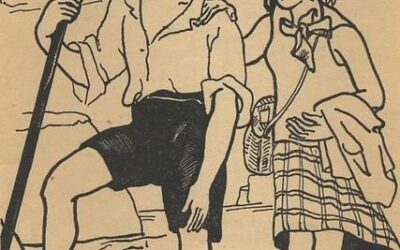
Colette’s <em>The Ripening Seed</em> (1923)
It’s a momentous picnic for a young couple to understand they are courting in Colette’s The Ripening Seed. With the summer half gone, Phil Adebert (sixteen and a half) and Vinca Ferret (fifteen and a half) pack their picnic baskets and walk down the rocky cliffs like “explorers, to eat out of doors in one […] read more
Mark Twain 's <em>The Adventures of Tom Sawyer</em> (1876)
Becky Sharp’s “pic-nic” begins with “a giddy and rollicking company” on an island in the Mississippi. After traveling by old ferryboat three miles below the town of Hannibal, the picnickers “swarmed ashore and soon the forest distances and craggy heights echoed far and near with shoutings and laughter.” The picnic turns adventuresome when Tom and […] read more
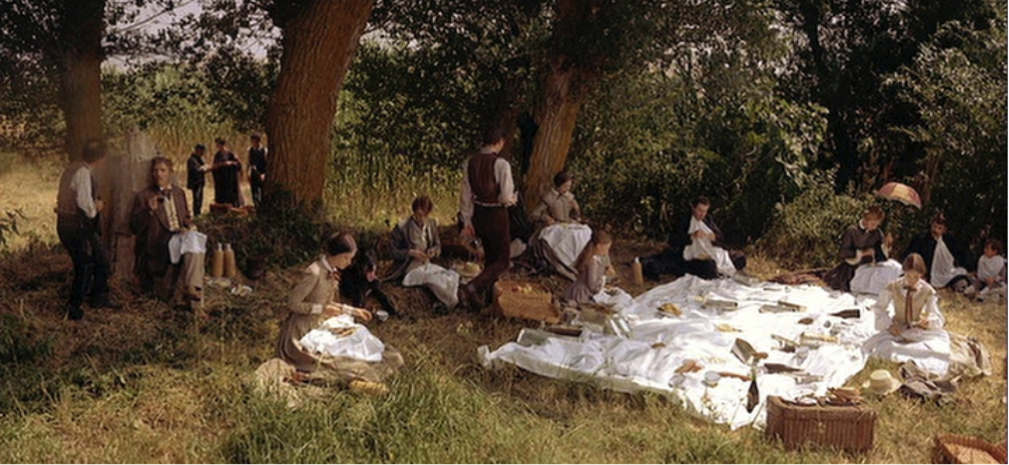
Luchino Visconti's <em>The Leopard</em> (1963)
Lampedusa wanted the picnic in The Leopard to be a metaphor for Don Fabrizio’s outward pleasant condition masking his inward and disillusionment. Visconti wishes it to be a respite on a long dusty ride. Lampedusa describes a “funereal countryside, yellow with stubble, black with burned patches; the lament of cicadas filled the sky. It was […] read more
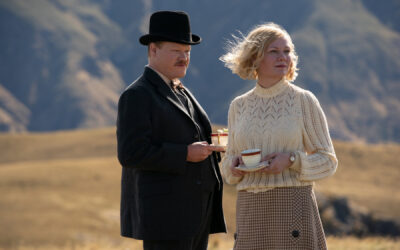
Thomas Savage’s <em>The Power of the Dog</em> (1967)
Though it’s February and light snow is on the ground, Rose Burbank stops for a picnic. She’s romancing George Burbank, a good-hearted undemonstrative rancher. He’s thinking about his automobile and what it would be to have a more luxurious model, a Pierce. So, when Rose says, “This looks like a good place.” George’s train of […] read more
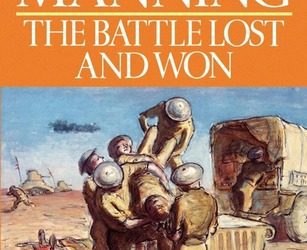
Olivia Manning’s <em>The Battle Lost and Won</em> (1978)
Simon Boulderstone, a British lieutenant, serving during the North African campaign, is among the major characters of Manning’s The Battle Lost and Won. Cutting short a leave, Boulderstone wanders, trying to regain his unit and rejoin the fighting against Rommel at El Alamein. Hitching a ride with two Australian soldiers, he calls Cherrypickers, a term […] read more
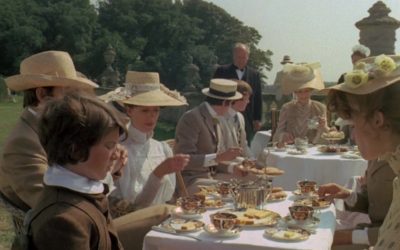
L.P. Hartley’s <em>The Go-Between</em> (1953)
Leo Colston’s memories of Brandham Hall fifty years earlier are an infinite source of trouble. Now about sixty-two, he is still trying to understand why. Sometimes Leo is called Mercury or the postman because he’s the go-between surreptitiously delivering letters for Marian Maudsley to Ted Burgess, a tenant farmer. As in an espionage thriller, Leo […] read more
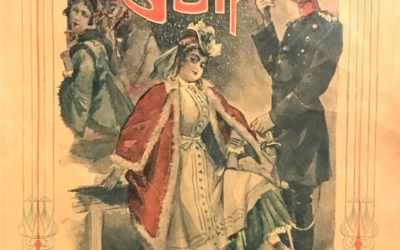
Guy de Maupassant’s <Boule de suif</em> (1880)
De Maupassant knows that the picnic of this story is not the picnic you expect. Instead of grass, the setting is s a four-horse coach carrying ten passengers fleeing the Prussian army advancing on Rouen for safety at Le Havre. Instead of being congenial, all but one of the passengers are mean-spirited and hypocritical. The […] read more
John Varley’s <em>Picnic on the Nearside</em> (1980)
Included in Varley’s “Picnic on the Nearside is a romantic picnic on the Moon. Fox Carnival Joule and Halo are pals. But their relationship is altered when Halo changes into a woman with full breasts, curves, “the works,” etc. To avoid the sexual confrontation, Fox suggests they visit Old Archimedes on the Nearside, a restricted […] read more
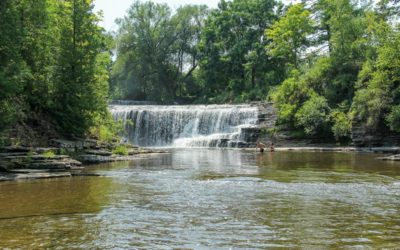
Frederick Exley's Disastrous Picnic in <em>Pages from a Cold Island </em> (1974)
Exley’s semi-memoir Pages from a Cold Island, an homage to Edmund Wilson, describes his disastrous picnic on the Sugar River with Mary Polcar, Wilson’s “drinking, dinner, and movie companion,” and get her to talk about him. Exley’s interest was partly homage and partly prurient. The picnic is disastrous and comical by turns: the ground is […] read more
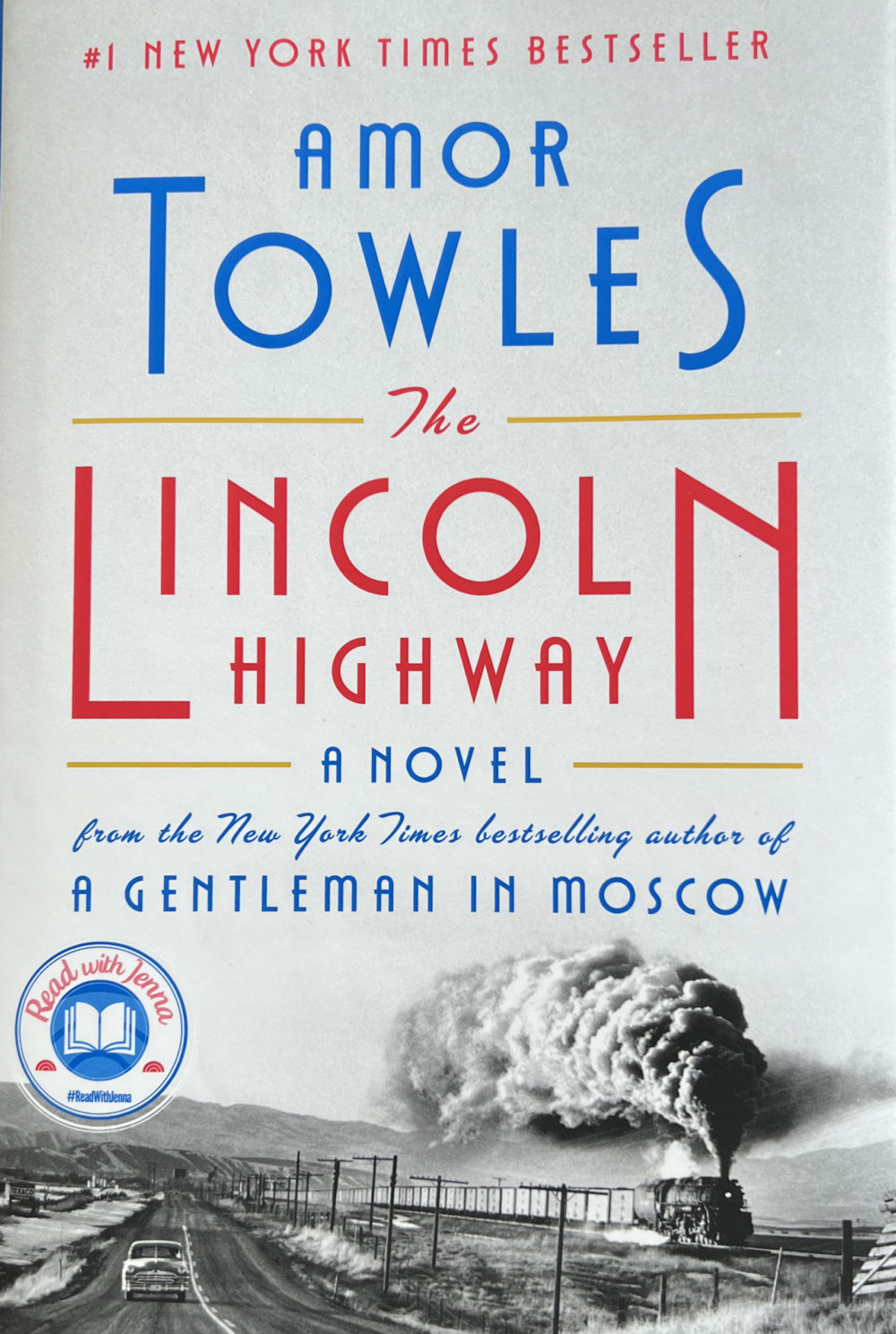
Amor Towles’s <em>The Lincoln Highway</em> (2021)
There are two picnics, both occurring about the same time in 1946. One concerns the Watson’s and the other the Hewett’s. Both picnics are bittersweet and end with unhappy consequences. The Watson family celebrates the Fourth of July by attending a family picnic. It’s a tradition ending when Mrs. Watson (aka Mom), suffering an unhappy […] read more
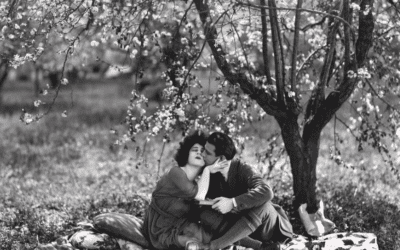
Alexandre Dumas fils’s <em>La Dame aux Camélias</em> (1848)
Dumas, fils’s La Dame aux Camélias does not have a picnic episode. But Roy C. Smallwood’s Camille makes a lover’s picnic a set piece. read more

Laurie Colwin ‘s <em>Family Happiness</em> (1982)
Colwin’s is a New York-based novel about Polly [Dora] Solo-Miller Demarest, married to Henry Demarest, an affluent, Jewish East Manhattan husband she loves, and Lincoln Bennett, an artist who lives in Lower Manhattan. Polly finds family happiness by leading two lives, each separate and fulfilling. On Sundays, Polly has lunch with her parents and extended […] read more
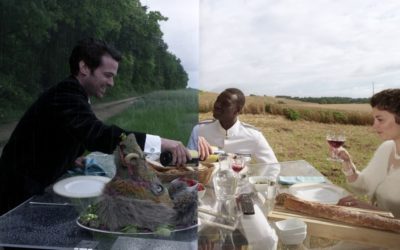
Boris Vian’s <em>L’Écume des jours</em> (1947)
Vian’s L’Écume des jours is variously translated as The Foam of Days, The Scum of Days, or Froth on the Daydream. Take your pick. It was filmed by Charles Belmont as Spray of Days (1968) and retold as an opera by Edison Denisov (1986). It was without a picnic until Michel Gondry added one to […] read more
Nadine Gordimer’s <em>The Lying Days </em> (1953)
It’s a tender moment when Helen Shaw and Joel Aaron climb a hill to picnic and enjoy the view. They do not bring food or picnic gear but sit on the rock facing the sun. They are good friends, not lovers, and Aaron soon will be leaving Joel for Israel. Helen imagines she loves him. […] read more
Peter Viertel’s <em> Loser Deals</em> (1995)
Vertiel’s picnic is a lovers’ tryst in a finca above Marbella, a town on the Costa Brava. Robert Masters and Carmen Fernandez, a flamenco dancer, are having a farewell picnic because she is leaving for Madrid to dance with an important company. She packs a roasted chicken and a bottle of wine in a basket. […] read more
Vladimir Nabokov’s <em>Ada, or Ardor: A Family Chronicle</em> (1969)
The picnic celebrates Ada’s sexual awakening on her twelfth birthday. * It’s a picnic during which she initiates a life-long incestuous relationship with her older brother Van Veen. As a sign of her age, Ada wears a long but airy and ample black skirt with red poppies or peonies, and a short-sleeved white, black-striped jersey. […] read more
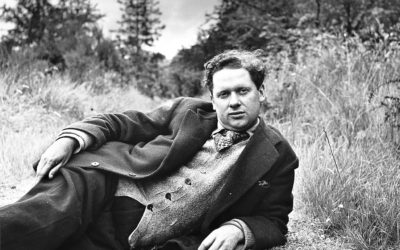
Dylan Thomas's "The Orchards" (1936)
Thomas’s “The Orchards” is a nightmare. It’s a death-in-life story about Marlais, a blocked writer who meets spectral women, demon-lovers, at a horrible picnic. The narrative begins when Marlais contemplates suicide but instead is summoned by some unseen force to an orchard by the sea. “He had dreamed that a hundred orchards on the road […] read more
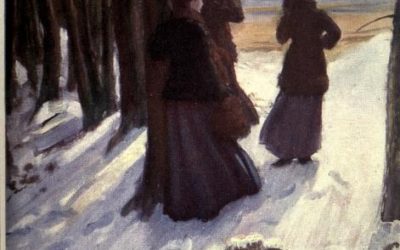
Elizabeth von Arnim’s <em>Elizabeth and Her German Garden</em> (1898)
Winter picnics are few, and among the best is Elizabeth von Arnim’s on a freezing afternoon on a bluff above the Baltic. On a brilliant January day, Elizabeth’s birthday, she travels about three hours in a horse-drawn carriage over deep snow to a bluff overlooking the cold and windless Baltic Sea. The sudden view of […] read more
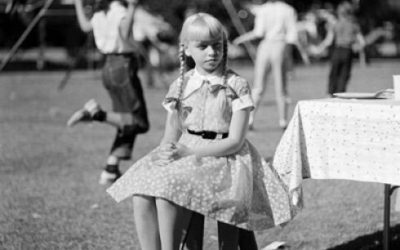
William March's <em>The Bad Seed</em> (1954)
Rhoda Penmark is a successful serial killer whose career begins at a school picnic. She looks innocent, a darling little girl with blond pigtails and blue eyes. But Rhoda’s interior is ruthless and murderous. Wanting the penmanship medal for herself (March’s pun intended), Rhoda follows her classmate Claude around, trying to snatch it. When that […] read more
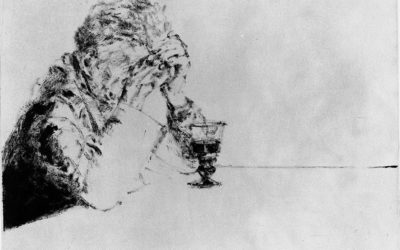
Samuel Beckett’s <em>Malone Dies</em> (1951)
Time and details in Beckett’s Malone Dies are contradictory and often obscure. Events of the narrative are confusing, especially as it reaches a bloody climax that ends when Malone hacks six to death at a picnic. The picnic is narrated by the protagonist Malone (sometimes known as Lemuel), who remembers (more or less) the day […] read more
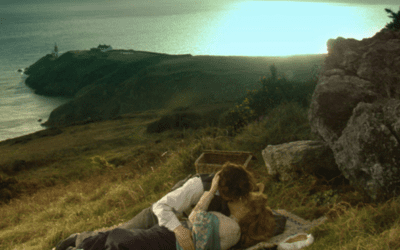
Benjamin Black's <em>A Death in Summer</em> (2011)
Benjamin Black’s picnic at Howth alludes to James Joyce’s Ulysses. The date is the same fifty-two years later, June 16, 1956, but the picnickers and their intentions are very different. In Ulysses, Leopold Bloom, and Marian “Molly,” Tweedy make love on the grass at Howth Head, Dublin. In A Death in Summer, Black’s picnickers, David […] read more
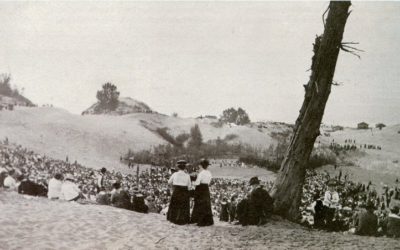
Edna Ferber’s <em>Fanny Herself</em> (1917)
Fanny Brandeis is a new woman, whose career comes first, and when Clarence Heyl, an unacknowledged suitor, asks her to picnic, she says that she’s so busy working that she has forgotten how. But the next morning, Fanny is sitting in a train heading out from Chicago to the Indiana Dunes on Lake Michigan, a […] read more
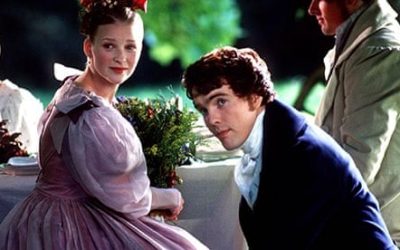
Charles Dickens’s <em>David Copperfield</em> (1850)
“Blissful” is Dickens’s word to describe Copperfield’s tenderest memories of Dora Spenlow’s picnic birthday party. He’s about nineteen and obsessed, getting up before 6 AM to buy flowers, so they are fresh. The picnic is near Guilford, Surrey, that David thinks might have been conjured by an “Arabian Night-magician.” He rides horseback behind Dora’s carriage […] read more
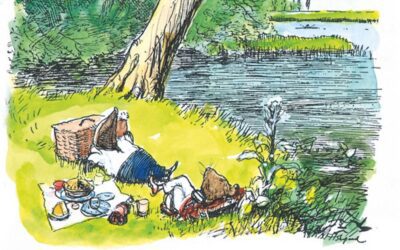
Kenneth Grahame's <em>Wind in the Willows</em> (1908)
Grahame’s picnic in The Wind in the Willows (1908) is a wonder. What child (or adult) could ever conceive of a picnic for one eating basket full of “cold chicken. . .‘coldtonguecoldhamcoldbeefpickledgherkinssaladfrenchrollscresssandwichespottedmeatgingerbeerlemonadesodawater——’?” * It’s the adults that prefer oceans of food for picnics believing that this is the best way (some think the only way) […] read more