
1600-1699
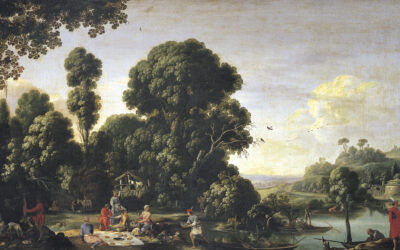
Filippo Napoletano’s <em>Merenda sull’erba</em> (1619)
Napoletano’s Merenda sull’erba is a landscape with Florentines enjoying an informal outdoor lunch by a lake. Merenda is Italian for picnic, which was not coined until 1649 in Paris. The picnickers have spread their cloth in the shade. To the left, a cook works at a fire; to the left, a servant brings fish from […] read more
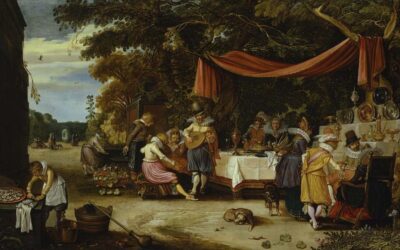
Esaias van de Velde’s <em> An Elegant Company in a Garden</em> (1614)
Van de Velde’s reputation is now based on his naturalistic landscape. But he was in demand among the affluent Amsterdam community, for whom he painted many scenes of their parties, especially garden parties, of which An Elegant Company in a Garden is an exemplar. The Boston Museum of Fine Arts’s title is misleading. There is […] read more
Jan Miel’s <em>La Merienda</em> and <em>Hunters at Rest</em> (1640s/50s)
Miel’s halt on the hunt and repas de chasse depicts hunters stopped by a rustic inn. In the Prado’s La Merienda, hunters have spread a cloth beside their horses and are settling in to relax. This is a perfunctory meal of sliced ham, cheese, bread, and wine. Unlike Watteau’s fashionable hunters and their ladies in […] read more
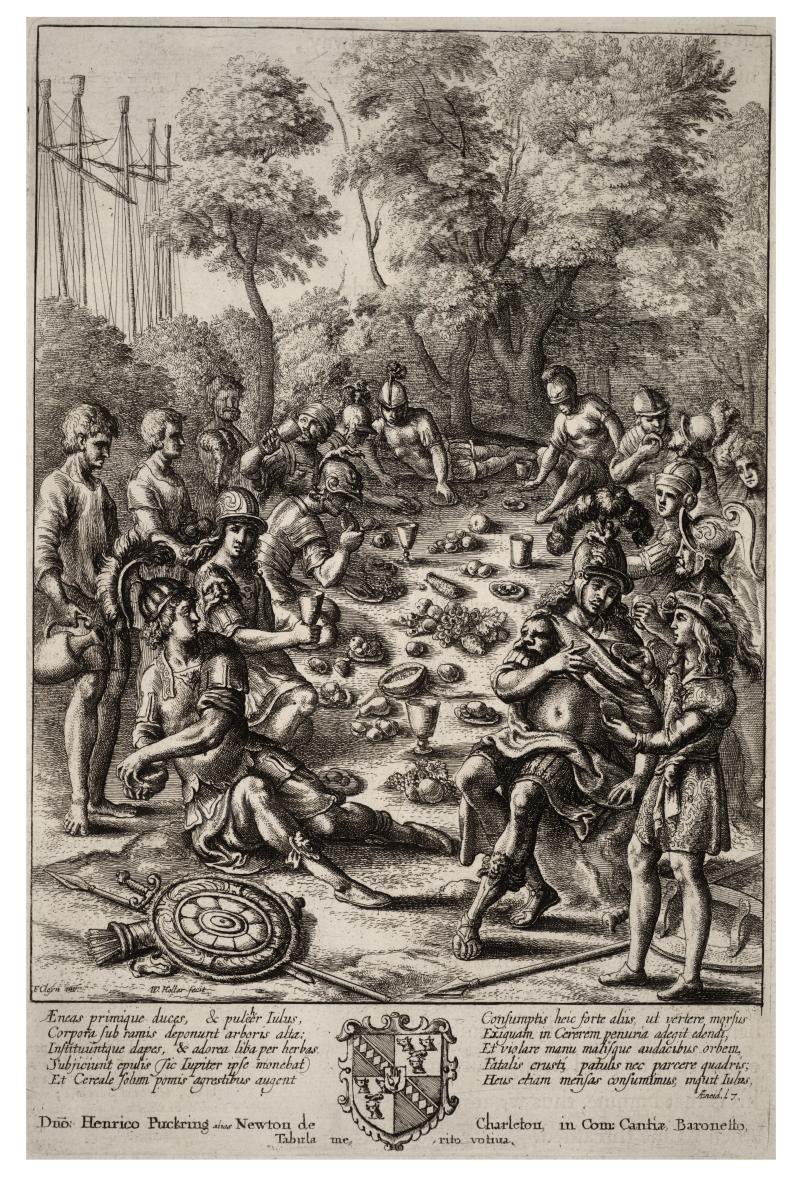
Wenceslaus Hollar's <em>The Trojans' First Meal in Latium</em> (1654)
Hollar illustrates the key moment in Virgil’s Aeneid (19 CE) when Aeneas realized that he had reached the land where he would build a new city where Trojans would prosper. The chosen moment is when Aeneas and his crew bivouac in a forest clearing in Latium and dine on skimpy provisions. But when Aeneas’ son Ascanius […] read more

John Milton's <em>Paradise Lost</em> (1667/74)
Milton never uses the word picnic or any synonym but knows the concept and uses it freely for satiating Adam and Eve in Paradise before the Fall in Paradise Lost. Because they had no means of cooking, Milton supposes that Adam and Eve were inadvertent Vegans picnicking at every meal with available vegetation and that […] read more

Oliver Cromwell’s Picnic in Hyde Park (1654)
Cromwell, the Lord Protector of England, “picnicked” in Hyde Park in 1654. According to Cromwell’s secretary of state Edmund Ludlow, “His highness, only accompanied with secretary Thurloe and some few of his gentlemen and servants, went to take the air in Hyde-park, where he caused some dishes of meat to be brought; where he made […] read more
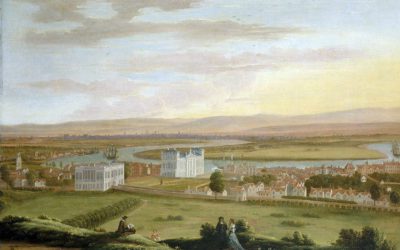
Samuel Pepys’ <em>Diary</em> (1664 & 1667)
Pepys’s “frolique” is a euphemism for a picnic, which did not exist as a word in English. It was among his favorite ways to spend an afternoon with friends idling. It was a favorite way for him to spend an afternoon with friends idling. We know this from his Diary, a frank glimpse of his […] read more
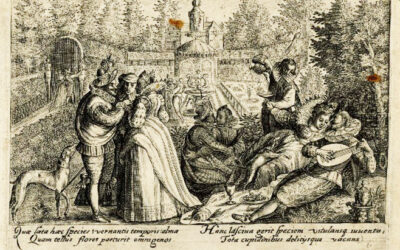
Crispijn de Passe’s Picnic in<em> New Mirror for Youth</em> (1617)
Early in the 16th century, Dutch emblem books were primers or handbooks for youthful aristocrats. Among the more socially and sexually suggestive of these books are Crispijn de Passe, the Elder’s The Garden of Love, aka Hortus Voluptatum, and New Mirror for Youth, aka Nieuwen ieucht spieghel, both of which include the same illustration, Young People […] read more
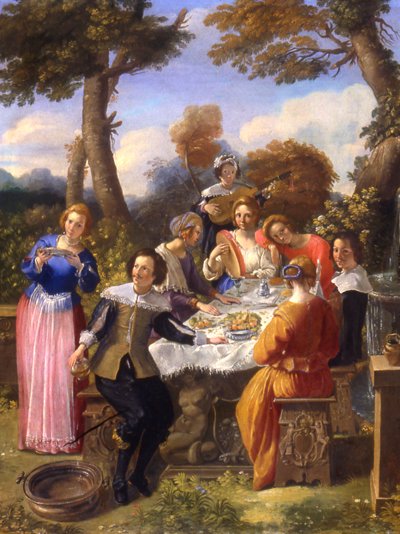
Giovanni Passeri's <em> A Party Feasting</em> (1645c.)
Passeri’s A Party Feasting in a Garden seems like a happy end to an alfresco luncheon. Young couples are deep in conversation, flirting, and courting, which suggests this is a garden of love. It is casual and innocent, though Passari is a moralist. Close examination of the shield at the bottom of the bench suggests […] read more
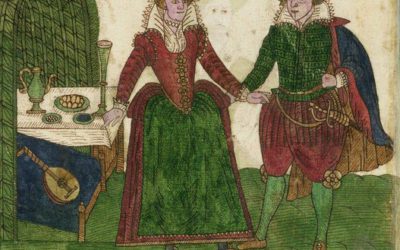
Thomas Trevelyon’s Lover's Picnics in <em>The Miscellany</em> (1608)
Trevelyon’s Miscellany is a meticulously illustrated compendium of 1608. It’s stocked with a calendar, scenes from the Bible, current events, court, political figures, costumes, fabric designs, games, dances, etc. It’s among the marvels of bookcraft by a Londoner of means with the imagination and leisure to make this a book. Two of Trevelyon’s illustrations contrasting […] read more
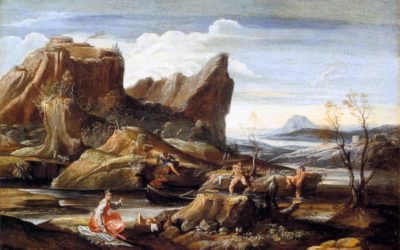
Agostino Carracci's <em>Landscape with Bathers</em> (1616 c.)
Though it is unmistakably a merienda at the beach, the title given for this painting in the Pitti Palace is Landscape with Bathers. Though the seashore is a tumultuous blend of barren, jutting rocks. the focus is a serene woman dressed in red sitting on a white picnic cloth beside a basket of food and […] read more
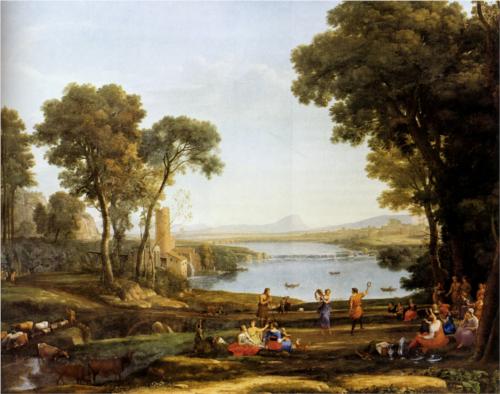
Claude's <em>Landscape with the Marriage of Isaac and Rebecca</em> (1648c.)
Claude should have named his painting scampagnata (holiday in the country), merenda sull’erba, or lolazione sull’erba (picnic on the grass). But Claude enhanced Landscape with the Marriage of Isaac and Rebecca with a biblical allusion to Genesis, 24, the details of which are wholly his own. If this is a wedding, it’s surprisingly informal and […] read more
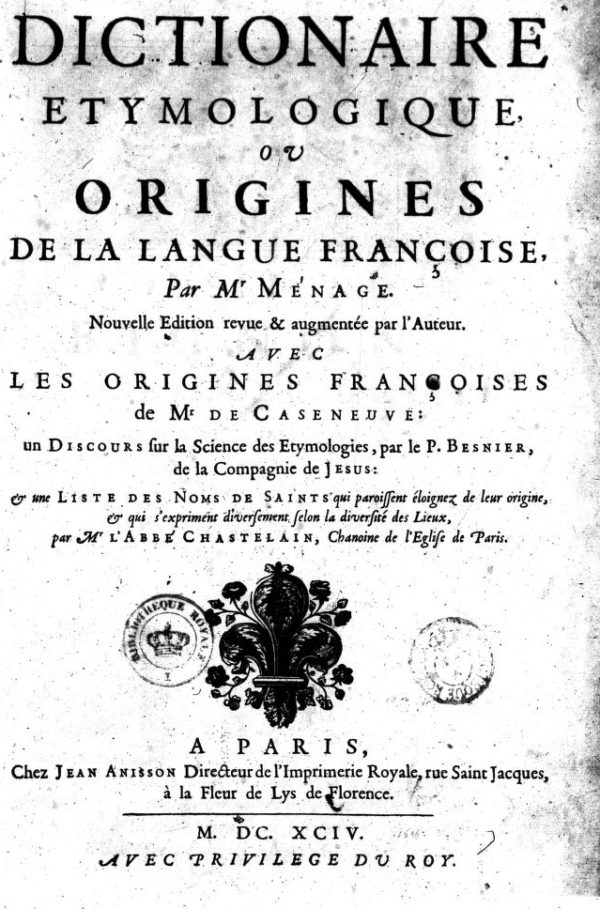
Gilles Ménage’s <em>Dictionnaire Du Etymologique</em> (1694)
Gilles Ménage was the first to define piquenique in his Dictionnaire de Étymologique de la Langue Françoise, published in Paris in 1694. Forty-four years earlier, when he published his Les Origines de la Langue Françoise, piquenique, then newly coined in 1649, was an unknown word. According to Ménage’s brief definition, piquenique was a Parisian dining […] read more
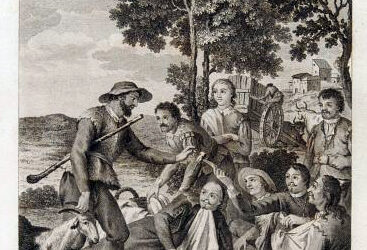
Miguel de Cervantes's <em>Don Quixote de la Mancha (1605)</em>
Cervantes’s merienda looks like a picnic on the grass. It occurs while, Don Quixote and Sancho engage in a spirited discussion of the uses of enchantment and the power of imagination with the Canon, the curate, and the barber. They sit on the grass waiting for cold rabbit, pasties, and wine ordered from a local […] read more
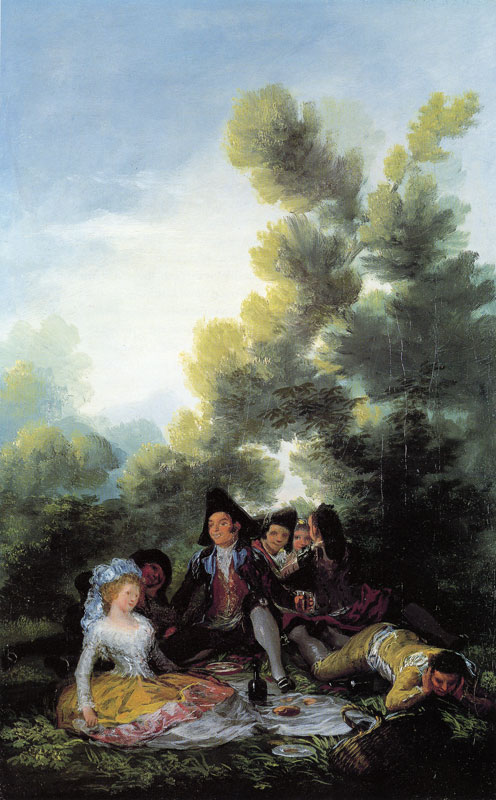
Francisco Quevedo's <em>El Buscon</em> (1626) and Francesco Goya's <em>La Merienda</em> (1785/90)
The etymological record of merienda is a blank between 1554 and 1626. After surfacing in Lazarillo de Tormes as a snack, it does not reappear until Quevedo’s El Buscón alfresco merienda. The change in meaning is unaccountable. In this instance, Don Pablos, el Buscon, the swindler, plans a sumptuous luncheon in the Casa del Campo, then […] read more