
Ruins
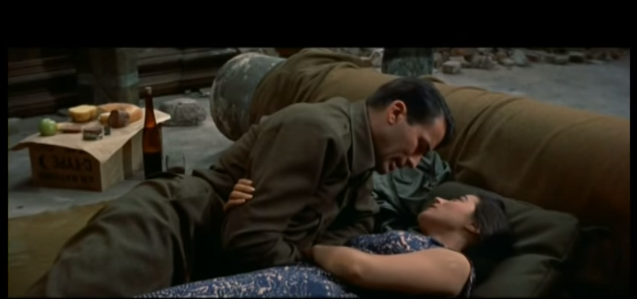
Nunnally Johnson's <em>The Man in the Gray Flannel Suit</em> (1956)
Wilson’s The Man in the Gray Flannel Suit and Johnson’s film strongly solidified the character of Tom Wrath as a symbol of mid-twentieth Century America, the rising generation of white, well-educated men striving for wealth and power in mid-century 19th century America. Ernest Hemingway disdained Wilson’s novel as a drivel but was silent about the […] read more
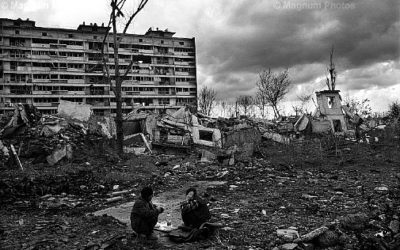
Thomas Dworzak’s <Ruins of Chechnya</em> (2002)
Dworzak’s picnic in Grozny, Chechnya, is disconcerting. Chechen men having a picnic in a bombed-out neighborhood near Minutka Square. See Thomas Dworzak. Picic in the Ruins of Chechnya (2002). Magnum Photos. read more
Sylvia Plath's <em>The Colossus and Other Poems</em>(1960)
Plath’s “The Colossus” is specifically a jab at her dead father, Otto Plath, less clear an allusion to her husband, Ted Hughes. She had a stormy and pathological relationship with her long-dead Daddy, “Thirty years now I have labored,” Plath writes, “To dredge the silt from your throat. / I am none the wiser.” And […] read more
Mary Elizabeth Braddon's <em>Mount Royal</em> (1882)
Tintagel Castle and its Arthurian associations have perennial romantic appeal—but Mary Elizabeth Braddon is the first to fictionalize a picnic on the crag, and it’s her addition to Britain’s mythology. With lunch from a local inn, Christabel Courtnay, Angus Hamleigh, and Jessie Bridgeman sit other n castle’s “windy height,” eating chicken and salad. Still, while […] read more
Sloan Wilson's <em> The Man in the Gray Flannel Suit</em> (1955)
Ernest Hemingway thought Sloan Wilson’s The Man in the Gray Flannel Suit was trash. However, Americans still readjusting to World War Two and its aftermath thought made it a best-seller. Within a year of publication, Nunnally Johnson directed a faithful film adaptation. Without a reason, Ernest Hemingway thought Sloan Wilson’s The Man in the Gray Flannel Suit […] read more
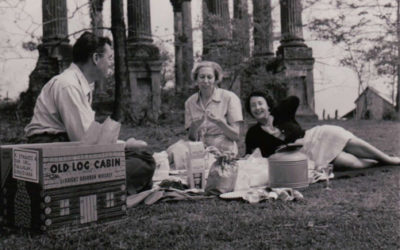
Eudora Welty's "Asphodel" (1942)
Momentary serenity and happiness are upended in Welty’s “Asphodel,” a humorous picnic story in which three old maids are frightened by the appearance of a naked man. Cora, Irene, and Phoebe plan a picnic at Asphodel, the former home of their recently deceased dear friend Miss Sabina. They are unaware that the name Asphodel alludes […] read more
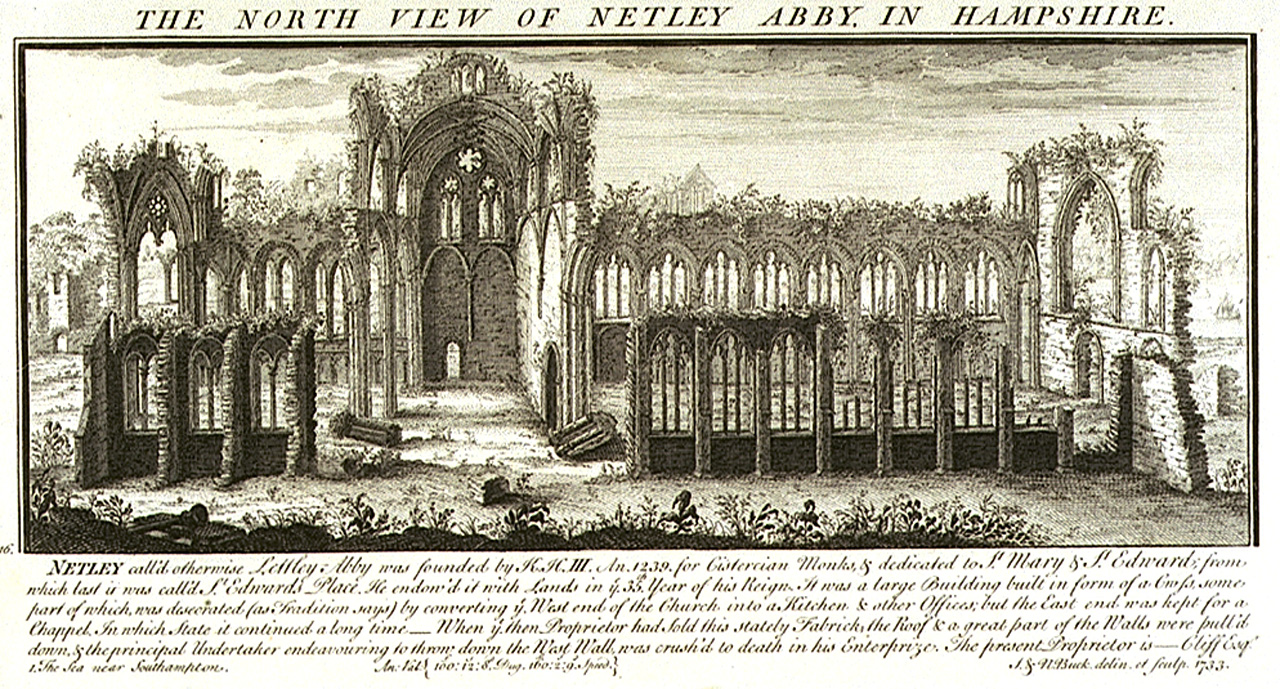
Alexander Pope's Sightseeing Visit to Netley Abbey (1734)
Writing to his dear friend (and probable mistress) Martha Blount, Pope related his adventure at Netley Abbey and his alfresco luncheon there. He does not call it a picnic because the word was not used in English parlance until 1806. (See Harris’s The happy courtship, Merry Marriage, and Pic-Nic Dinner of Cock Robin and Jenny […] read more