
Non-Fiction
J.V. Davidson-Houston's "Siberian Picnic" (1939)
In August 1939, Russia and Germany signed a non-aggression pact. The following October, Major Davidson-Houston was spying for the British Army, and “Siberian Picnic” is his public account of his 5,772-mile Trans-Siberian “Hard Class” train ride in late October 1939, which was long, dirty, and cold was no picnic. Curiously, Davidson-Houghton took careful notes of […] read more
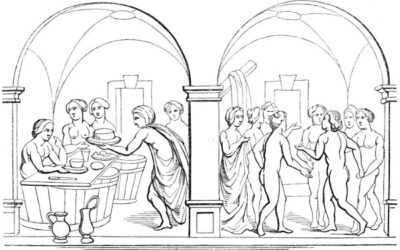
Thomas Wright’s <em>The History of Domestic Manners and Sentiments in England</em> (1862)
Thomas Wright found songs, now obscure, about women having meals in taverns and bathhouses that are suspiciously like picnics. He writes about this in The History of Domestic Manners and Sentiments in England, suggesting that sharing food and entertainment is common among the lower classes. In one song, women meeting in a tavern each contribute […] read more
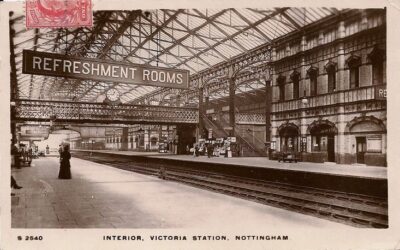
Charles Dickens. "The Boy at Mugby Junction" and the "Universal French Refreshment Sangwich" (1866)
Dickens vented his distaste for English travel food, especially sandwiches served in cold, comfortless train stations. The Boy at Mugby Station working in h Refreshment Room gleefully tells anyone who will listen (or not) how awful the refreshments (if they can be called refreshments are: “You don’t know what I mean? What a pity! But […] read more
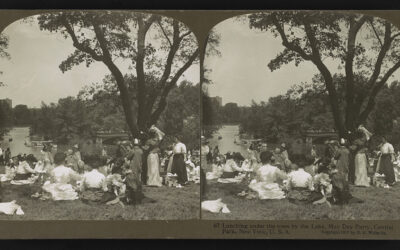
Frederick Law Olmsted's Sense of Picnicking in Public Parks
“Lives of women and children too poor to be sent to the country can now be saved in thousands of instances by making them go to the Park, During a hot day in July last, I counted at one in the park eighteen separate groups, consisting of mothers with their children, most of whom were […] read more
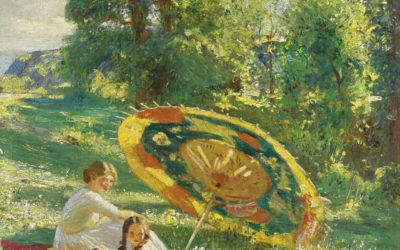
Georgina Battiscombe’s <em>English Picnics</em> (1949)
Georgina Battiscombe’s 1949 English Picnics is a study of English picnics in literature and art that has become a go-to standard because it was the first of its kind. Her writing is distinctive, authoritative voice and her examples and explanations usually first-rate. Though, alas, she does not reveal her sources. Battiscombe asserts the English picnicker […] read more
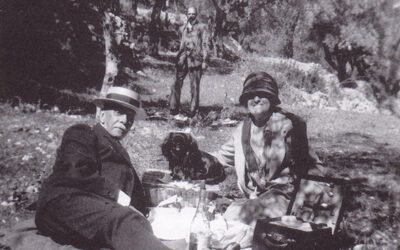
Percy Lubbock's Description of Edith Wharton Picnicking (1947)
Lubbock’s Portrait of Edith Wharton is definitive: “Edith settled, the strapped hampers (which she likes to think of as ‘corded bales’) set side by side, the rugs spread, the guests ‘star-scattered in their places: poetic allusion is never amiss at these symposia. Nobody at this point is to help her; she unpacks, distributes, and apportions […] read more
Arthur Conan Doyle’s “No picnic at Vaalkranz.” in <em>The Great Boer War</em> (1900)
Doyle was knighted for his service during the Boer War (1899-1902), in which he served as a medical doctor. Much of Doyle’s The Great Boer War was written in hospital tents where he treated the wounded and diseased. The memories are a nationalistic view of a war unpopular in Britain, making the case that war […] read more
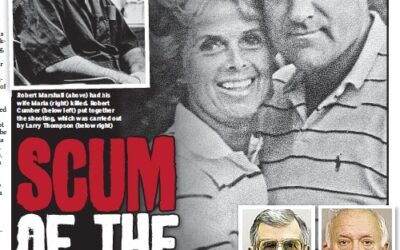
Joe McGuiness’s <em>Blind Faith</em> (1989)
McGinnis’s’ Blind Faith is dramatized reportage of a New Jersey murder case in which Rob Marshall was accused of hiring hitmen to free himself to marry his flamboyant mistress. According to McGuiness, when Marshall thought something was wrong with one of his tires, he pulled off the Garden State Parkway into a pitch-black, deserted picnic […] read more
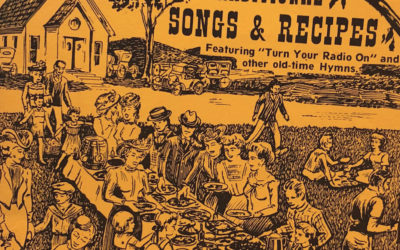
Albert E. Brumley’s <em>All-Day Singin' and Dinner on the Ground[s]</em> (1972)
Camp meetings are an American tradition, the first of which seems to have been organized by James McGready (c.1760–1817) based on the Scottish Presbyterian outdoor revival meetings. These meetings were introduced to England in 1807, especially by the Methodists. The camp meetings were marathons that lasted several days. A short version of the camp meeting […] read more

Booker T. Washington's <em>"All Day Meeting"</em> (1911)
Washington’s “all day meeting” is also known as “dinner on the grounds.” It agrees with versions of meetings by William A. Clary, Edna Lewis, Bebe Meaders and maya Angelou. I’ve cited Washington’s whole passage because it’s so full of detail and energy In Macon County, Ala., where I live, the coloured people have a kind […] read more
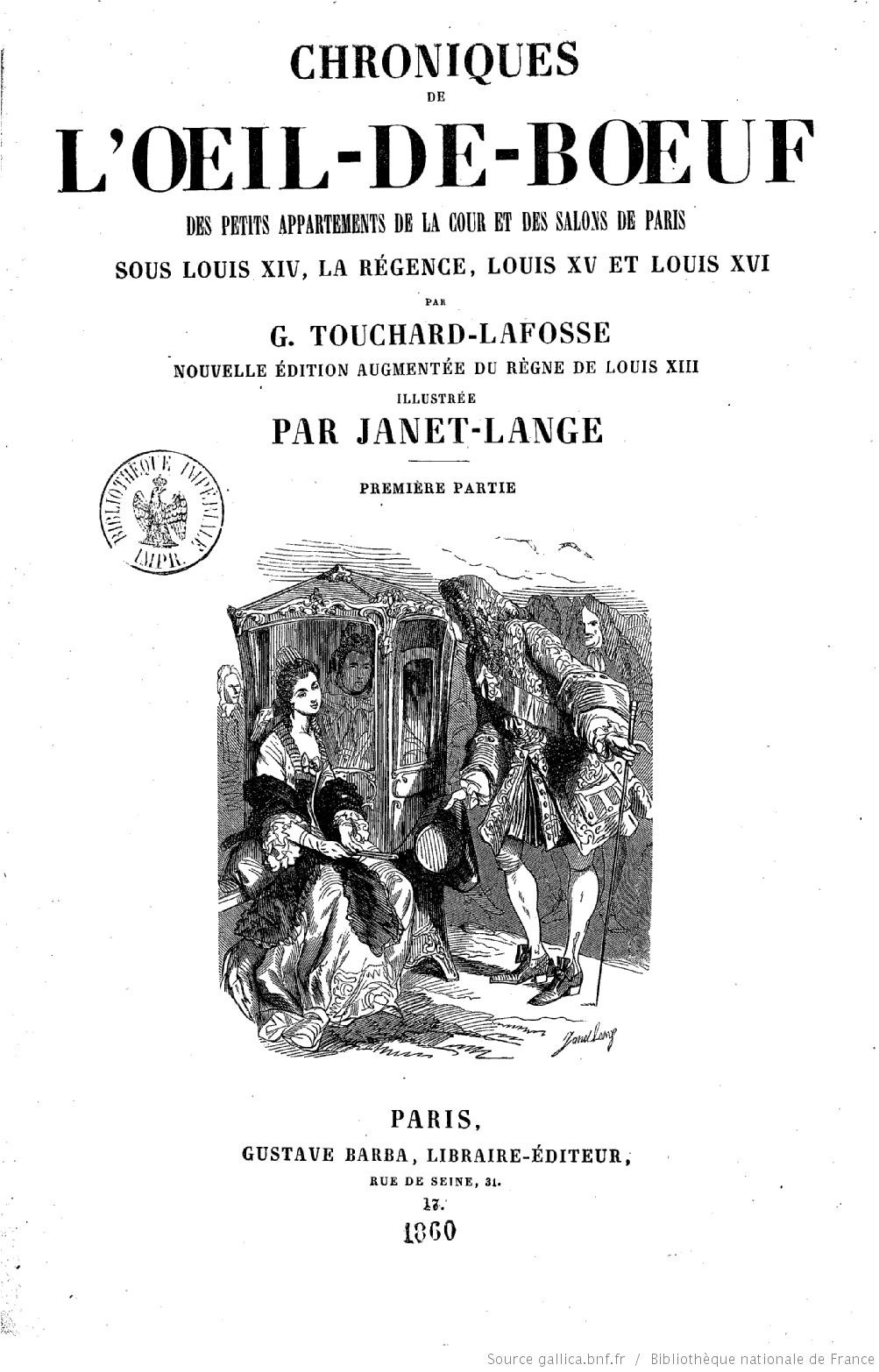
Touchard-Lafosse’s <em>Pique-Nique Manqué</em> (1776c)
Oeil-de-boeuf is Touchard-Lafosse’s pseudonym used to sign off on his gossip reports about Louis XIV’s court and Parisian society Oeil-de-boeuf is a circular window, often indoors, above a doorway. As a metaphor, it suggests gossip that is sexually tinged or embarrassing. Americans may celebrate 1776 as the year of their nation’s birth. Still, Georges Touchard-Lafosse […] read more
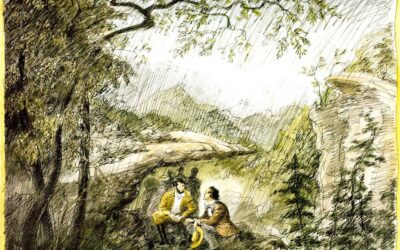
Nathaniel Hawthorne & Herman Melville Picnic on Monument Mountain (August 1850)
When Melville and Hathorne picnicked on Mount Mansfield in August 1852, Piper Heidsieck corks were popped. That’s what Cornelius Mathews wrote The Literary World during their climb to the summit. Until this meeting, the two authors were unacquainted though they lived seven miles apart; Hawthorne in Lenox and Melville in Pittsfield. In Pittsfield. Mathews wrote […] read more
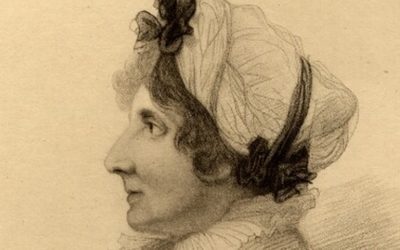
Letitia Barbauld’s <em>A Legacy for Young Ladies</em> (1826)
Barbauld’s etiquette book A Legacy for Young Ladies Consisting of Miscellaneous Pieces in Prose and Verse was an important social resource. Like Miss Manners or Emily Post, Barbauld is sure that what she has to say is correct. Barbauld’s explanation of “pic nic” then a new indoor dining style is positive. She writes that it’s a “very sociable […] read more
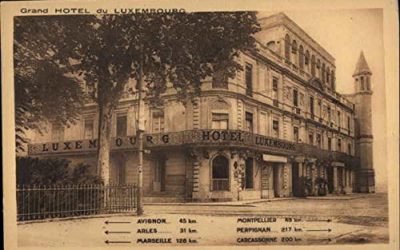
Gertrude Stein and Alice Toklas's Picnic Jaunts (1917-1918)
Memories are finicky; sometimes accurate, sometimes fuzzy, and sometimes fiction. Among some amusing memories of Stein and Toklas, there is some general mix-up regarding their picnic jaunts during 1917-1918 when they were living in Nimes and working for the American Fund for the French Wounded (A.F.F.W.). For iconoclasts, Stein and Toklas were old-fashioned when naming […] read more
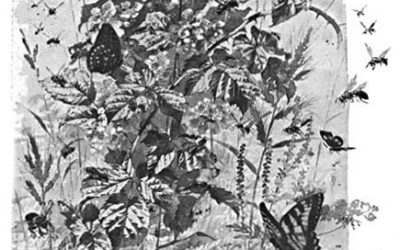
William Hamilton Gibson's "Honey Dew Picnic" (1897)
Gibson, nature writer and artist of the 1890s, describes the nature of things in “Honey Dew Picnic” from My Studio Neighbors (1897) is, a humorous essay about the feeding frenzy of insects in a forest. He says that while he never actually witnessed the honey-dew picnic, he has found ample evidence that it was so. […] read more
Isak Dinesen’s <em>Out of Africa</em> (1938)
Blixen’s Out of Africa is a memoir without picnics. But Sidney Pollack and his screenwriter Kurt Luedke have added two picnic episodes that reveal Blixen’s characteristic vanity and romantic nature. See Isak Dinesen [Karen Blixen]. Out of Africa (New York: Random House, 1938); Sidney Pollack. Out of Africa (1985). Screenplay by Kurt Luedke adapted from […] read more
Elizabeth Bowen’s <em>Out of a Book</em> (1946)
Bowen’s often quoted “it is futile to attempt a picnic in Eden” is a metaphor, usually taken out of context: “No, it is not only our fate but our business to lose innocence, and once we have lost that, it is futile to attempt a picnic in Eden. One kind of power to read, or […] read more
Judith Martin’s <em>Miss Manners’ Guide</em> (2005)
Martin’s advice (always with humor) for picnics is the chapter for “Outdoor Eating.” Here it is: It is true that some rules for eating outdoors are different from those that apply indoors. For example, it is permissible to execute extraneous wildlife found crawling across the picnic table, while any such creature making an appearance at […] read more
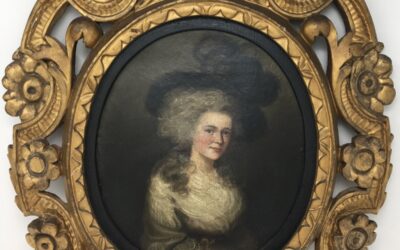
Louisa Stuart’s Memories of the Pic Nic Suppers (1803?)
Stuart’s firsthand memories of the time that parallel Henry Angelo’s playful attitude towards the Pic Nic society. She attempts a comic attitude, that really masks her antagonism. “Its partisans, “she wrote in her journal, “might have been pursued to the stake or the scaffold as rebels or tyrants, or heretics, or aristocrats, or democrats, or […] read more
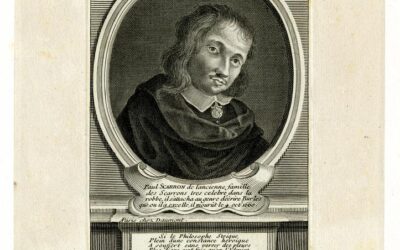
Paul Scarron’s <em>Repas de pique-nique</em> (1650c.)
It is rumored that this is how the satirist Paul Scarron was known for his petits soupers, intimate dinners without ceremony, to which guests were invited to dine in the picnic-style, un repas dans le manière pique-nique. Oliver Goldsmith’s “Retaliation” (1774) defines Scarron’s petits soupers foe English readers unfamiliar with the custom of un repas […] read more
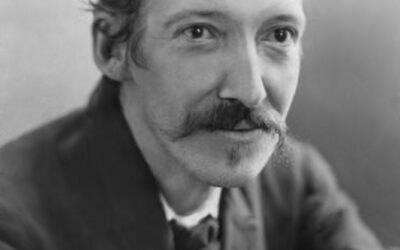
Robert Louis Stevenson’s Picnics in <em>Essays of Travel </em> (1876)
Robert Louis Stevenson’s picnics squibs are embedded in Essays of Travel: Essays in the Art of Writing. “An Autumn Effect” is memorable for the phrase “the spirit of picnic.” “The fields were busy with people ploughing and sowing, ” Stevenson writes, “every here and there a jug of ale stood in the angle of the […] read more
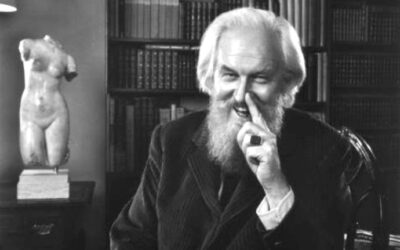
Robertson Davies’s “What Every Girl Should Know” (1978)
Davies’s picnic wit is a metaphor in is this advice about sexual mores to an assembly at his daughter’s school: “A girl who thinks love affairs are less trouble than a marriage is probably also the kind of girl who thinks that picnics are simpler than dinner parties. A first-class picnic, which has to be […] read more
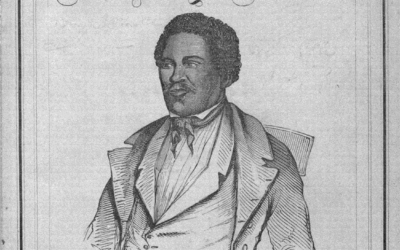
Henry David Thoreau’s Oration at the Harmony Grove Picnic (1854)
At the Harmony Grove picnic dedicated to abolishing slavery, Thoreau read portions of what became his essay “Slavery in Massachusetts” completed later that year. The occasion was a Fourth of July celebration, and among Thoreau’s concerns was the fugitive Henry Burns who was extradited after escaping slavery and living in Boston. Addressing the crowd, […] read more

Jacques du Fouilloux's <em>La Venerie</em?, aka <em>Hunting</em> (1561)
Fouilloux’s La Venerie, aka Hunting, differs from Gaston’s 1389 description (See Le livre de chasse). Accordingly, the assemblée is replaced with un repas chasse, a hunters’ lunch attended only by men. However, when George Gascoigne adapted La Venerie for his The Noble Arte of Venerie or Hunting (1575), he included Elizabeth I, an avid hunter, […] read more
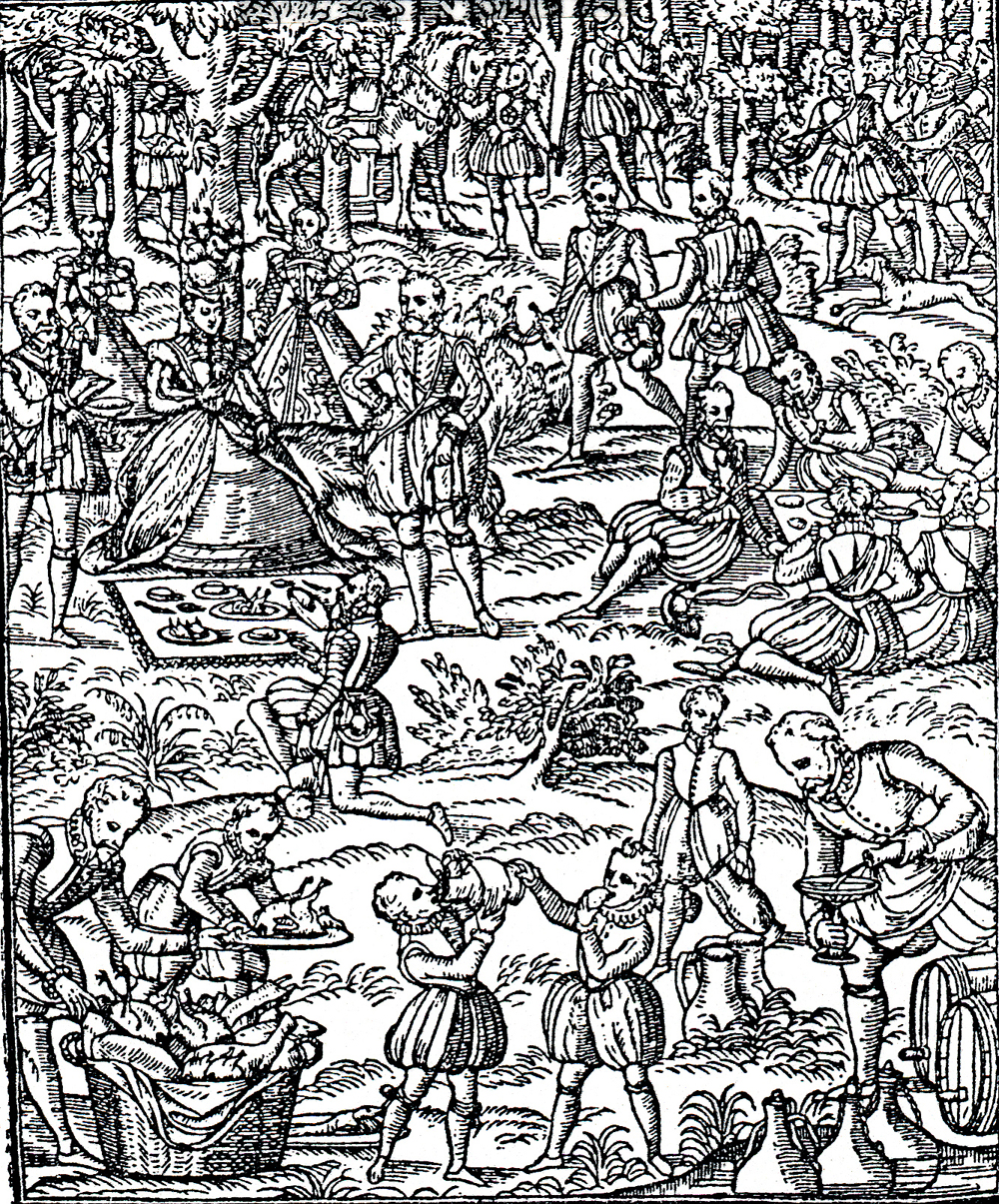
George Gascoigne’s <em>The Noble Arte of Venerie or Hunting</em> (1575)
Gascoigne adapted Gaston Phébus’s The Book of the Hunt (1380) and Jacques du Fouilloux’s in La Venerie (1560) into English, retitling the work The Noble Arte of Venerie or Hunting (1575). (The book is dedicated to Lord Clinton, Elizabeth’s master of Hart Hounds.) Borrowing from Fouilloux’s illustration in La Venerie, Gascoigne depicted the hunters’ assemblée […] read more
Osbert Sitwell’s "Picnics and Pavilions" (1944)
In “Picnics and Pavilions,” Osbert Sitwell, man of definite opinions, writes that “picnic” as an ugly word. But thinks eating outdoors is delightful, and then suggests picnics are opportunities to act as the noble savage in a controlled natural setting, a continuation of the perpetual picnic of Adam and Eve. This is a contentious point […] read more
Philostratus’s <em>Imagines</em> (250-300 CE)
Hunting feasts have a long history. Among the Romans, one such by Philostratus Elder uses the rhetorical device of Ekphrasis, a verbal description of a visual representation, to illustrate a painting he observed in Naples. Ironically, none survive, if they existed at all, and except by his descriptions in Imagines, they would be lost. Though […] read more
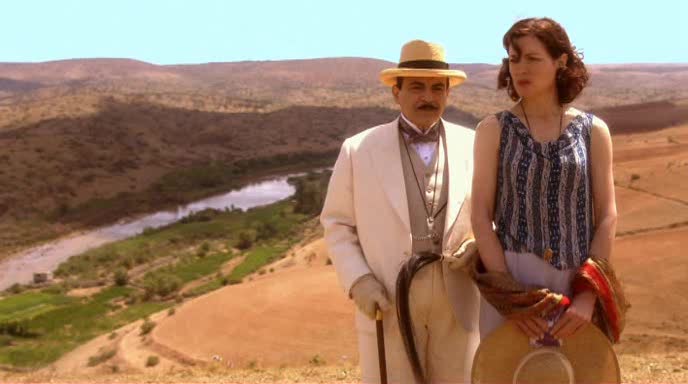
Agatha Christie's <em>Come, Tell Me How You Live</em> (1946)
Christie’s picnic at Kawkab in Syria was indelible because the dessert was in bloom. During an archeological dig in 1934 (?), Christie and Max Mallowan* packed a lorry named Queen Mary for sightseeing at Kawkab, a hill about 300 meters high. They expected an easy climb, but it was slippery and steep, and at the […] read more
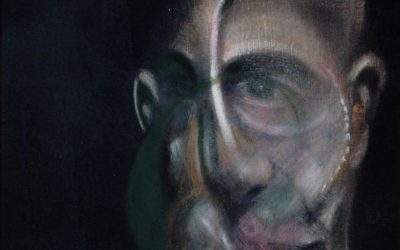
Michel Leiris’s <em>Manhood: A Journey, or L’Age d’homme</em> (1946)
Leiris’s autobiographical exposé of trying to make sense of his emerging Manhood includes an episode of when he got his first erection at a family picnic in a Paris park. He was six or seven years old, and at the time, he recalls, he “established no direct relation between the modification in my penis and […] read more
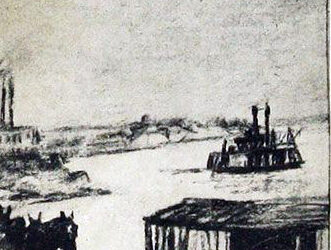
Theodore Dreiser's <em> A Hoosier Holiday</em> (1915)
“The Piety And Eggs Of Paterson” is Dreiser’s version of a picnic gone wrong. It’s strategically placed at the start of A Hoosier Holiday because Dreiser meant it as a metaphor for what is to come and how his motor trip from New York to Terre Haute will end. “We are all such pathetic victims […] read more

Jean-Anthelme Brillat-Savarin's <em>The Psychology of Taste</em> (1826)
As a passionate hunter, Brillat-Savarin enjoyed traditional midday luncheon trysts or haltes de chasse. he describes the gathering in “Meditation XV” in Physiologie du Gout, or The Psychology of Taste. According to French usage, the halte de chasse is not un repas de pique-nique because it is an alfresco gathering. English translators observe this: Fayette […] read more
Henry James's <em>English Hours</em> (1905)
Chief among James’s observations of Derby Day at Epsom is his astonishment at the picnicking on the carriage tops. It was a sight of madness. “The crowd was very animated; that is the most succinct description I can give of it. The horses of course had been removed from the vehicles so that the pedestrians […] read more
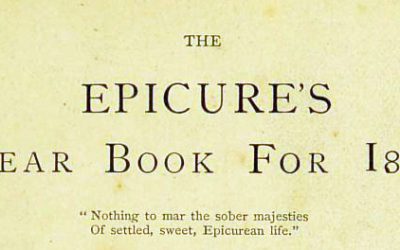
William B. Jerrold's "Picnic Reform" for <em>The Epicure's Year Book for 1869</em> (1869)
According to Jerrold’s satire “Picnic Reform,” British “Picnic- frequenters” must radically alter their “picnic gastronomy.” Change is accomplished by eliminating the ordinary. “Could anything be more barbarous?” he asks “than the common picnic fare of England?” Could anything be worse eating alfresco than “substantial viands, ham, and beef,’ those greasy plummets called meat patties, a […] read more
Elizabeth David's "Eating Out in Provencal France" (1951)
David realized the elements of her ideal and described it in “Eating out in Provincial France.” “There has to be water,” she declares, “and from that point of view, France is wonderful picnic country, so rich in magnificent rivers, waterfalls, reservoirs, that it is rare not to be able to find some delicious spot where […] read more

Gustave Doré's and Blanchard Jerrold's <em>London: A Pilgrimage</em) (1872)
For London: A Pilgrimage, Doré and Jerrold visited Epsom in 1869 to experience the tumult of Derby-Day— the race, the carnival atmosphere, and picnic luncheons on carriage tops. Unlike William Powell Frith’s The Derby Day, Dore and Jerrold were keen to exploit the totality of the day: the crowd’s excitement and turmoil and the race’s […] read more
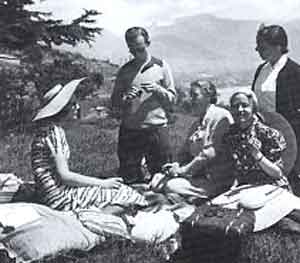
M.F.K. Fisher's "The Pleasures of Picnics" (1957)
Fisher sets rules for picnics in stone. In “The Pleasures of Picnics,” she declares people who do not like picnics must be “dismissed immediately.” Fisher’s “true” picnic (and maybe yours?) must be outdoors and away from home. “It can consist of a piece of bread and an apple, eaten anywhere in the outdoors that will […] read more
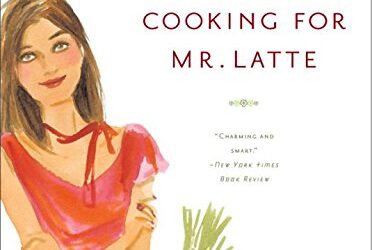
Amanda Hesser's <em>Cooking for Mr. Latte</em> (2004)
Hesser’s “Fine Dining in the Sky,” from Cooking for Mr. Latte, A Food is a fussy gourmet’s admission that she packs a bulky in-flight bag as if it was a flying coach a picnic cooler. She wants us to believe that she for a flight to Spain, she packed bottled water, roasted salted almonds, goat cheese, […] read more
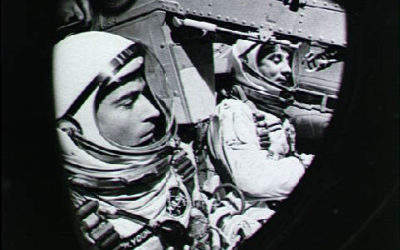
NASA's Gemini 3 Spacecraft (1965)
NASA’s space food makes a picnic. Aboard Gemini 3, “The Molly Brown,” Virgil “Gus” Grissom, and John Young rocketed and enjoyed a picnic of corned beef sandwiches purchased at a local deli in Cocoa Beach. As Grissom began to eat it, the sandwich bread fell apart and began floating through the cabin. NASA controllers were […] read more
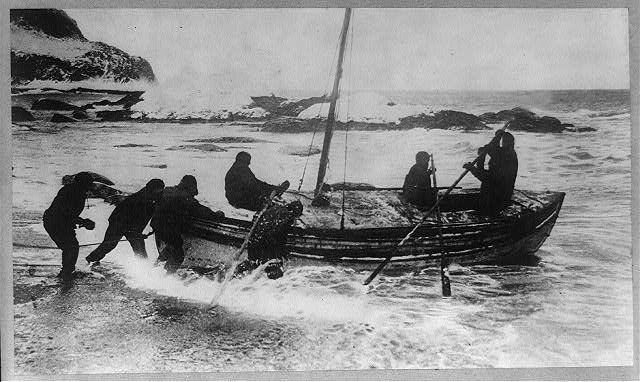
Ernest Shackleton's <em>South!: The Story of Shackleton’s Last Expedition 1914-1917</em> (1919)
When Shackleton’s Endurance was crushed by October ice in Antarctica, he and five companions set out for South Georgia Island, 800 miles away, in some of the most stormy and cold ocean on Earth. Their boat was a whaler, James Caird, barely big enough for the men and supplies. But it held, and enduring the […] read more
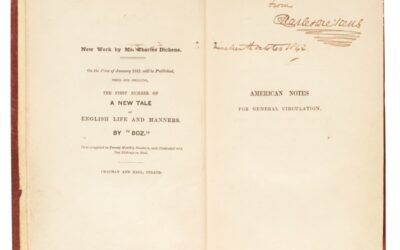
Charles Dickens’s<em>American Notes for General Circulation</em> (1842)
“A Jaunt to the Looking-Glass Prairie and Back” left Dickens with mixed feelings. The weather was hot and the journey tedious, but the picnic on Looking-Glass Prairie” was something Dickens wanted, mostly because he had been told that any sightseer should not miss its grandeur. The expedition set out from St. Louis, Missouri, where they […] read more
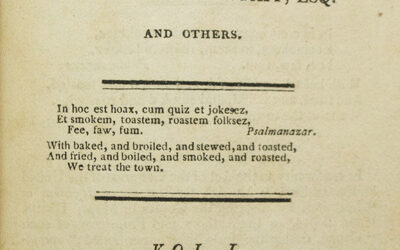
Washington Irving and James Kirke Paulding's <em>Salmagundi</em> (1807)
Being Anglophile and aware of London happenings, Irving probably picked up the aftermath of the Pic Nic Society scandal during his tour of Europe 1804-1806. The word stuck, but it’s used only once as an adjective to mean something silly. Under the heading “Fashions by Anthony Evergreen,” (1807) for the journal Salmagundi; or, The Whim-whams […] read more