
Beach
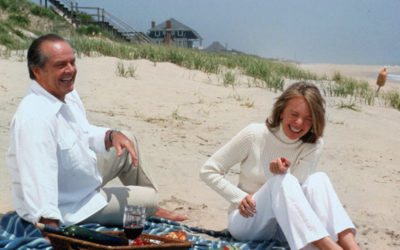
Nany Meyers' <em>Something’s Gotta Give </em>(2003)
Suds. Hamptons, New York, and Paris. Money. Two middle-aged beauties find romance and love. Perfect beach house. Perfect weather, Perfect wine. Aw shucks. “Erica and Harry sit on a blanket on a cloudy day, having a picnic lunch. Harry is telling Erica a story, and she screams with laughter.” Then it rains. The run to […] read more
Jacques Lartigue’s <em>Chou Valton at la Garoupe, Cap d’Antibes, July 1932</em>
Sunbathing on the beach with champagne. Lartigue’s shadow is seen in the lower left corner. See Jacques Henri Lartigue. Chou Valton at the plage de la Garoupe, Cap d’Antibes, July 1932. Silver Gelatin Print. read more
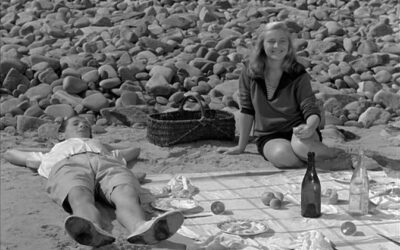
Claude Autant-Lara’s <em>The Ripening Seed </em> (1954)
Autant-Lara’s Le Blé en herbe is good at separating the dual aspects of love in Colette’s novel about adolescents and friends for years and learning about love while vacationing in Normandy. There are two parts to the narrative. In the first part, teenagers Philippe and Vinca fall in love and endure the pleasure and rough […] read more
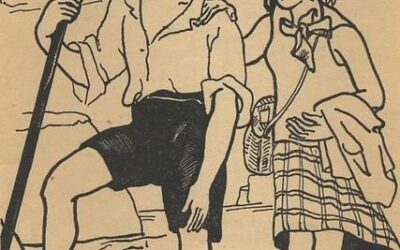
Colette’s <em>The Ripening Seed</em> (1923)
It’s a momentous picnic for a young couple to understand they are courting in Colette’s The Ripening Seed. With the summer half gone, Phil Adebert (sixteen and a half) and Vinca Ferret (fifteen and a half) pack their picnic baskets and walk down the rocky cliffs like “explorers, to eat out of doors in one […] read more
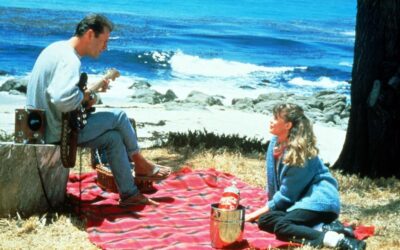
Blake Edwards’s <em>Blind Date</em> (1987)
Edwards’s comedy is sometimes madcap, but when matters settle, there is a happy ending with a picnic on the beach. What else is new? See Blake Edwards’s Blind Date (1987). The screenplay is by Dale Launer. Featured Image: Bruce Willis as Walter Davis; Kim Bassinger as Nadia Davis celebrated their honeymoon on the beach. read more
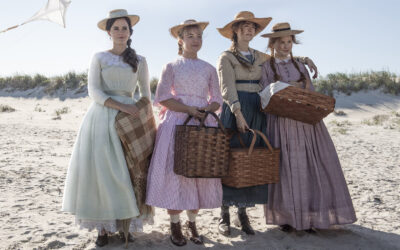
Great Gerwig’s <em>Little Woman</em> (2019)
There are two picnics in Gerwig’s Little Women: a wedding picnic and a beach picnic. The first is Meg March and Mr. Brook’s reception. As in Alcott’s novel, it’s “a plentiful lunch of cake and fruit, dressed in flowers.” But Gerwig’s foods include wine, lemonade, and coffee. The happiness is marred only by Aunt March’s […] read more
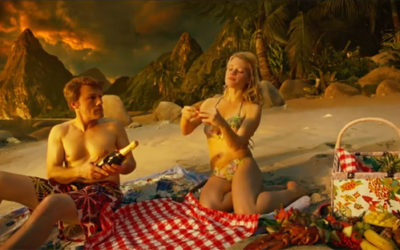
Terry Gilliam's <em>Zero Theorem</em> (2013)
Gilliam’s Zero Theorem is a sexy, pleasantly ordinary picnic. Except it is virtual, taking place in Qohen’s computer program and placed there by his horrid boss to make him work, work, work. The picnic is a romp on the tropical beach with a virtual sex worker Bainsley. Before the picnic, supremely unhappy Qohen Leth, a […] read more
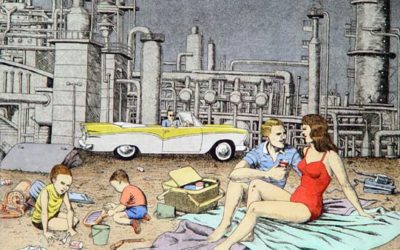
William B. Montgomery’s <em>Industrial Picnic</em> (1986)
You have to look at this again to fully grasp the satire. Nice. Compare this with Banksy’s picnic. See William B. Montgomery. Industrial Picnic. 1986. Etching, hand-colored read more
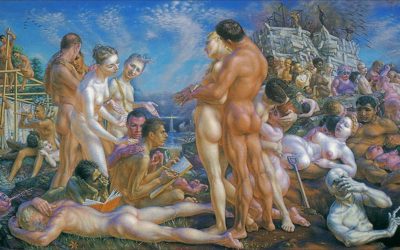
Paul Cadmus’s <em> What I Believe </em> (1947-1948)
Cadmus’s What I Believe (1947-1948) is a beach picnic without food, inspired by E.M. Forester’s essay of the same-named. Forster is the dark man reading a book with the red cover in the lower left foreground. The figures are based on some of Cadmus’ friends and former lovers. See Paul Cadmus. What I Believe (1947-1948), […] read more
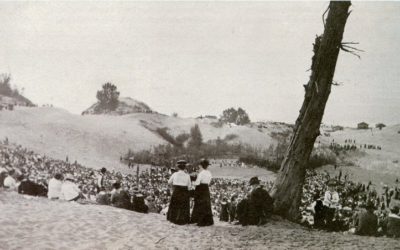
Edna Ferber’s <em>Fanny Herself</em> (1917)
Fanny Brandeis is a new woman, whose career comes first, and when Clarence Heyl, an unacknowledged suitor, asks her to picnic, she says that she’s so busy working that she has forgotten how. But the next morning, Fanny is sitting in a train heading out from Chicago to the Indiana Dunes on Lake Michigan, a […] read more

Edward Albee's <em>Seascape</em> (1975)
Albee’s Seascape is set on a beach, the evolutionary boundary from which sea creatures emerged to walk on land. The action begins innocently. Charlie and Nancy Man are just finishing a picnic when they encounter two primordial green lizards, Leslie and Sarah, who have crawled up the beach. The confrontation is antagonistic and often cruel. […] read more

Nan Goldin’s <em>CZ and Max on the Beach, Truro, MA </em> (1976)
Goldin’s is a spoof at Mickey Mouse’s expense. “CZ and Max on the Beach, Truro, MA” is a staged picnic of CZ and Max on a picnic cloth next to Mickey Mouse’s picture on the cover of The New York Times Magazine. Goldin seems to be suggesting that such outings are “mickey mouse”—an expression that […] read more
Mabel Dwight’s <em>Coney Island Beach</em> (1928)
Dwight’s beach scene is no picnic. It’s a crowded Coney Island scene with a humous twist. Compare Dwight’s beach scene with John Sloan’s South Beach Bathers (1908) and Reginald Marsh’s Beach Picnic (11939). Featured Image: Mable Dwight’s Coney Island Beach 1932 hand-colored litho Smithsonian http://americanart.si.edu/collections/search/artwork/?id=7663 read more
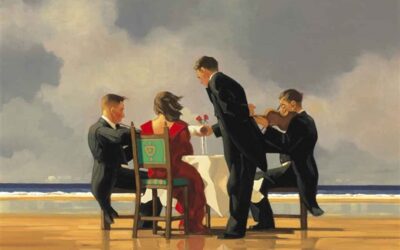
Jack Vettriano’s <em>Elegy for the Dead Admiral</em> (1994)
Vettriano’s Elegy for the Dead Admiral is a beach picnic on the sand at the surf’s edge. A woman in red sits with her back to the viewer facing the sea. She is serenaded by two violinists and served by a waiter. The situation alludes to the death of the admiral and this woman’s remembrance. […] read more
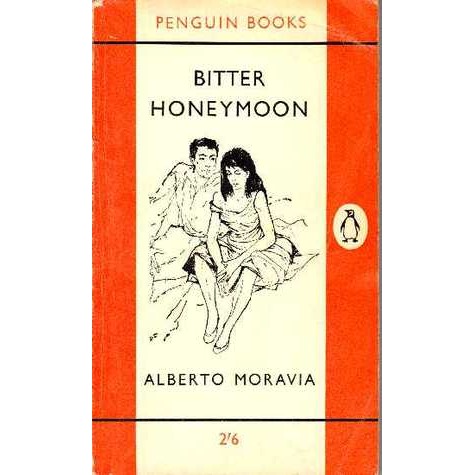
Alberto Moravia’s “Back to the Sea” (1945)
Moravia’s story’s “Back to the Sea” [Ritorno al mare] is about a picnic is without a shred of joy. It’s partly about gender relations and a metaphor for post-war Italy in the guise of a nightmare merénda, In the summer of 1945, Lorenzo, an unregenerate Fascist, takes his estranged wife, unnamed, to a picnic at […] read more
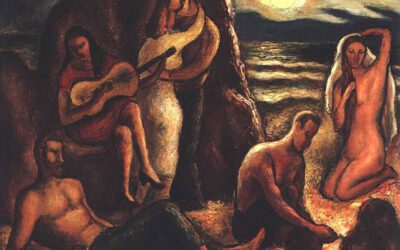
Judith Deim's <em>The Beach Picnic </em>(1936)
Deim’s The Beach Picnic is a portrait of the Cannery Row crowd in Monterey, California. Among the picnickers are John Steinbeck, the kneeling figure lighting the fire, Ed Rickets (bearded) and reclining with a beer in hand, Deim playing the guitar, who looks down at Rickets. Featured Image: Judith Deim [Barbara Stevenson] The Beach Picnic […] read more
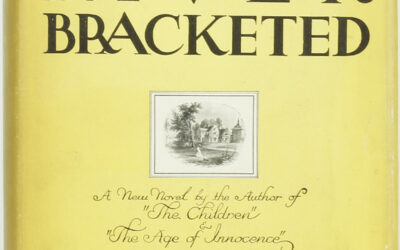
Edith Wharton's <em>Hudson River Bracketed</em> Beach Picnic (1929)
Wharton’s Hudson River Bracketed has two picnics, and I’ll treat each as a separate posting. Each picnic features the protagonist Vance Weston with different women, Halo (Héloïse) Spear on Thundertop Mountain at sunrise over the Hudson River, and Laura Lou Tracy’s honeymoon beach picnic. Both picnics have unappetizing food, a surprise because Wharton was food-centric […] read more
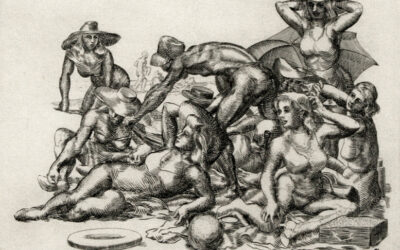
Reginald Marsh's <em>Beach Picnic</em> (1939)
This is a favorite among Marsh’s Coney Island images. In this instance, a collection of Venuses. Compare it with John Sloan’s South Beach Bathers and Mabel Dwight’s Coney Island Beach. Featured Image: Beach Picnic (1939). Engraving. read more
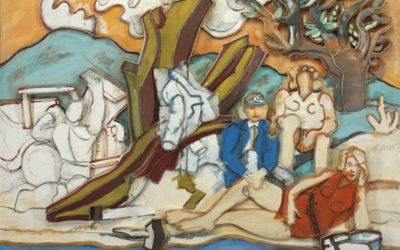
Larry Rivers's Picnics (1985-1990)
Rivers expressed his appreciation of good picnic fun in Picnic (1985) and The Pleasant Picnic (1990). Both are inspired by Leger’s series La Partie de Campagne [The Country Outing, or Picnic] (1952/53). The Pleasant Picnic changes the scene. Now the picnickers are on the grass, and the water is in the background. Rivers also changed […] read more
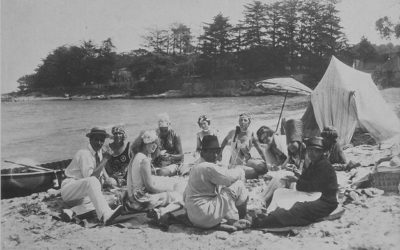
Sara & Gerald Murphy's <em>Villa America</em> in Antibes (1920s)
Villa America, Sara, and Gerald Murphy’s home in Antibes looked down on La Garoupe, where they spread oriental carpets on the sand and drank wine and cold Veuve Cliquot. They were prodigious drinkers, but what they ate was a mystery. During the 1920s, their home was a destination for artists, writers, musicians, Parisian socialites, glitterati, […] read more

John Banville's<em>The Sea</em> (2005)
Banville’s The Sea is about a man’s untrustworthy memories—less about his dying wife and more about his sexual awakening when he was about eleven years old. Looking back, Max Morden realizes that his observations of the Grace family’s beach picnics “changed his life forever.” After fifty years, he returned to the beach resort of Ballyless, […] read more
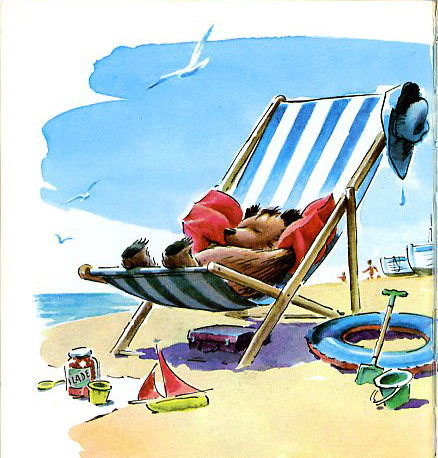
Michael Bond's <em>Paddington at the Sea-Side</em> (1975)
Paddington at the Seaside begins: “Today,” said Mr. Brown at breakfast one bright, summer morning, “feels like the kind of day for taking a young bear to the seaside. Hands up to all those who agree.” So, the Browns pack up the motorcar and drive off. He wears his signature hat (usually red, but green) […] read more
William Montgomery's <em>Industrial Picnic</em> (1986)
Industrial Picnic is William Montgomery’s satirical vision of how we are desensitized by pollution and learn to do with what we have. Wonderful satire. Featured Image: William B. Montgomery. Industrial Picnic. Hand-colored etching. read more
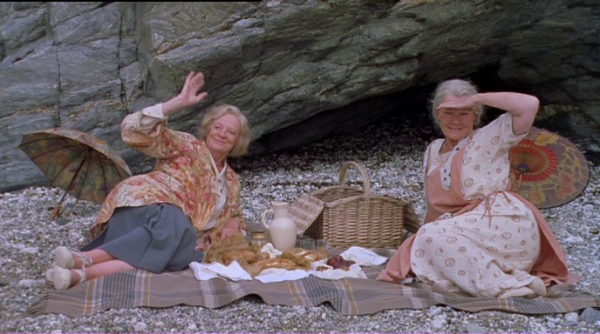
Charles Dance's <em>Ladies in Lavender</em> (2004)
Locke’s story “Ladies in Lavender” does not have a picnic. Dance thought better and wrote a beach picnic on the coast of Cornwall into his screenplay. The story is simple. Ursula and Janet, spinster sisters, well on in years, live in a cottage by the sea near the small village near St. Madoc. One morning […] read more
Ernest Hemingway's <em>The Garden of Eden</em> (1986)
Juan Gris’s Woman with a Basket is the dust jacket for the 1st edition of The Garden of Eden. Gris was among Hemingway’s favorite painters, and Patrick Hemingway thought this work expressed his father’s narrative’s “somber hedonism.” The woman’s basket is suggestive of a picnic of which there are two—the first unpleasant and the second […] read more
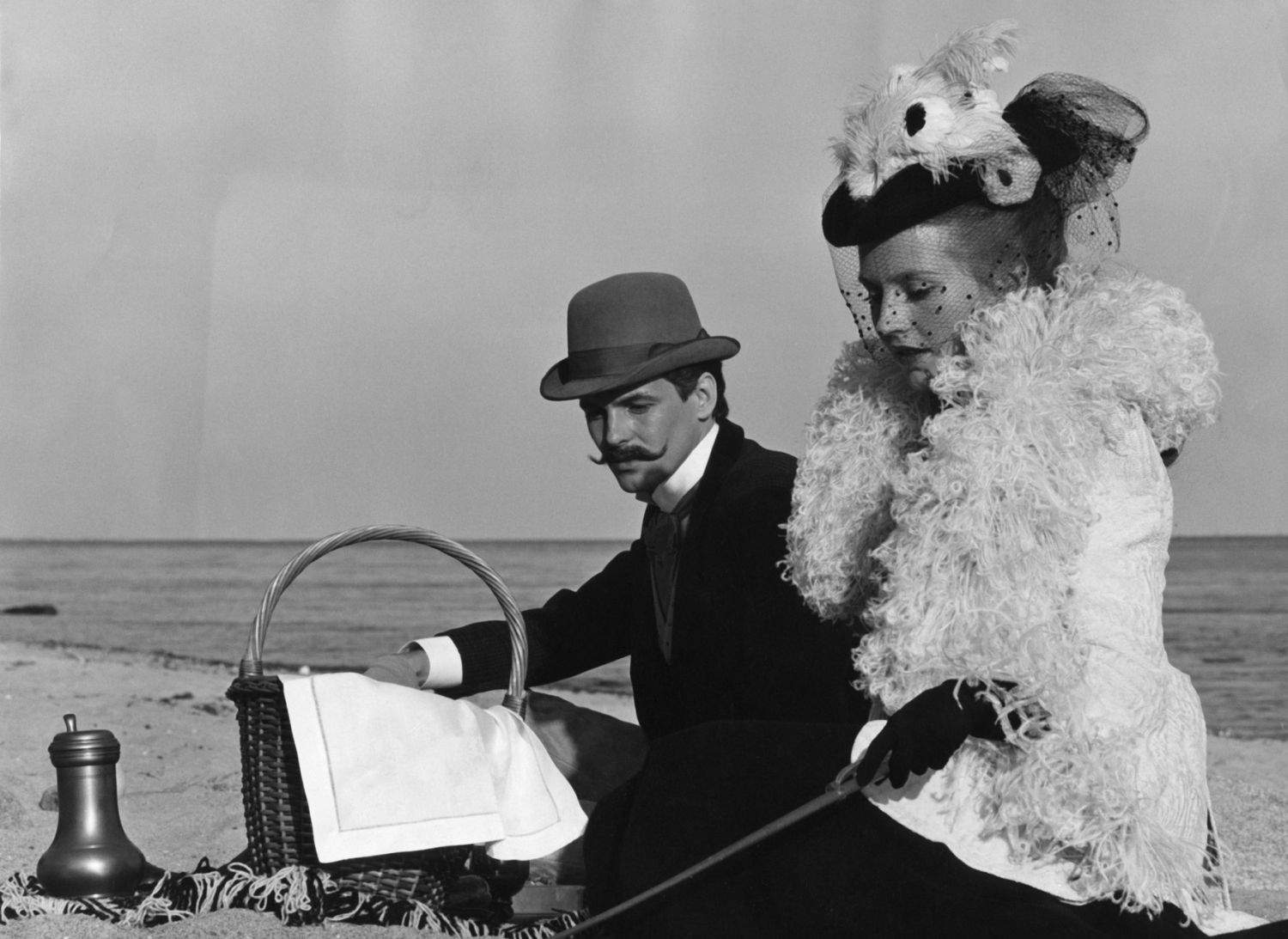
Theodor Fontane's <em>Effi Briest</em> (1896)
Fontane’s take on adultery in Effi Briest is a long, long sad story hinging on a beach-picnic-love affair. At first, it’s a recreational outing for Effi Briest and a friend, Major von Crampas. But soon, the recreation becomes a cover for lust. Though Briest and Crampas are discrete, long after the affair has ended, Briest […] read more
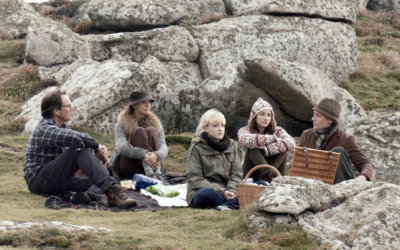
Joanna Hogg's <em>Archipelago</em> (2014)
Joanna Hogg says that Archipelago is a metaphor for a family just out of touch with one another; “The title relates to the family as a group of islands, linked together beneath the surface. What often links a family together goes unspoken and unacknowledged. Families are a way of protecting individuals from what they need […] read more
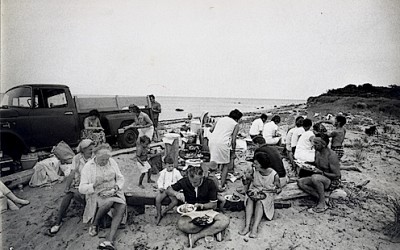
Pierre Franey's Chefs’ Picnic on Gardiners Island (1965)
Franey, executive chef of Le Pavilion, New York’s only four-star restaurant, and Craig Claiborne, the New York Times food critic, planned an August picnic on Gardiners Island. * It was staged in August 1965 and ironically reported in a Life magazine issue featuring the Watts Riots in Los Angeles. The story headline, with photographs by […] read more
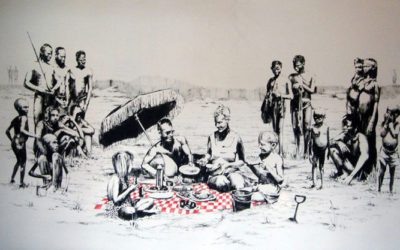
Banksy's <em>Picnic</em> (2005c.)
Banksy’s satirical Picnic contrasts a group of indigenous African hunter-gatherers bewildered by the Picnic of a White middle-class urban family picnicking on the beach. The contrast between civilizations and technologies suggests irreconcilable differences between civilizations. Oblivious of the hunter-gathers, the family is at ease and enjoying the beach. To the hunter-gathers, the family might as well be extraterrestrials. Banksy’s take […] read more
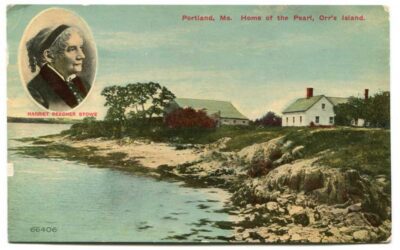
Harriet Beecher Stowe's <em>The Pearl of Orr's Island </em> (1862)
Stowe’s The Pearl of Orr’s Island, published ten years after Uncle Tom’s Cabin (1852), is a story of the people who speak in the vernacular of Maine, on the road to the Kennebec, below the town of Bath. Its basis is Shakespeare’s The Tempest, and the characters relate accordingly: Prospero is Captain Pennel, Miranda is Mara […] read more
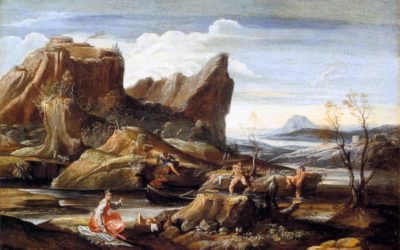
Agostino Carracci's <em>Landscape with Bathers</em> (1616 c.)
Though it is unmistakably a merienda at the beach, the title given for this painting in the Pitti Palace is Landscape with Bathers. Though the seashore is a tumultuous blend of barren, jutting rocks. the focus is a serene woman dressed in red sitting on a white picnic cloth beside a basket of food and […] read more
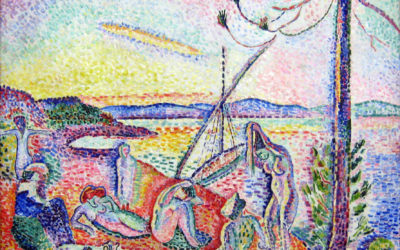
Henri Matisse's <em>Luxe, Calme et Volupté<em> (1904/05)
Luxe, Calme et Volupté, or Calm, Luxury, and Sensual Pleasure, was Matisse’s shimmering beach picnic at Saint-Tropez, was a belated response to Édouard Manet’s Luncheon on the Grass (1864). Painted in Saint-Tropez, Matisse’s atmosphere vibrates with glowing reds, golds, and blues of a late afternoon that contrasts with the calm repose of the figures. Customarily […] read more
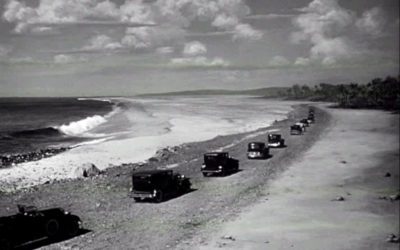
Orson Welles's <em>Citizen Kane</em> (1940)
Only 2:07 seconds of screen time, but it’s an unpleasant crackling picnic that ends with a slap in the face. Despite the southern Florida heat, Charles Foster Kane and Susan Alexander are lounging by a crackling fireplace in Xanadu, their palatial estate: he in front of the fire; she at the other end of the […] read more
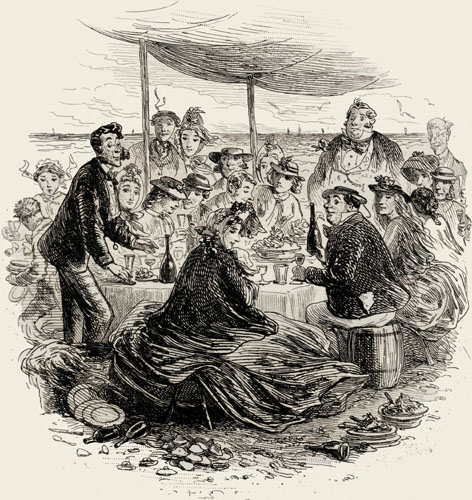
Anthony Trollope's <em>Can You Forgive Her?</em> (1864)
Trollope’s beach picnic in Can You Forgive Her (1864) is highlighted with a stern warning: “Yarmouth is not a happy place for a picnic. A picnic should be held among green things. Green turf is absolutely essential. There should be, if possible, rocks, old timber, moss and bramble. There should certainly be hills and dales –on […] read more
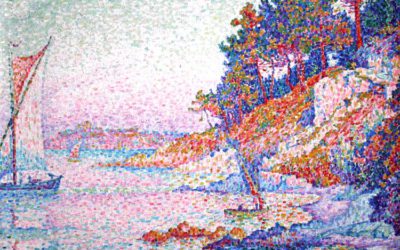
Ford Madox Ford's “Banquet at Calanques” (1932)
Ford Madox Ford’s “Banquet at Calanques” makes his life in 1932 seem picnicky. Particularly, Ford remembered a picnic on a brilliant day that he “Homeric feast” enthusiastically. But by the time it was published in 1937, Ford was at various times ailing and depressed, quarreling with publishers, and financially strapped. Ford’s description of the scenery […] read more
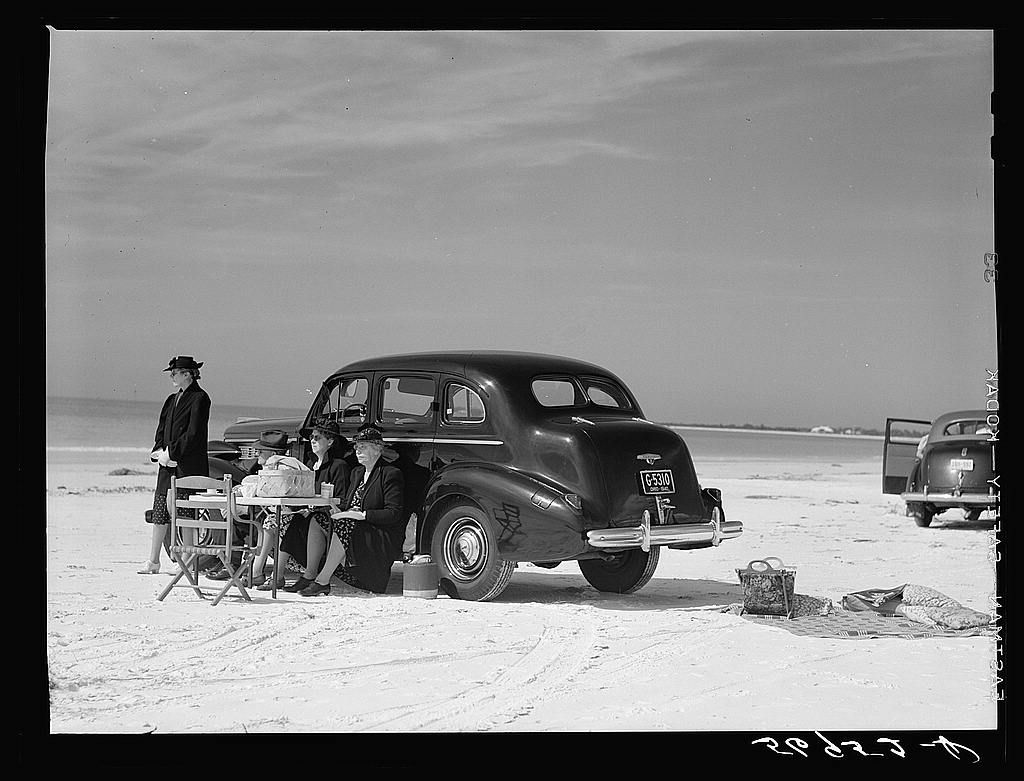
Marion Post Wolcott's <em>Members of Sarasota Trailer Park, Sarasota, Florida, Picnicking at the Beach, January 1941</em> (1941)
On a fantastic day in 1941, Wolcott photographed picnickers on the Sarasota beach. She was working for the Farm Services Administration, documenting contemporary American life. Among her subjects was picnicking, which she found in serval guises on the beach and churches. The day on the Sarasota beach features a 1938 Pontiac against which three women […] read more
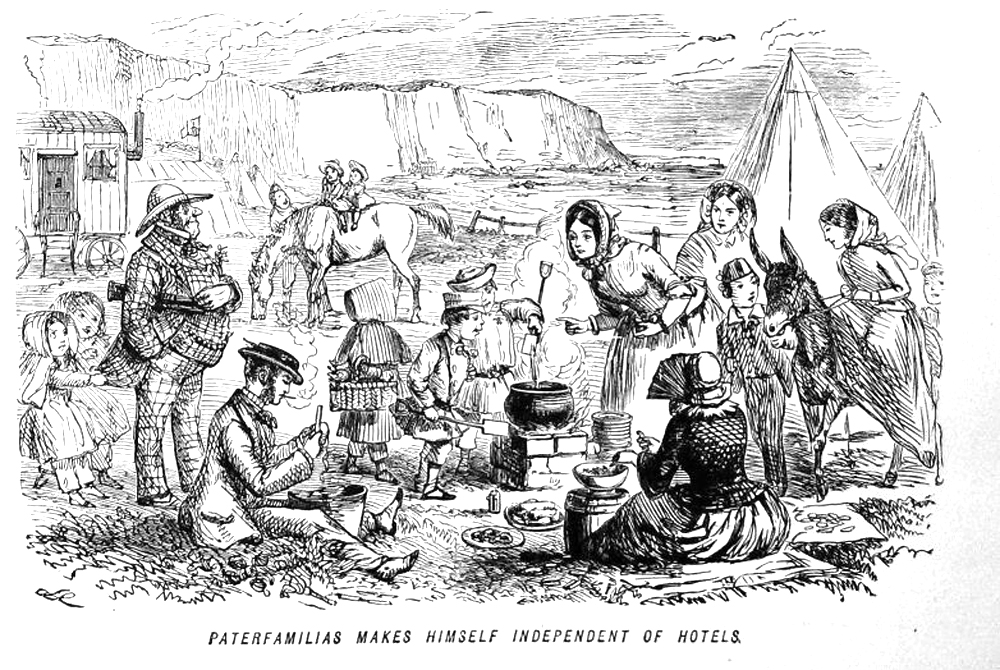
John Leech's <em>Paterfamilias Makes Himself Independent of Hotels</em> (1854)
Leech’s joke here is the smugness of the father of the family (paterfamilias), who would rather inconvenience his family by camping on the beach instead of staying at a hotel. This large family putting up with the man is an implicit joke because no one protests or scowls. The man peeling potatoes (left foreground) probably […] read more