
Fields & Forests
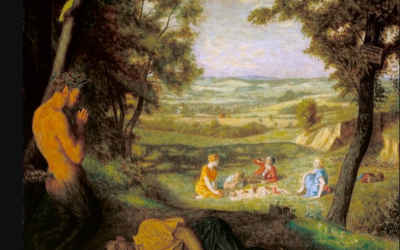
George Warner Allen. <em>Picnic at Wittenham</em> (1947-1948)
Picnic at Wittenham is George Warner Allen’s pleasant allusion to the myth of Pan with an edge that suggests Allen’s homosexuality. In the center, a group is having a picnic in an open, sunlit grassy lawn. The bright colors of the picnickers lead the eye to them first, and only after does the viewer’s eye […] read more
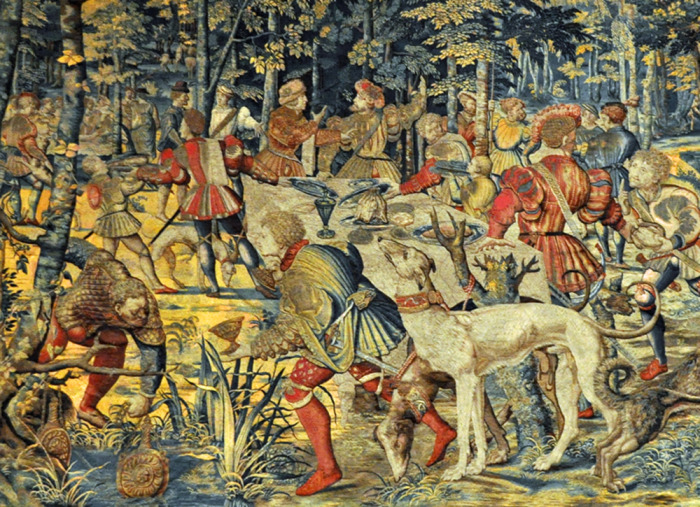
Bernard Van Orley’s <em>Les chasses de Maximilien</em> (1531-1533)
Van Orley’s The Month of June is part of a series of tapestries called The Hunts of Maximilian [Les Chasses de Maximilien. The June episode depicts an elaborate Orley halt on the hunt [halte de chasse]at which Archduke Maximillian (later Emperor of Austria) is waiting to begin a feast. This a formal gathering fully catered […] read more
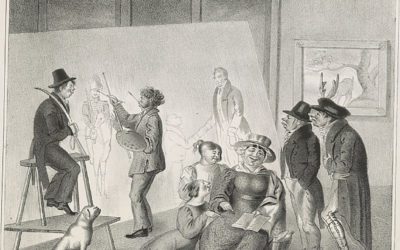
Frances Trollope's <em>Domestic Manners of the Americans</em> (1832)
Sandwiches in the United States are mentioned first by Frances Trollope in Domestic Manners of the Americans. Their contents are unknown, and they were brought along for a hellish “pic-nic” party in the woods in the environs of Cincinnati circa 1829. Though the heat was “furnace-like,” Trollope and companions (unnamed) had packed “books, albums, pencils, […] read more
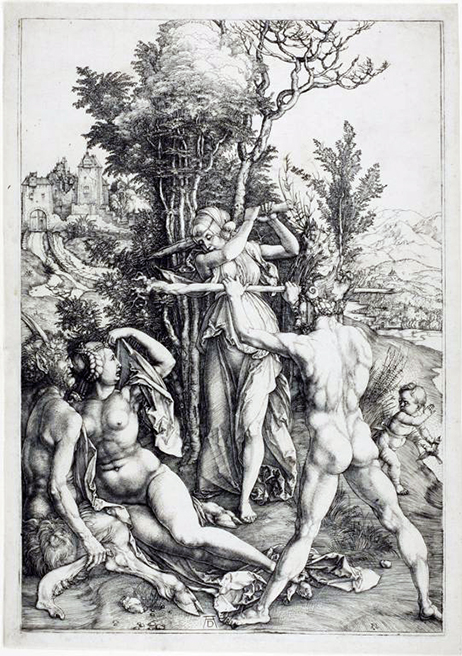
Albrecht Dürer's <em>Hercules at the Crossroads</em> (1498c)
Xenophon’s Memorabilia of Socrates (371BCE) tells that when Hercules was approaching manhood, he was given a choice of a life of pleasure or a life of Virtue. While sitting at a crossroads and considering his future, he is approached by two immortal women, Virtue, in a white robe, and Vice, in a transparent robe revealing […] read more
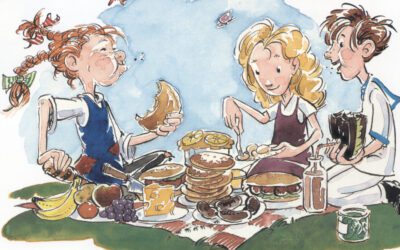
Astrid Lindgren's <em>Pippi’s Extraordinary Ordinary Day</em> (1945)
Astrid Lindgren’s zany picnic is a gastronomical feast. The chief picnicker is Pippi Longstocking, a brash, energetic, good-natured Swedish girl of nine who lives independently packs her own picnic. After zipping through some household chores, Pippi takes her friends Annika and Tommy for lunch. Sitting on a blanket, “they saw all the good things Pippi had spread […] read more
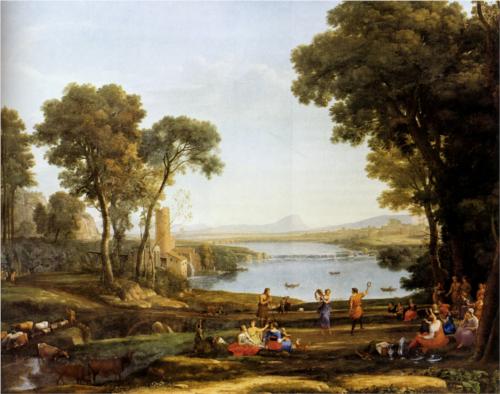
Claude's <em>Landscape with the Marriage of Isaac and Rebecca</em> (1648c.)
Claude should have named his painting scampagnata (holiday in the country), merenda sull’erba, or lolazione sull’erba (picnic on the grass). But Claude enhanced Landscape with the Marriage of Isaac and Rebecca with a biblical allusion to Genesis, 24, the details of which are wholly his own. If this is a wedding, it’s surprisingly informal and […] read more
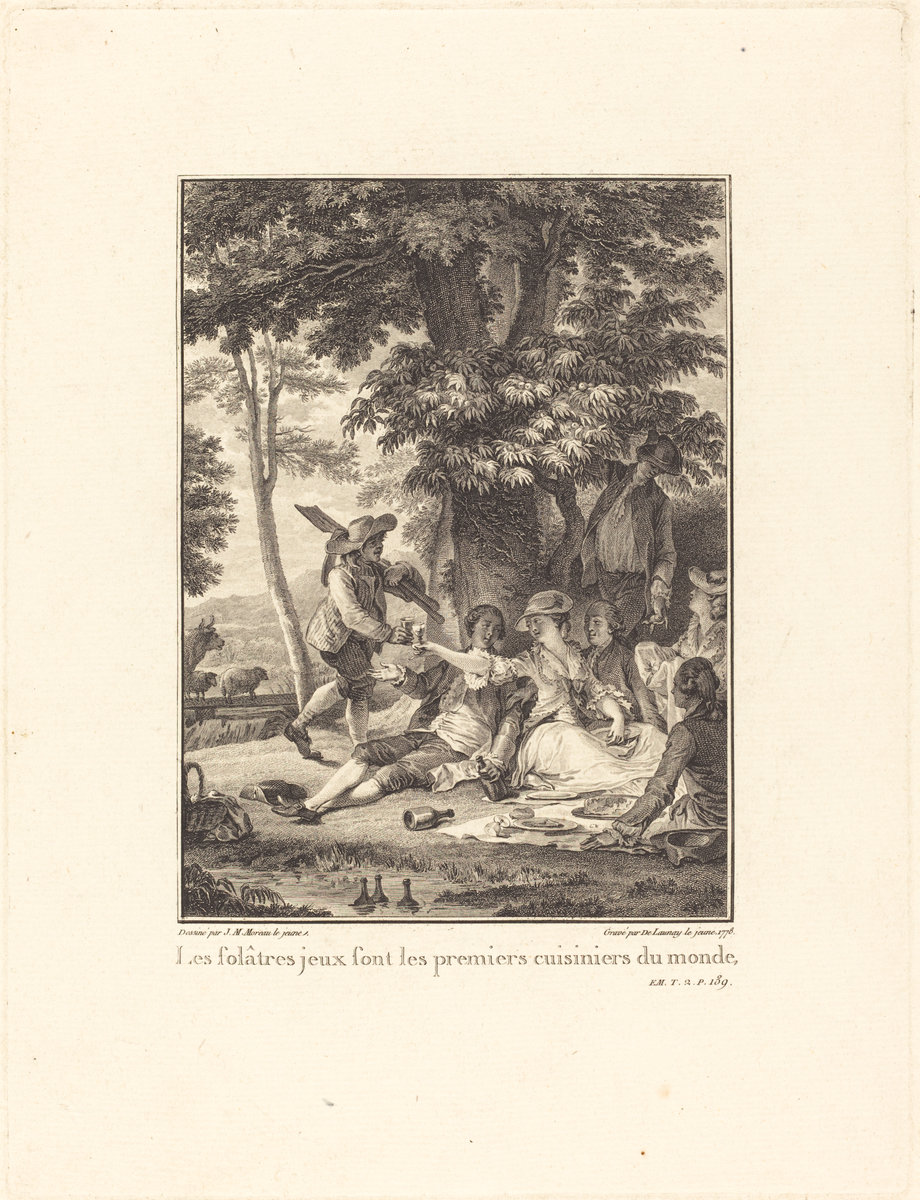
Jean-Jacques Rousseau’s <em>Emile</em> (1762)
Rousseau was not thinking of a pique-nique when he wrote, “The turf will be our chairs and table, the banks of the stream our sideboard, and our dessert is hanging on the trees.” He knew that pique-nique was an indoor meal for which friends shared the cost. Sharing the bill at a tavern or restaurant […] read more
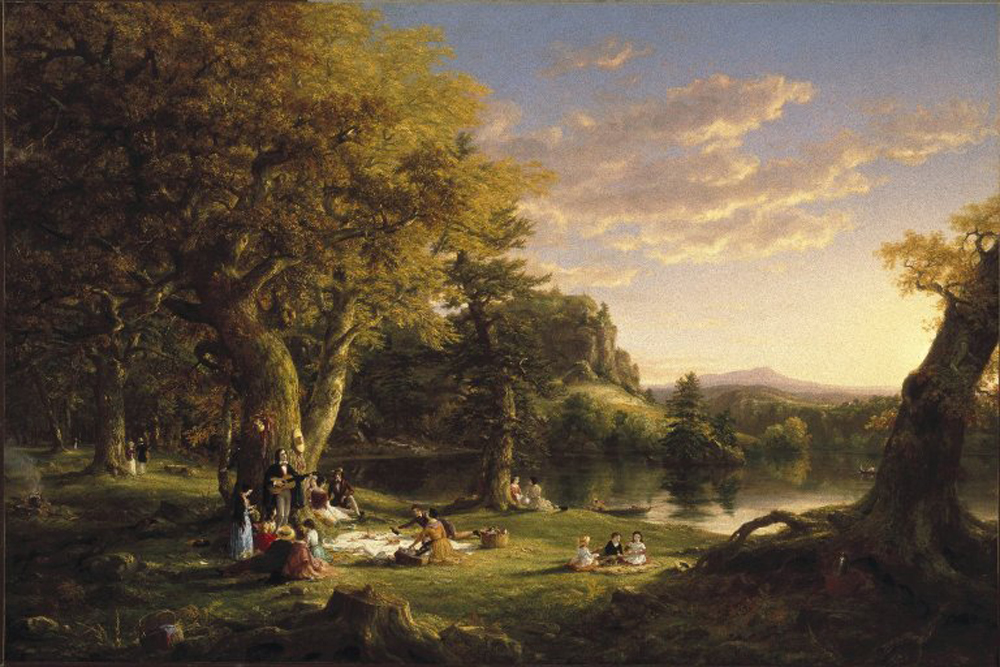
Thomas Cole’s <em>A Pic-Nic Party</em> (1846)
Cole’s Pic-Nic Party is a standout for its joie de vivre. It’s not just another of Cole’s numerous “sylvan” scenes,” which his hyperbolic biographer Louis Noble described as being “all American, wide, bright polished water, manifold woods over all the sweet glad light and quiet air and everywhere the sense of beauty with the wilderness.” […] read more