
Garden
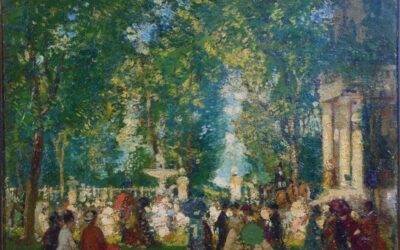
Clifford Beal’s <em>The Garden Party </em> (1920)
Beal was an important American artist in the first half of the 20th century. He’s now almost forgotten. See Gifford Beal. The Garden Party (1920), oil on canvas. The Phillips Collection, Washington, D.C. read more
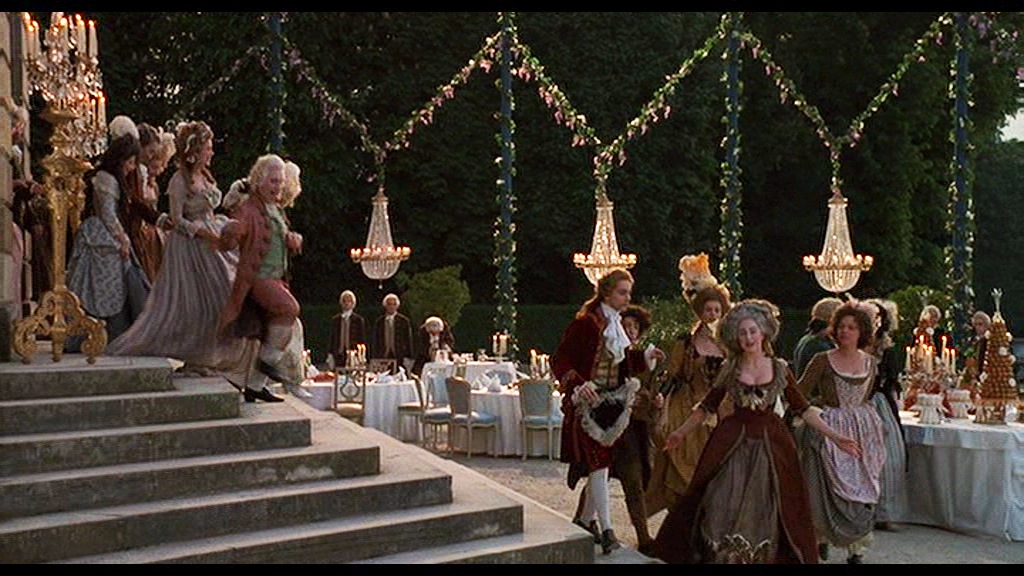
James Ivory’s <em>Jefferson in Paris,/em> (1995)
Ivory and Jhabvala imagine a “typical” gala Parisian garden party circa 1784. It was hosted by the Marquis de Lafayette for Thomas, then acting as American ambassador. Though de Lafayette was philosophically democratic, he was required to cultivate relationships with the Parisian fashionistas and aristocratic hedonism of pre-revolutionary France. The gala is fluff meant only […] read more
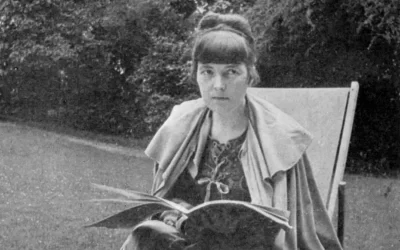
Katherine Mansfield's "The Garden Party" (1922)
Mansfield’s “The Garden Party” describes the Sheridan family’s Wellington, New Zealand, summer picnic garden party. The day is early summer, the weather ideal, the air warm and windless, and the blue sky has a veil of gold: “They could not have had a perfect day for a garden party if they had ordered it—Windless, warm, […] read more
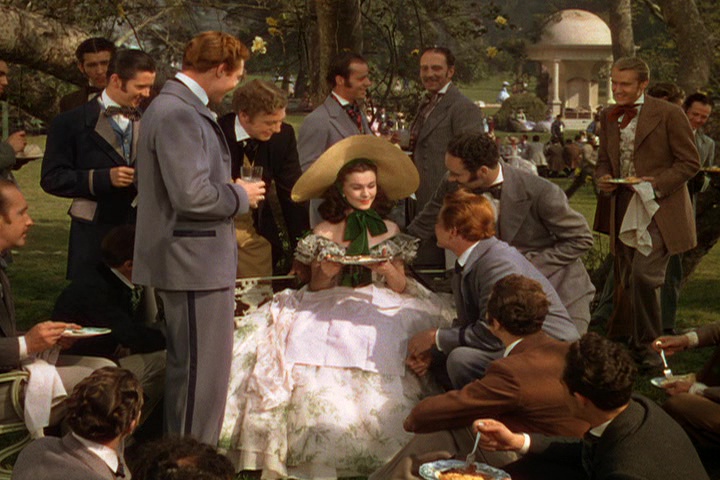
Victor Fleming’s <em>Gone With the Wind</em> (1939)
Arriving at Twelve Oakes, Gerald O’Hara is pleased to say, “Well, John Wilkes, it’s a grand day you’ll be havin’ for the barbecue.” It’s momentous because it is the beginning of Scarlett and Rhett Butler’s relationship and the engagement party for Ashley Wilkes and Melanie Hamilton. As a social gathering, the picnic barbecue is a […] read more
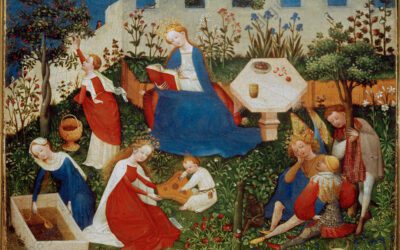
Upper Rhenish Master’s <em>The Little Garden of Paradise</em> (1410/20)
The Garden of Paradise recasts in a contemporary Hortus Conclusus as an allegory of life before the Fall. Tucked into a protected garden, free from original sin, homage the Virgin Mary and the baby Jesus are at ease. The secluded garden offers serenity in a busy world. The Virgin Mary, in the blue gown, sits […] read more
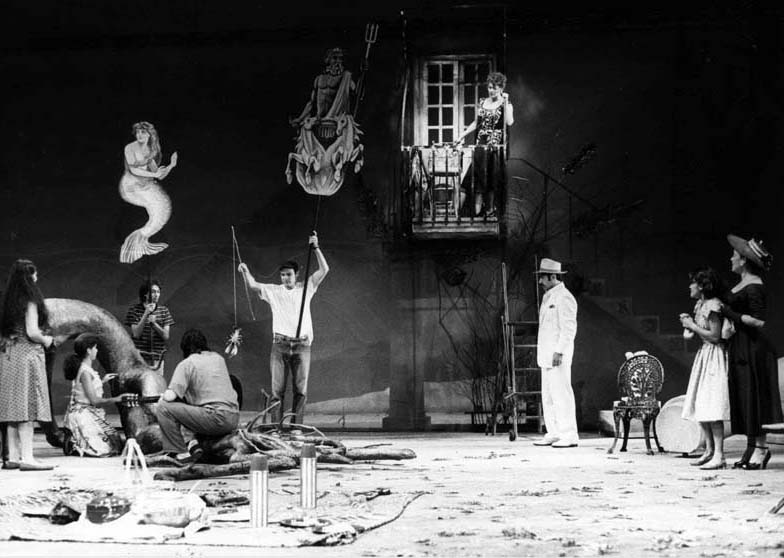
Jane Bowles' <em>In the Summer House</em> (1953)
Bowles’s In the Summer House is an absurd play, and she admirably proves the rule that some people do silly things at picnics. The action begins with a lawn picnic at which characters with tenuous relationships incessantly bicker. When Mr. Solares enters, bringing a picnic to Gertrude Eastman Cuevas, she is unenthusiastic. “I think I’ll […] read more
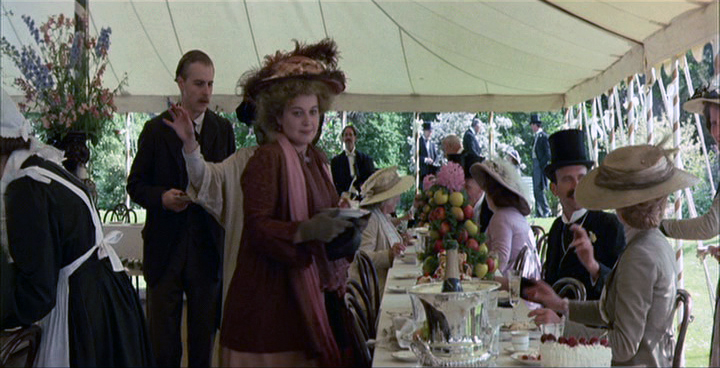
E.M. Foster's <em>Howards End</em> Garden Party (1910)
Henry Wilcox’s garden party for his daughter’s wedding s reveals Edwardian hypocrisy and predatory sexuality. It’s a turning point in Foster’s Howards End. Forster scants the dinner itself, but when it is about to end, the guests are in stages of departure. The messy dinner table becomes a metaphor for future unhappiness, anger, and dismay […] read more
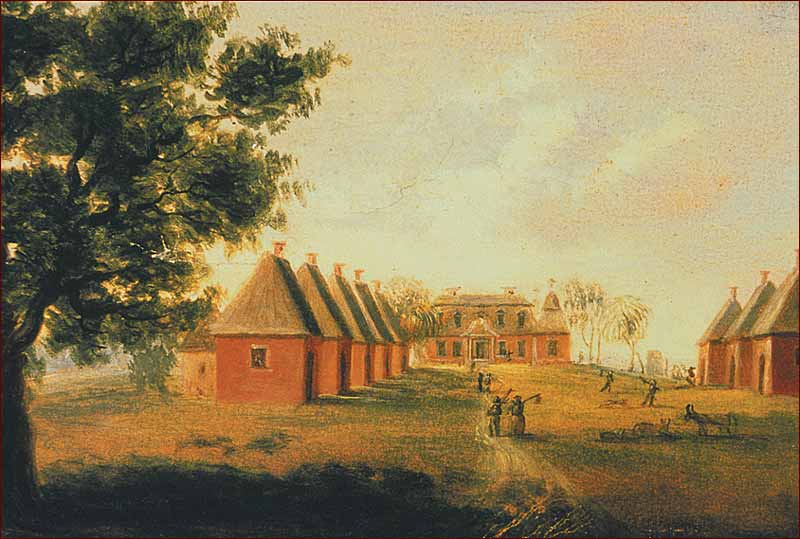
May Boykin Chesnut’s <em> Diary from Dixie</em> (1861)
Coram’s View Of Mulberry in 1800 looks up to the rear of the house from the vantage point of “the street” because it was lined with slave quarters, of which houses are visible. Coram’s view suggests “the street” was a matter of pride and an indication of wealth and prestige. Refinements to Mulberry altered the […] read more
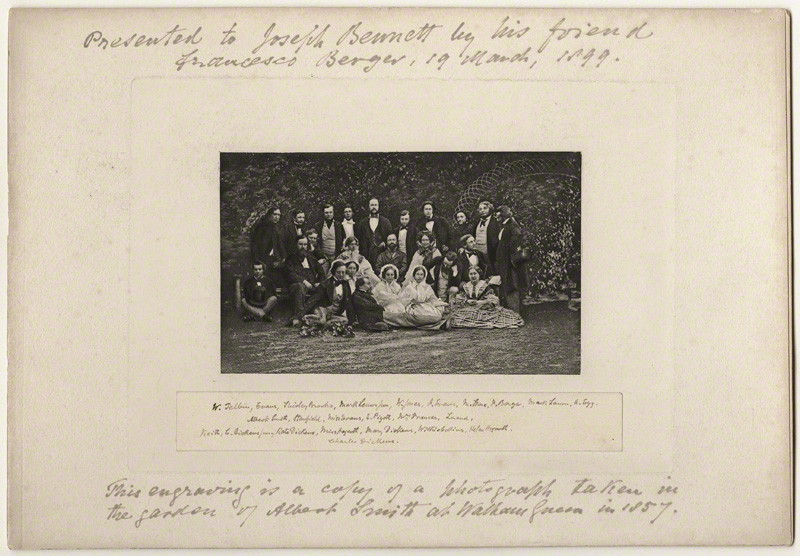
Charles Dickens and Cast of <em>The Frozen Deep</em> (1857)
Frederic Ouvry’s invitation to a July garden party at his home in Fulham Green, London, insinuates that guests would gather with two celebrities: Albert Smith, the famous lecturer of “The Glaciers of Mont Blanc,” and Charles Dickens. The latter was producing and acting in The Frozen Deep by Wilkie Collins. Though neither of their names […] read more
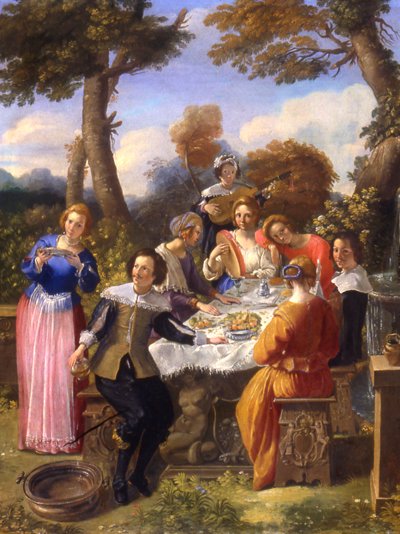
Giovanni Passeri's <em> A Party Feasting</em> (1645c.)
Passeri’s A Party Feasting in a Garden seems like a happy end to an alfresco luncheon. Young couples are deep in conversation, flirting, and courting, which suggests this is a garden of love. It is casual and innocent, though Passari is a moralist. Close examination of the shield at the bottom of the bench suggests […] read more
William Trevor's “The Teddy Bears' Picnic” (1982)
Transforming the popular children’s song “Teddy Bears’ Picnic” into a death picnic is Trevor’s metaphor for portraying the 1980s generation as infantile and short on morality. Six months into their marriage, Edwin, a twenty-nine-year-old stockbroker, and Deborah Chalm, a twenty-six-year-old secretary, bicker about attending a Teddy Bears-themed picnic. Edwin is incredulous. “You call sitting down […] read more