
1-1499
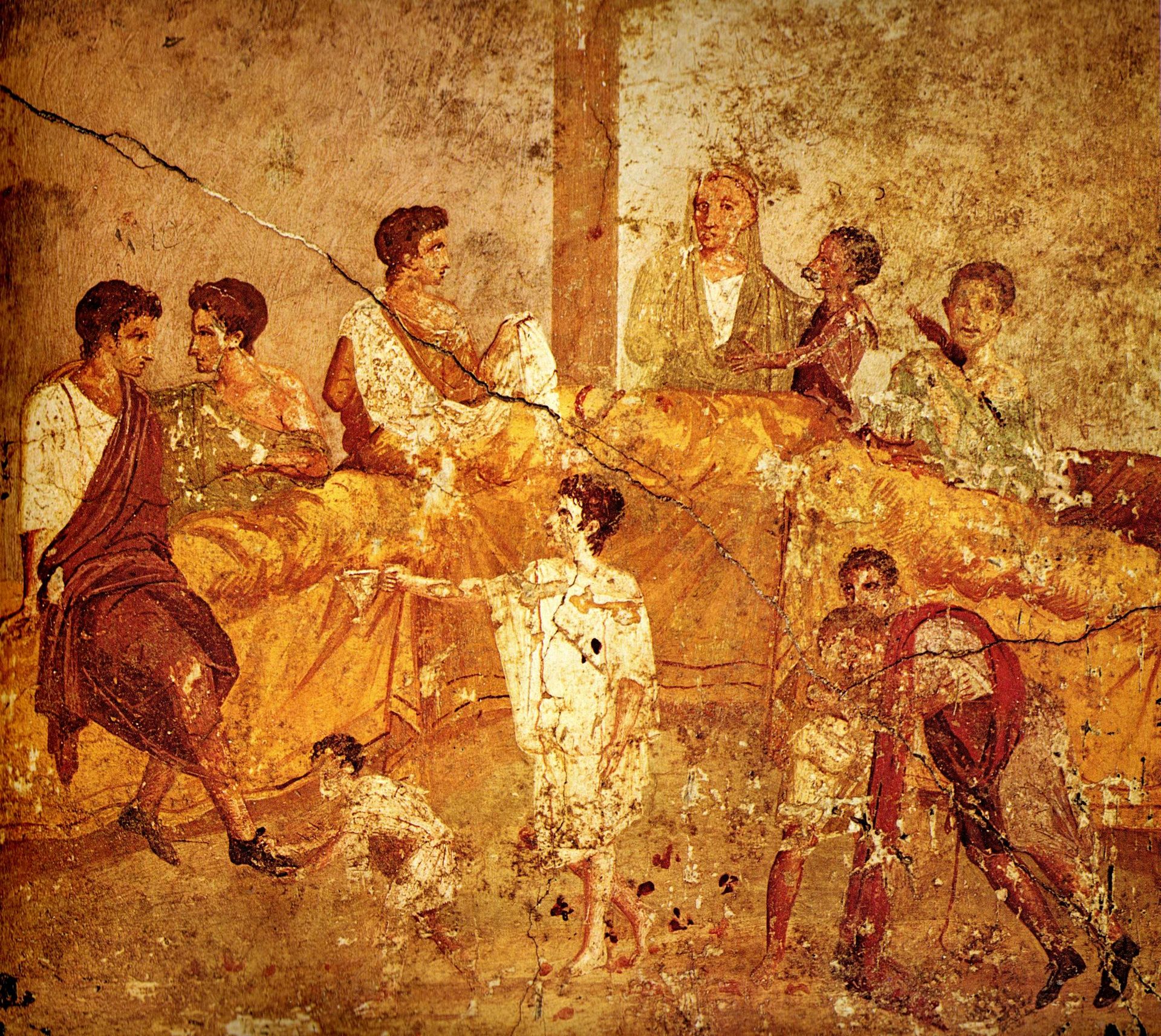
Horace's "De Mure Urbano et Mure Rustico" or "The Country Mouse and the Town Mouse" (35-34 BCE)
Horace delights in a rustic country dinner resembling eranos, the Greek custom of dining where each guest contributes something. A guest might contribute money, food, drink, or entertainment. Horace’s adaptation of this custom required that his guest provide entertainment by conversation or telling a story. It’s real talk, Horace believes, not the social simper that […] read more
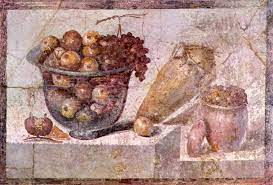
Seneca’s <em>Moral Letters to Lucilius </em> (before 63-65 CE)
Seneca says that eating ripe figs at a picnic brings “me a New Year feast every day, and I make the New Year happy and prosperous by good thoughts and greatness of soul.” Figs—only figs—that he claims is a substitute for bread. It is among the oddest main dishes for a picnic, so odd that […] read more
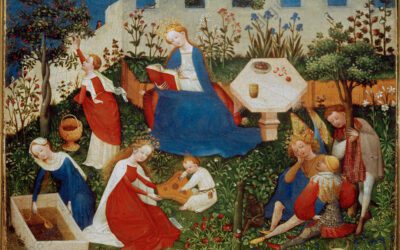
Upper Rhenish Master’s <em>The Little Garden of Paradise</em> (1410/20)
The Garden of Paradise recasts in a contemporary Hortus Conclusus as an allegory of life before the Fall. Tucked into a protected garden, free from original sin, homage the Virgin Mary and the baby Jesus are at ease. The secluded garden offers serenity in a busy world. The Virgin Mary, in the blue gown, sits […] read more
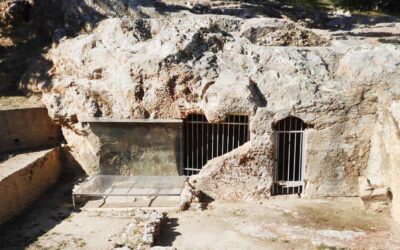
Menander’s <em>The Bad Tempered Man</em> (316 BCE)
Menander’s comedy The Bad-Tempered Man [aka Dyskolos] was lost for centuries until discovered in the 1950s. A pivotal episode is a pilgrimage to the shrine of Pan at Phyle on a hillside in what is now Athens, where a sacrificial meal will cooked to appease the god. The offering is meant to help Sostratus, a […] read more
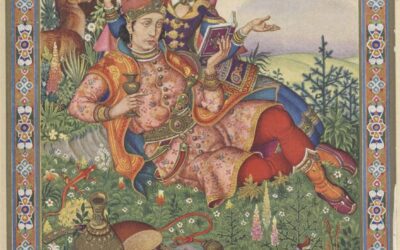
Omar Khayyám’s The Rubáiyát of Omar Khayyám (1100c.)
Omar Khayyam is better known for his love poems than his philosophy. His vision of lovers picnicking is in Rubáiyát “XI” in the collection of his poetry titled The Rubáiyát of Omar Khayyám, most often read in Edward Fitzgerald translation: A Book of Verses underneath a Bough, A Jug of Wine, a Loaf of Bread-and […] read more
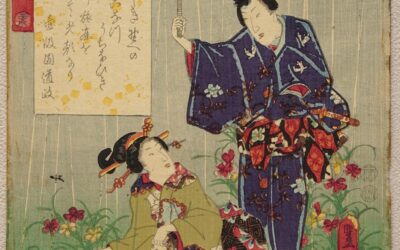
Murasaki Shikibu’s <em>The Tale of Genji</em> (1000c.)
to relax at a palace fishing pavilion with close friends. Arthur Whaley translates the outing as a picnic, though Lady Murasaki has no such vocabulary word. The chapter is “Wild Carnations” or Tokonatsu One very hot day Genji, finding the air at the New Palace in tolerably close, decided to picnic at the fishing-hut on […] read more

Sevso and Casena Hunt Luncheon Plates (Late 4th Century)
The Sevso Plate * (27.8 inches in diameter) may also reference a hunting feast describe by the roman writer Philostratus. But the iconography is Christian. The Chi-Rho situated at the apex of the legend on the plate’s circumference is a symbol for Jesus Christ Dunbabin correctly calls this a picnic because it looks like a […] read more
Philostratus’s <em>Imagines</em> (250-300 CE)
Hunting feasts have a long history. Among the Romans, one such by Philostratus Elder uses the rhetorical device of Ekphrasis, a verbal description of a visual representation, to illustrate a painting he observed in Naples. Ironically, none survive, if they existed at all, and except by his descriptions in Imagines, they would be lost. Though […] read more

Cristoforo de Predis’s <em>The Garden of Delights</em> (1470c.)
De Predis’ Venus: The garden of delights representing the joyful influence Venus exerts on mortals is an illustration for The Sphere of the Cosmos, De Sphaerae (1466 or later). The original treatise dating from 1230c describes Venus’ feast day celebrated when Venus is the brightest object in the night sky. Among Romans, an homage to […] read more
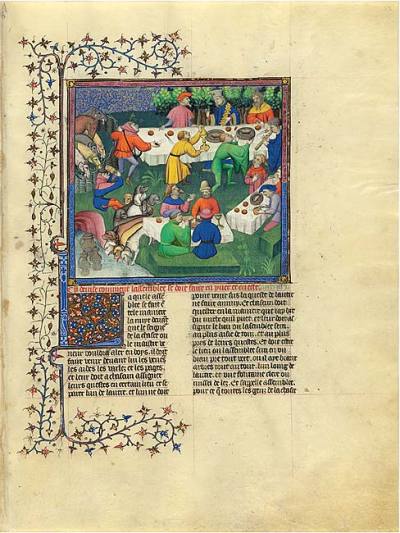
Edward Langley's <em>The Master of Game</em> (1413)
When Edward Langley, 2nd Duke of York, translated Gaston’s Le livre de chasse (1389) into English, French was still the language of the Court and elsewhere. He renamed it The Master of Game.* Like Chaucer, Edward’s translation decided to write in English rather than French or Latin. “And the place where the gathering shall be made should […] read more
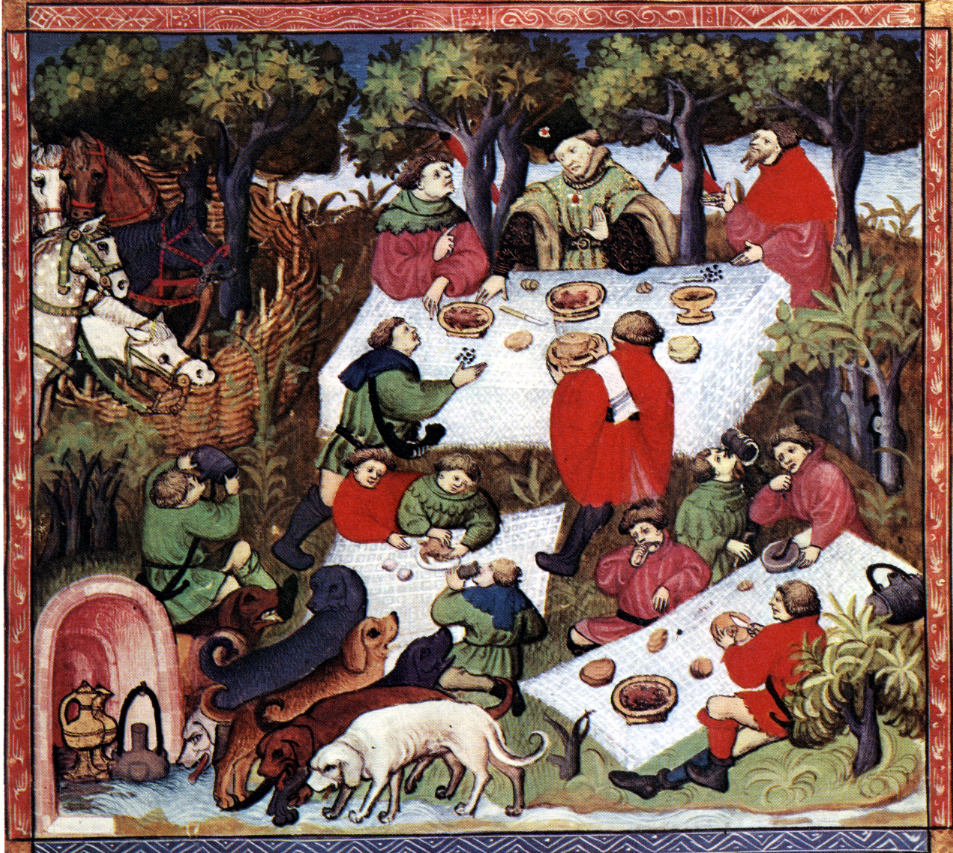
Gaston III’s <em>The Book of the Hunt</em> aka <em> Le livre de la chasse</em> (1387)
Gaston’s Le livre de la chasse formalized the hunter’s assemblée as the model for a meal during a hunt. It is not a picnic. Gaston did not intend this gathering as a luncheon but as an early morning meeting during which the day’s hunt was discussed and planned. Methodically, Gaston describes “How the Assembly (Assemblée) […] read more
Piero di Cosimo's <em>Fight Between the Lapiths and the Centaurs</em> (1500/15)
Piero’s primary resource is Ovid’s Metamorphoses (XII). Ovid does not mention the wedding guests dining alfresco in a picnic style. But Piero prominently depicts a white embroidered picnic cloth in the center of the composition. In other details, Piero is faithful to Ovid’s narrative. He situates the feast in the open and not in a […] read more
Vibia's Tomb, Rome (350c.)
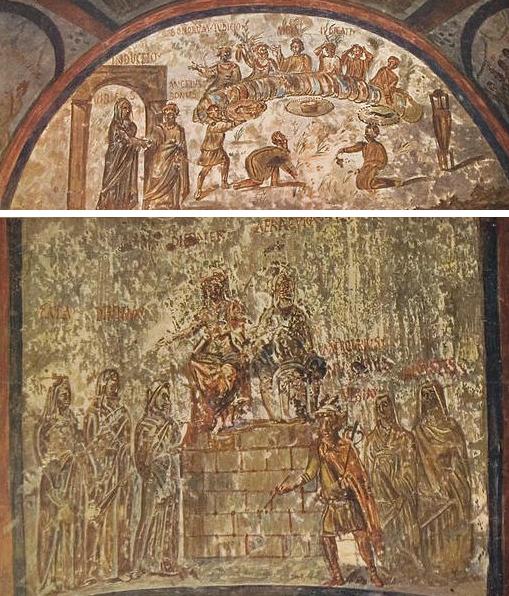
The feast that decorates Vibia’s resembles a picnic. Her life story is painted in an indented arch. In a comic strip style, Vibia journeys through Hades to Elysium at her death. On the left, Vibia is being led through an archway labeled Inductio by Good Angel, Angelus Bonus. She is the central figure among five […] read more
Virgil's <em>Aeneid</em> and the Trojans' First Meal in Latium
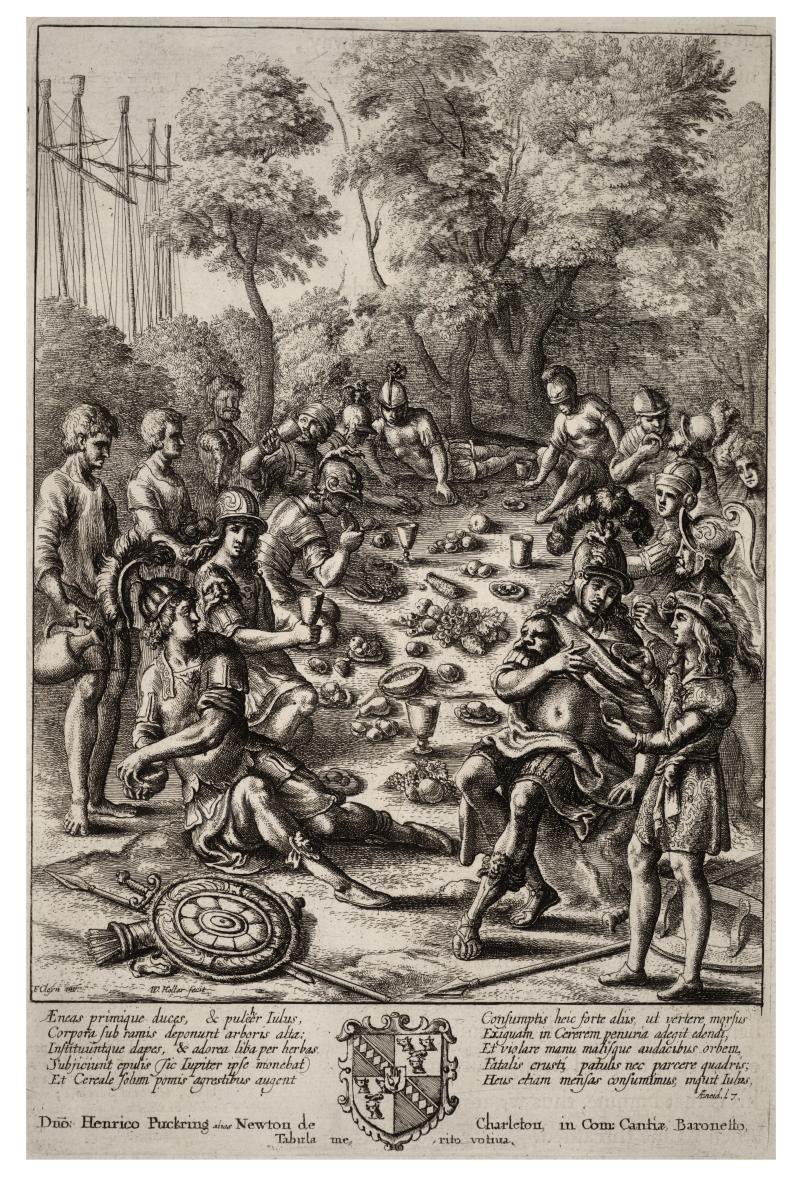
A prophecy held that Aeneas and his crew of Trojans would know where to build a new Troy when, being desperately hungry, they ate their plates—trenchers made of thick slices of stale bread. This revelation occurs at their first meal in Latium. Virgil’s details, translated by Dryden among many others, are that they dined at […] read more