
Happy
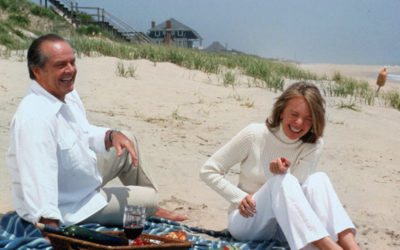
Nany Meyers’ Something’s Gotta Give (2003)
Suds. Hamptons, New York, and Paris. Money. Two middle-aged beauties find romance and love. Perfect beach house. Perfect weather, Perfect wine. Aw shucks. “Erica and Harry sit on a blanket on a cloudy day, having a picnic lunch. Harry is telling Erica a story, and she screams with laughter.” Then it rains. The run to […] read more
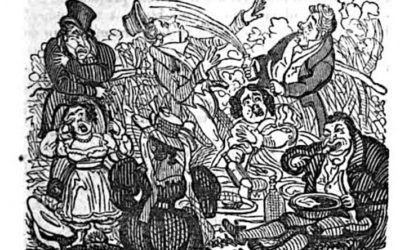
The Pic-Nic Song (1829)
Corny picnic satire was in vogue among English music before Gilbert and Sullivan’s 1871 Thespis, or The Gods Grown Old. Typical “The Pic-Nic” is sung to the air of “Here’s the Maiden of Bashful Fifteen” from Sheridan’s The School for Scandal. Its inclusion in Arliss’ The Melodist, a collection of popular songs, suggests opportunities for […] read more

Elizabeth von Arnim’s Elizabeth and Her German Garden (1898)
Winter picnics are few, and among the best is Elizabeth von Arnim’s on a freezing afternoon on a bluff above the Baltic. On a brilliant January day, Elizabeth’s birthday, she travels about three hours in a horse-drawn carriage over deep snow to a bluff overlooking the cold and windless Baltic Sea. The sudden view of […] read more
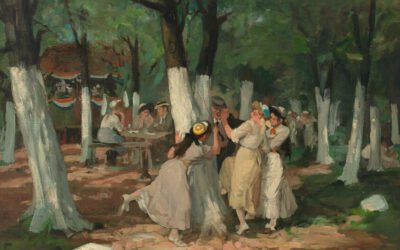
John Sloan’s The Picnic Grounds (1906-1907)
Sloan’s picnics are happy, and he uses the picnic theme intermittently, beginning with The Picnic Grounds, especially with South Beach Bathers (1909), The Picnic on the Ridge (1920), and Picnic, Arroyo Hondo (1938). The Picnic Grounds is a summer scene where young girls in summer dresses play under a grove of trees with whitewashed bark. […] read more
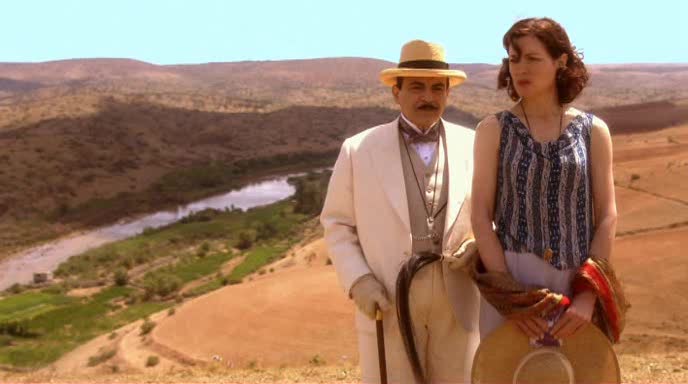
Agatha Christie’s Come, Tell Me How You Live (1946)
Christie’s picnic at Kawkab in Syria was indelible because the dessert was in bloom. During an archeological dig in 1934 (?), Christie and Max Mallowan* packed a lorry named Queen Mary for sightseeing at Kawkab, a hill about 300 meters high. They expected an easy climb, but it was slippery and steep, and at the […] read more

Lennart Anderson’s Idylls (1955-2015)
Anderson series of Idylls are picnicky, filled with people happily dancing and singing on the grass. He called the first Bacchanal and the other Idylls. In an interview, Anderson referenced Matisse’s Luxe, Calme et Volupté as a modern arcadian idyll but does not mention that it is a picnic. Anderson began the series in 1955, […] read more

D.H. Lawrence’s Aaron’s Rod (1922)
Aaron Sissons, the protagonist of Lawrence’s Aaron’s Rod, leaves his wife and three young children to find himself. He’s unsuccessful. The “rod” is his flute, which he plays well enough to earn a modest living. It is also a pun on his cloudy sexuality, and his need to settle his identity is oriented more towards […] read more
Laura Knight’s Picnics (1907-1912)
Knight developed her style while at the Lamorna Art Colony in west Cornwall. She was nineteen years old and married to Harold Knight. Among more experienced artists and congenial surroundings, she realized the freedom of expression and technique that lasted throughout her long career. Judging from the paintings, it was a happy time A 1914 […] read more
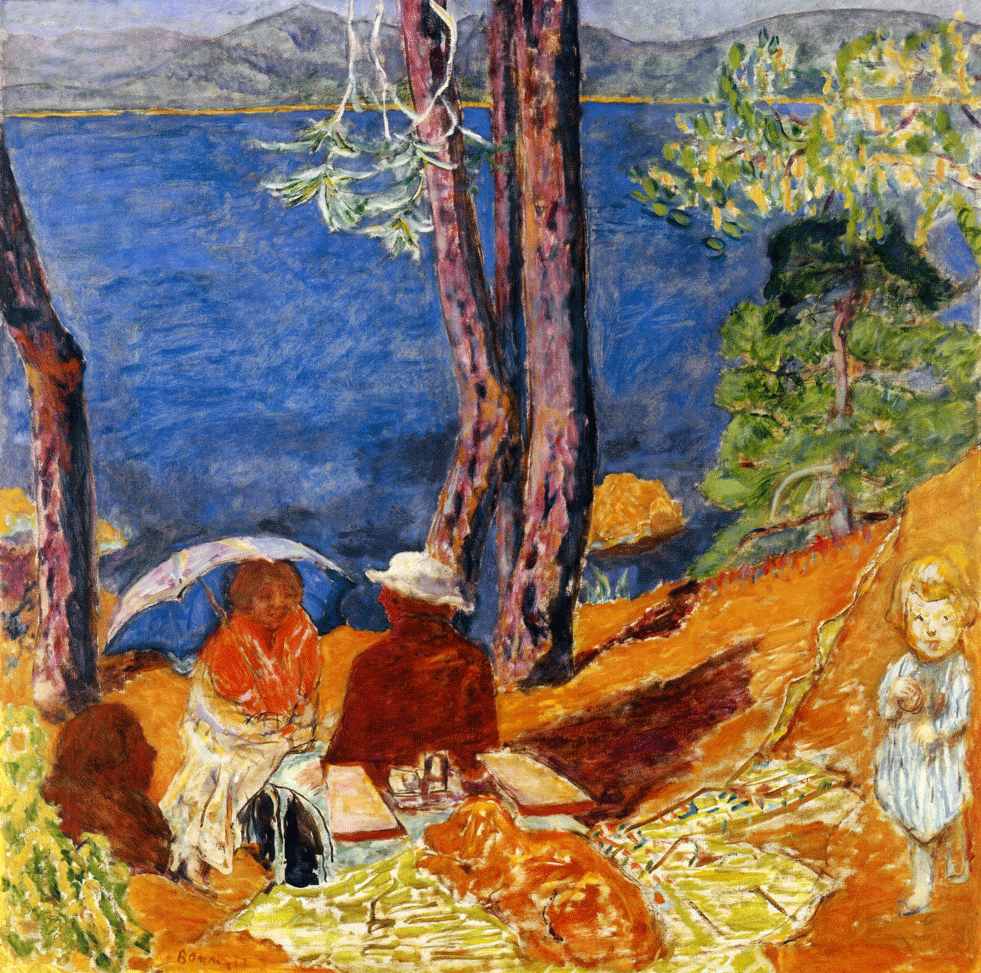
Pierre Bonnard’s By the Sea, Under the Pines, or Bord de mer, sous les pins>/em>1921)
Situated on the bluff near St. Tropez overlooking the brilliant blue ocean, Pierre Bonnard’s By the Sea, Under the Pines is a picnic in a delightfully cheerful mood. Everything is gold, yellow, brown, and green around the woman, a man, a child, and a recumbent dog. It’s a palette suggesting happiness and leisure. The identity […] read more
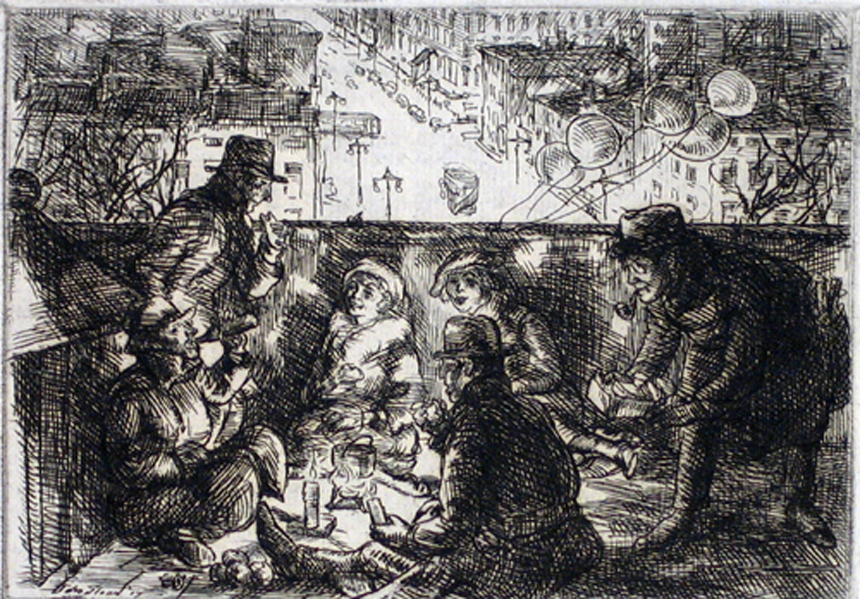
John Sloan’s Arch Conspirators (1917)
One January night, John Sloan and a boozy group climbed to the top of Greenwich Village’s Washington Arch. According to Sloan, they toted balloons, candles, food baskets, wine, a pot for boiling water, and the makings of a campfire. Fictionalized or not, No one contradicted Sloan’s t in the etching, and only he remembered that […] read more
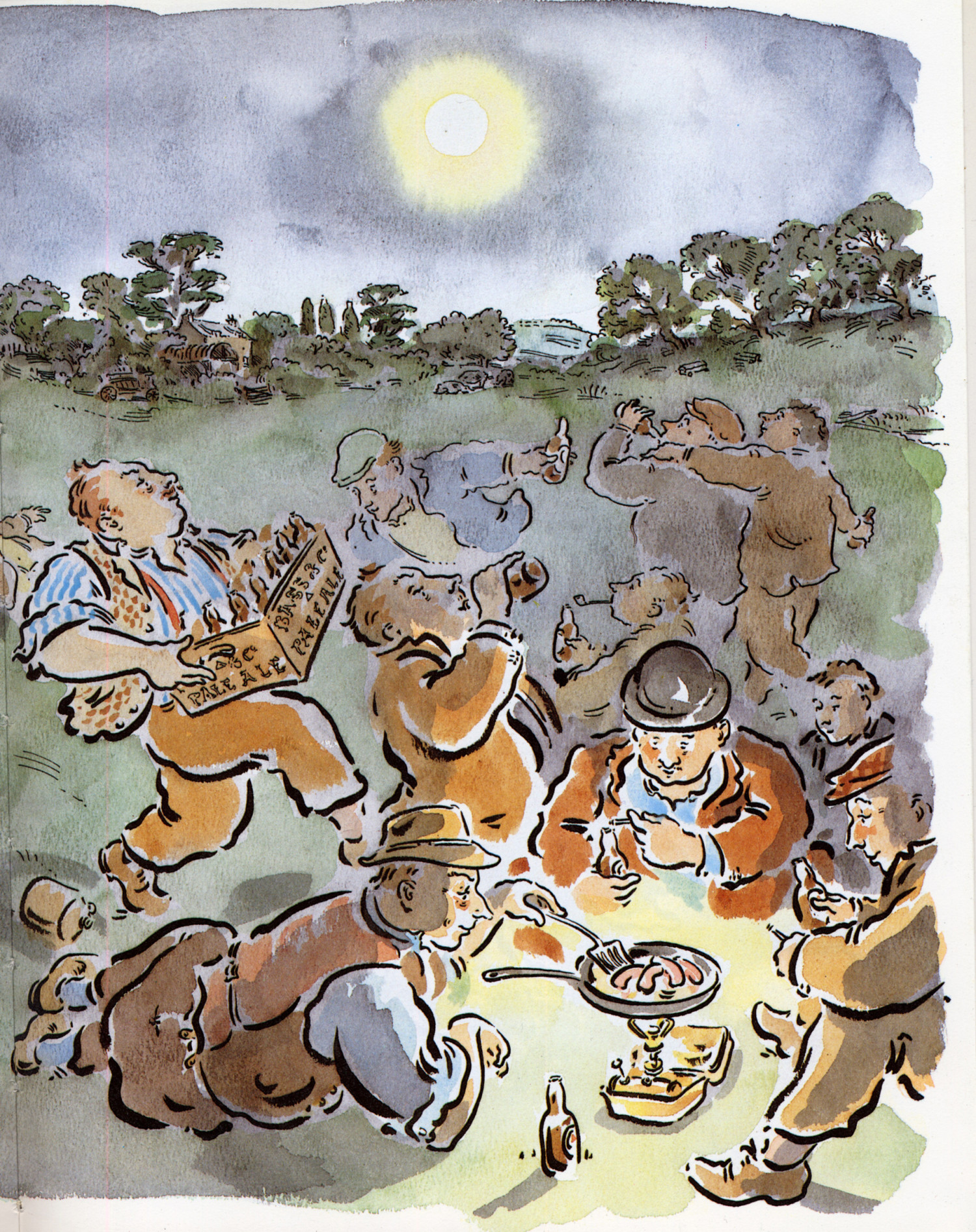
Dylan Thomas’ The Outing (1955)
Thomas’ life and marriage were tumultuous. So in November 1953, when Caitlin Thomas entered St. Vincent’s Hospital in New York looking for her husband, she expected a positive answer to her question, “Is the bloody man dead yet?” What she got was “Not yet,” for he was in a coma and died not long after. […] read more
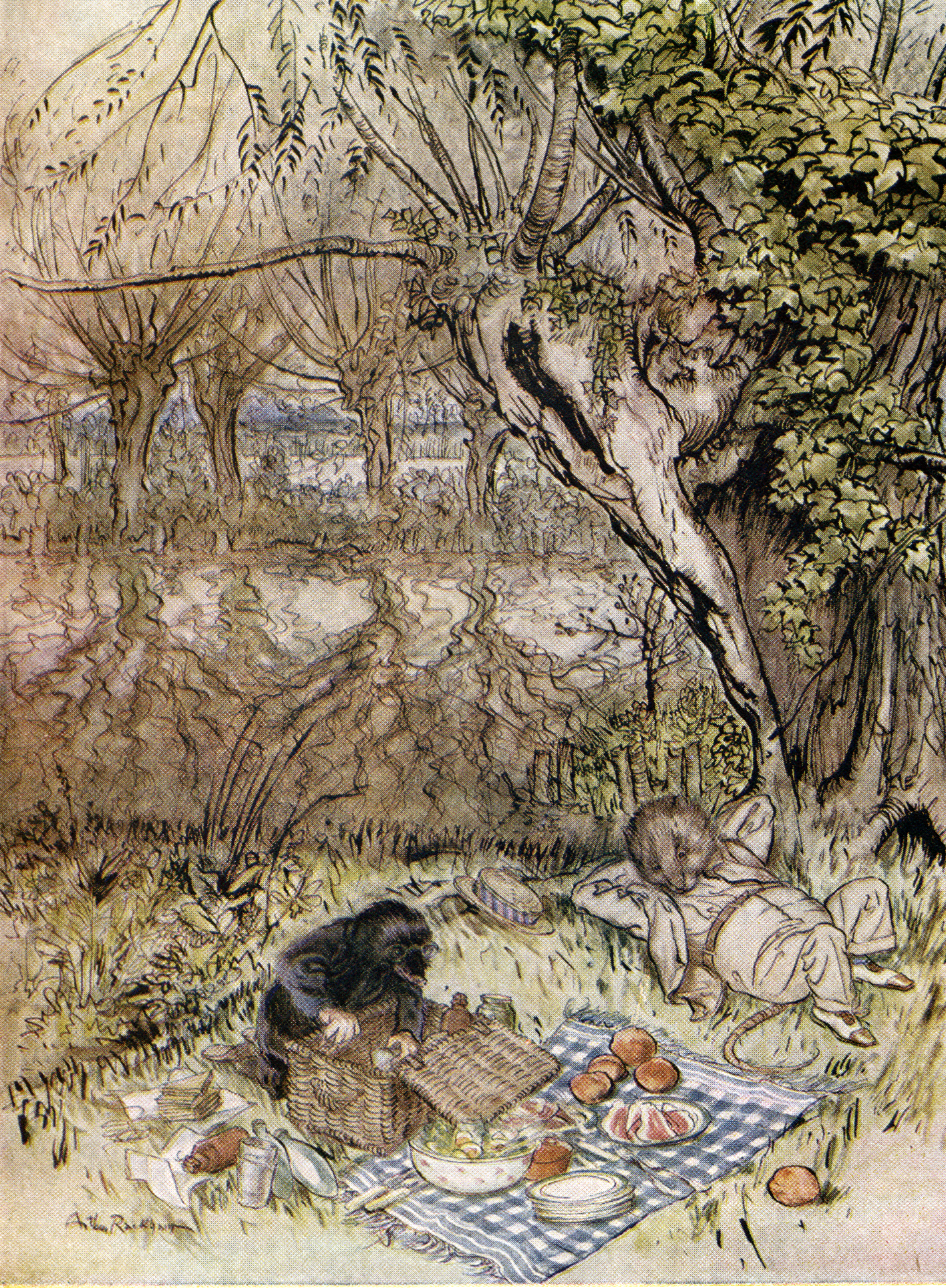
Arthur Rackham’s Riverbank Picnic in The Wind in the Willows (1940)
Rackham’s final project was a set of illustrations for Kenneth Grahame’s The Wind in the Willows. He was suffering from rheumatism and dying of cancer. Yet, he completed a series of twelve scenes, two of which are of Ratty and Mole’s picnic on the riverbank–”Shove That Under Your Feet He Observed To The Mole As […] read more