
Hunt Picnics
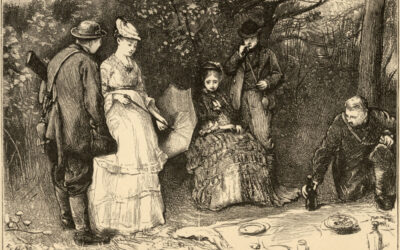
Anthony Trollope’s Phineas Redux (1874)
Trollope’s Phineas Redux is the fourth book in the Phineas Finn Series. It was among his most popular novels. Numerous hunt scenes and references suggest Finn’s plight evading his enemies. A halt during a fox hunt provides the opportunity for a simple picnic lunch in the field. Featured Image: Frank Holl’s illustration caption is “You […] read more
Jan Miel’s La Merienda and Hunters at Rest (1640s/50s)
Miel’s halt on the hunt and repas de chasse depicts hunters stopped by a rustic inn. In the Prado’s La Merienda, hunters have spread a cloth beside their horses and are settling in to relax. This is a perfunctory meal of sliced ham, cheese, bread, and wine. Unlike Watteau’s fashionable hunters and their ladies in […] read more
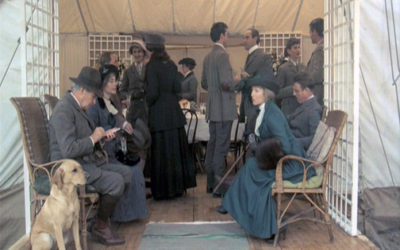
Alan Bridges’s The Shooting Party (1980)
Bridges’s hunt picnic is faithful to Isabel Colegate’s gently melancholy novel of English gentry circa 1913, The Shooting Party. The title The Shooting Party is intended to suggest the larger “shooting party” of the looming world war. Though they know it, Sir Randolph and Minnie Nettleby will be having their last October shooting party and a […] read more

Jacques du Fouilloux’s La VenerieHunting (1561)
Fouilloux’s La Venerie, aka Hunting, differs from Gaston’s 1389 description (See Le livre de chasse). Accordingly, the assemblée is replaced with un repas chasse, a hunters’ lunch attended only by men. However, when George Gascoigne adapted La Venerie for his The Noble Arte of Venerie or Hunting (1575), he included Elizabeth I, an avid hunter, […] read more
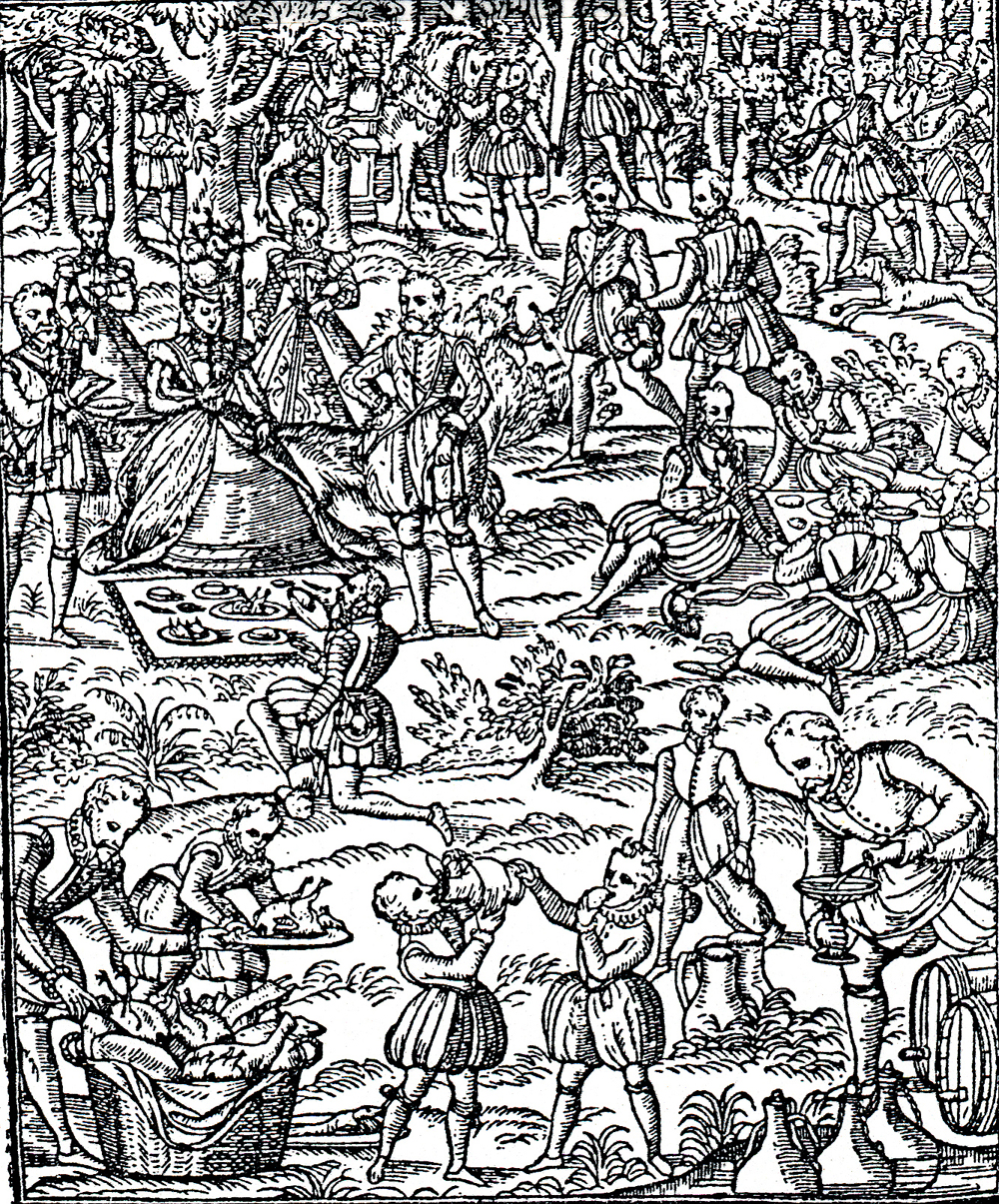
George Gascoigne’s The Noble Arte of Venerie or Hunting (1575)
Gascoigne adapted Gaston Phébus’s The Book of the Hunt (1380) and Jacques du Fouilloux’s in La Venerie (1560) into English, retitling the work The Noble Arte of Venerie or Hunting (1575). (The book is dedicated to Lord Clinton, Elizabeth’s master of Hart Hounds.) Borrowing from Fouilloux’s illustration in La Venerie, Gascoigne depicted the hunters’ assemblée […] read more

Sevso and Casena Hunt Luncheon Plates (Late 4th Century)
The Sevso Plate * (27.8 inches in diameter) may also reference a hunting feast describe by the roman writer Philostratus. But the iconography is Christian. The Chi-Rho situated at the apex of the legend on the plate’s circumference is a symbol for Jesus Christ Dunbabin correctly calls this a picnic because it looks like a […] read more

Jean-Anthelme Brillat-Savarin’s The Psychology of Taste (1826)
As a passionate hunter, Brillat-Savarin enjoyed traditional midday luncheon trysts or haltes de chasse. he describes the gathering in “Meditation XV” in Physiologie du Gout, or The Psychology of Taste. According to French usage, the halte de chasse is not un repas de pique-nique because it is an alfresco gathering. English translators observe this: Fayette […] read more
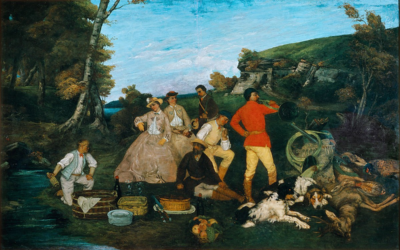
Gustave Courbet’s Le Repas de chasse (1858)
Exalting himself as a star hunter, “un homme libre,” or free man, Courbet painted himself in the center of Le Repas de chasse. Many luncheons, repas de chasse, were already painted by Watteau, Van Loo, De Troyes, and others, but their aristocratic effeminate swank repelled him. In aristocratic society, the hunters’ luncheon is enlivened by the […] read more
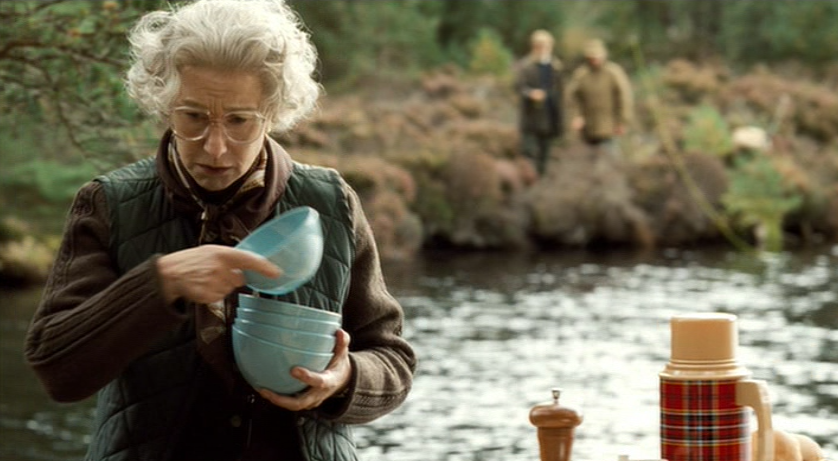
Stephen Frears’s The Queen (2007)
According to Stephen Frears, the Balmoral picnic is a glum episode as the Queen and family deal with the grief and notoriety resulting from the death of Princess Diana. Having retreated to Balmoral, a glum royal family tries to find solace outdoors. When the Queen arrives at an informal hunt picnic, she notices that Prince […] read more
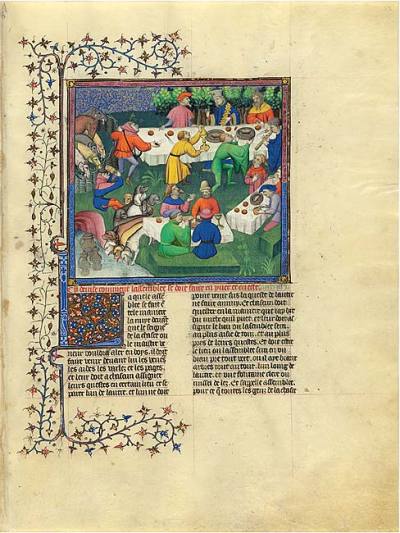
Edward Langley’s The Master of Game (1413)
When Edward Langley, 2nd Duke of York, translated Gaston’s Le livre de chasse (1389) into English, French was still the language of the Court and elsewhere. He renamed it The Master of Game.* Like Chaucer, Edward’s translation decided to write in English rather than French or Latin. “And the place where the gathering shall be made should […] read more
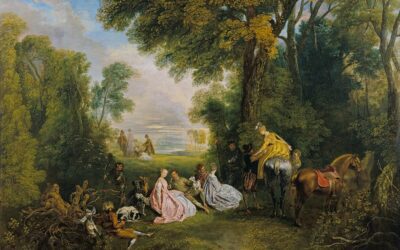
Jean-Antoine Watteau’s Rendez-vous de chasse (1717/20)
Watteau’s Rendez-vous de chasse illustrates a common activity among hunters, especially aristocrats who stopped about midday for a luncheon. The pause was called a tryst (a meeting at a predetermined location), where their wives or mistresses met the hunters. Dining was relatively informal, though it was served by staff. Watteau strictly observes the French usage […] read more
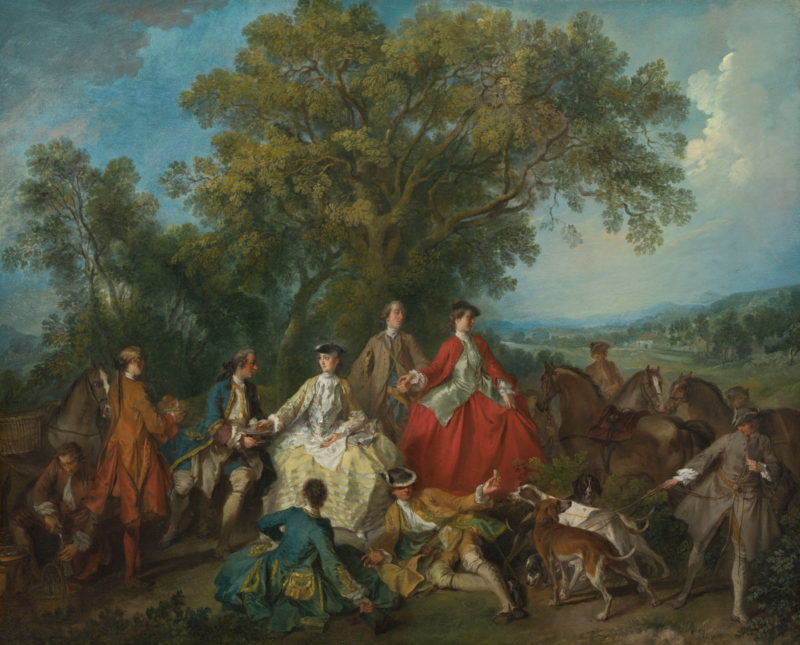
Nicolas Lancret’s Picnic after the Hunt (1735/40)
Because the scene is obviously a picnic, the National Gallery of Art’s title, The Picnic after the Hunt, is apt. But Lancret, whose language was French, would not have used pique-nique because it refers to an indoor dinner. More likely, he would have titled un repas de chasse, as he did for a painting in the Louvre […] read more
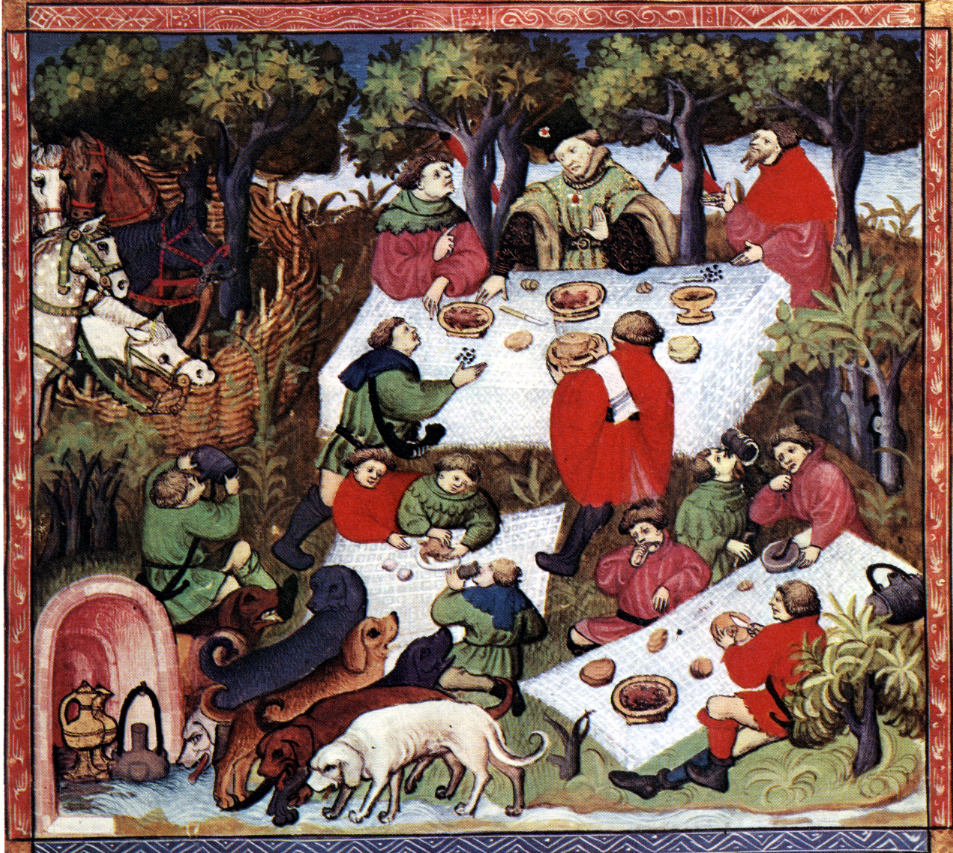
Gaston III’s The Book of the Hunt aka Le livre de la chasse (1387)
Gaston’s Le livre de la chasse formalized the hunter’s assemblée as the model for a meal during a hunt. It is not a picnic. Gaston did not intend this gathering as a luncheon but as an early morning meeting during which the day’s hunt was discussed and planned. Methodically, Gaston describes “How the Assembly (Assemblée) […] read more