
Film
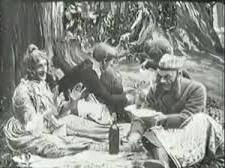
Segundo de Chomón's <em>Une excursion incohérente </em>, aka <em>The Travellers's Nightmare</em> or <em>Panicky Picnic </em> 1909)
The first picnic episode in film history is Segundo de Chomón’s comedy of “horrific” errors in Une excursion incohérente, which is sometimes translated as The Panicky Picnic or The Travellers’s Nightmare. It’s a silent film sequence of two minutes in an eight-minute film, one of several hundred silent films Chomón produced in Paris and Italy. […] read more
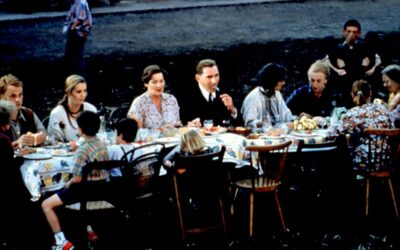
Marleen Gorris <em>Antonia’s Line</em> (1995)
Antonia is the matriarch of an extended family: her daughter, child, and partner, her friends, and castoffs who need a home. Each year, a long table is set in the barnyard for the extended family to picnic. See Marleen Gorris. Antonia’s Line (1995). Screenplay by Marleen Gorris. Also, Emma Bovary’s wedding party in Vincente Minnelli’s […] read more
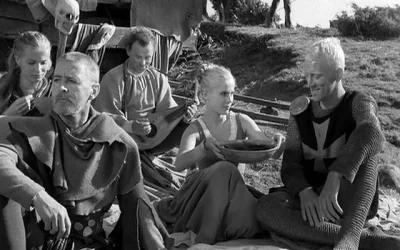
Ingmar Bergman’s <em>The Seventh Seal </em> (1957)
Bergman’s picnics in The Seventh Seal [Det Sjunde Inseglet], are moments of relief in an otherwise deadly serious drama about death and the meaning of God. When Block interrupts his game of chess with Death, he joins Jof (Nils Poppe) and Mia (Bibi Andersson) travelling performers, for a picnic-style lunch. for Block, a knight errant […] read more
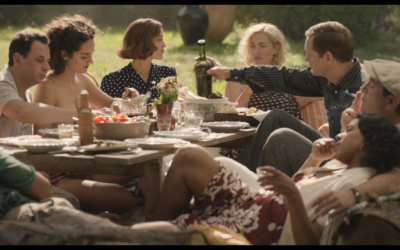
Ellen Kuras. <em>Lee</em> (2023)
The reenactment gathering in this still from Ellen Kuras’s Lee actually took place in Mpiogins, France, in 1937. See Ellen Karus. Lee. (2023) The screenplay is by Liz Hanna, John Collee, and Marion Hume, based on Antony Penrose’s The Lives of Lee Miller (2021) read more
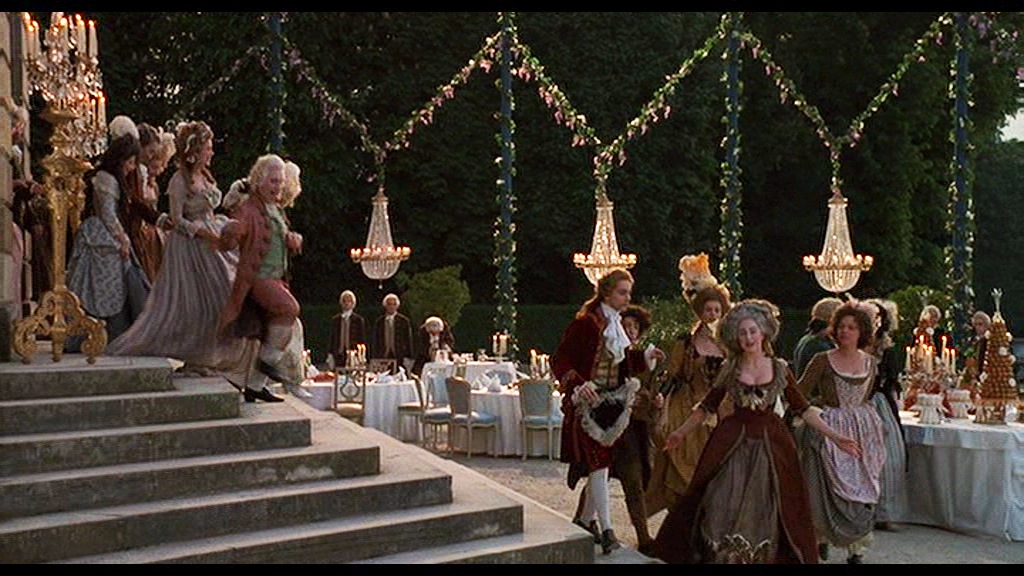
James Ivory’s <em>Jefferson in Paris,/em> (1995)
Ivory and Jhabvala imagine a “typical” gala Parisian garden party circa 1784. It was hosted by the Marquis de Lafayette for Thomas, then acting as American ambassador. Though de Lafayette was philosophically democratic, he was required to cultivate relationships with the Parisian fashionistas and aristocratic hedonism of pre-revolutionary France. The gala is fluff meant only […] read more
John Irvin’s <em>A Month by the Lake</em> (1995)
Irvin’s A Month by the Lake is touted as a romantic comedy about how two lonely middle-aged people break their stiff Englishness and kiss at a picnic. It takes place at a hotel on Lake Como, and the story moves so slowly that it might as well be titled “A Month at Lake Coma.” It’s […] read more
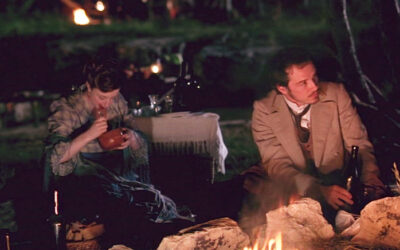
Dover Kosashvili's <em>The Duel</em> (2010)
Kosashvili’s picnic is comic and glum, as Chekhov intended. While other picnickers enjoy the view, Laevski, the protagonist, says, “To be in continual ecstasy over nature shows a poverty of imagination.” Laevski is a man who cannot enjoy himself, especially at a picnic. The picnickers get drunk as the picnic progresses from late afternoon to […] read more
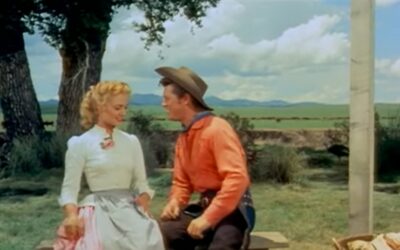
Fred Zinnemann’s <em>Oklahoma!</em> (1955)
Fred Zinnemann’s Oklahoma! is an adaptation of Richard Rodgers and Oscar Hammerstein II’s Oklahoma! (1943) is an adaptation of Lynn Riggs’ Green Grow the Lilacs (1931). Hammerstein wrote one (Act 2) to intensify the rivalry between Curly McClain and Jud Fry for Laurey Williams. Riggs’ Green Grow the Lilacs has a party without a box […] read more
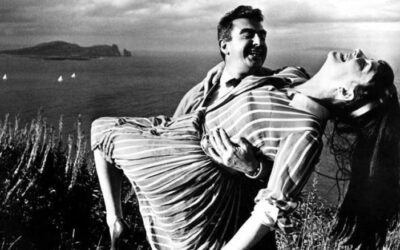
Joseph Strick's <em>Ulysses</em> (1967)
On June 16, 1906, unknown to each other, Leopold Bloom and Molly Bloom remember the picnic on the Hill of Howth when they agreed to marry sixteen years earlier. a popular park outside of Dublin. As part of her soliloquy in which Molly recalls the day, she remembers the seedcake, but Strick is disinterested in […] read more
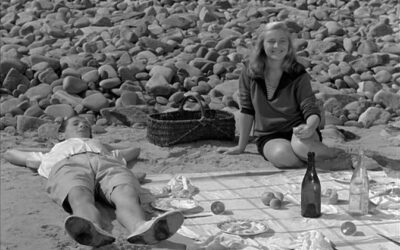
Claude Autant-Lara’s <em>The Ripening Seed </em> (1954)
Autant-Lara’s Le Blé en herbe is good at separating the dual aspects of love in Colette’s novel about adolescents and friends for years and learning about love while vacationing in Normandy. There are two parts to the narrative. In the first part, teenagers Philippe and Vinca fall in love and endure the pleasure and rough […] read more
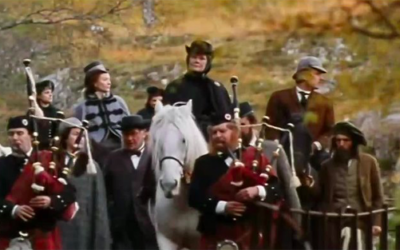
John Madden's <em>Mrs. Brown</em> (1997)
John Madden’s picnic in a glen is a short episode designed to show how Queen Victoria’s dependence on her gillie, John Brown’s guardianship. *He ensures the Queen’s privacy by chasing snooping journalists. It’s After Albert’s death, Victoria’s choice of wearing black became a personal and symbolic gesture so ingrained that it was usual to recall […] read more
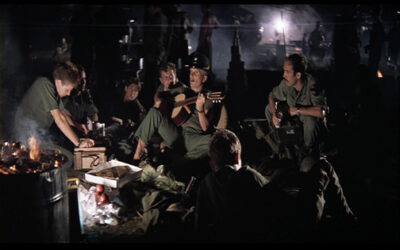
Francis Ford Coppola’s <em>Apocalypse Now</em> (1979)
Coppola’s Apocalypse Now is inspired by Conrad’s The Heart of Darkness. Coppola adapted the action and characters to his conception of the “insane” war in Vietnam, and the beach party picnic is his addition to the narrative. Coppola ensures nothing is quite right in his narrative, especially Lt. Col. Bill Kilgore’s war in Vietnam. As […] read more
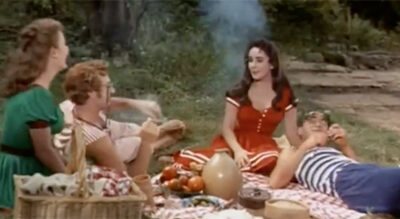
Edward Dmytryk’s <em>Raintree County</em> (1957)
Dmytryk’s picnic is a traditional affair on the rocky ledge of the Shawmucky River: a blanket, food, and a demijohn of corn liquor. It begins happily and ends with a kiss. The day’s happiness is a prelude to John Shawnessey’s love affair and unfortunate marriage to Susanna Drake, a southern belle with a wobbly character […] read more
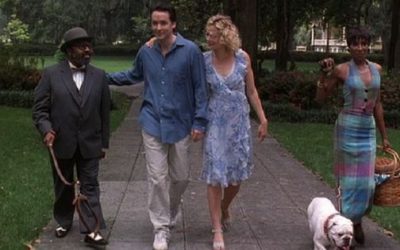
Clint Eastwood’s<em>Midnight in the Garden of Good and Evil</em> (1997)
The authoritative recommendation of Minerva, the Voodoo spiritualist in Eastwood’s Midnight in the Garden of Good and Evil says that when planning a picnic for witches, you must feed them pork because “witches loves pork meat.” When Minerva is performing spells on behalf of Jim Williams to save him from being convicted of murder, she […] read more
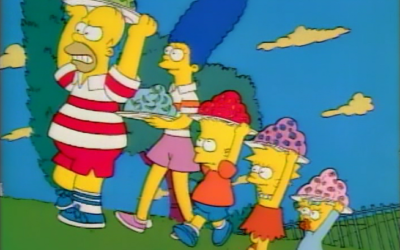
Matt Groening's <em>The Simpsons' There is No Disgrace Like Home</em> (1990)
If the Simpsons ever do any right, it’s a miracle, and the picnic at Mr. Bruns’s mansion is a typical disaster. Thinking that the boss likes dessert, Homer, Marge, Bart, and Lisa bring gelatin dessert to the picnic. (So does everyone else.) It’s an honest attempt to please the boss but Burns hates the jello […] read more
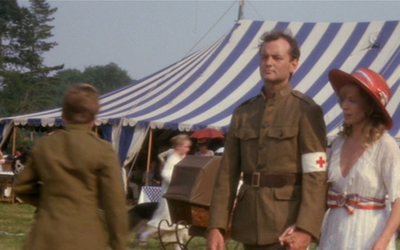
John Byrum’s <em>The Razor’s Edge (/em> (1984)
At Byrum’s July Fourth picnic, lovers cuddle, kiss, and roll on the grass. Larry Darrell wants more, but Isabel Bradley wants to wait. At the lover’s picnic in Maugham’s The Razor’s Edge, never touch or kiss or even hold hands As in Maugham’s picnic, Isabel tries to coerce Larry into a conventional marriage and a […] read more
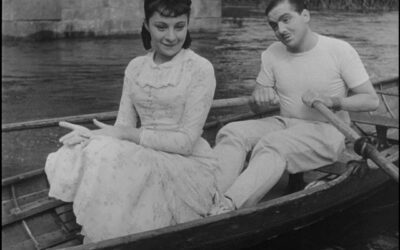
Jean Renoir’s <em>Partie de Campagne</em> (1946)
Renoir’s close adaptation of Guy de Maupassant’s Partie de Campagne is about the sad romantic consequences of a family picnic. Even the menu is Maupassant’s: fried fish, stewed rabbit [fricassee], salad, beer, claret, and coffee. However, Renoir substitutes white wine for the claret. Sated and a little drunk, Cyprian Dufour and his daughter Henriette’s fiancé […] read more
Agnes Varda’s <em>Le Bonheur</em> (1964)
Varda’s satirical idea is that family happiness depends on male arrogance and female docility. She suggests that if wives are replaceable, a man can lose one and simply replace it with another. Voila, happiness. François Chevalier supposes that a husband needs a mistress to keep his masculinity and have better sex with his wife, Thérèse. […] read more
Don Taylor’s <em>The Adventures of Tom Sawyer</em> (1973)
Just shy of the centenary of Twain’s Tom Sawyer, Taylor and the Shermans film is a musical. Becky Thatcher’s birthday picnic is recreated as rollicking July Fourth holiday picnic. It’s not Twain’s classic, but it’s light-hearted fun. While Twain’s details about the rollicking good time are scanty, Taylor’s are effusive. The day begins with a […] read more
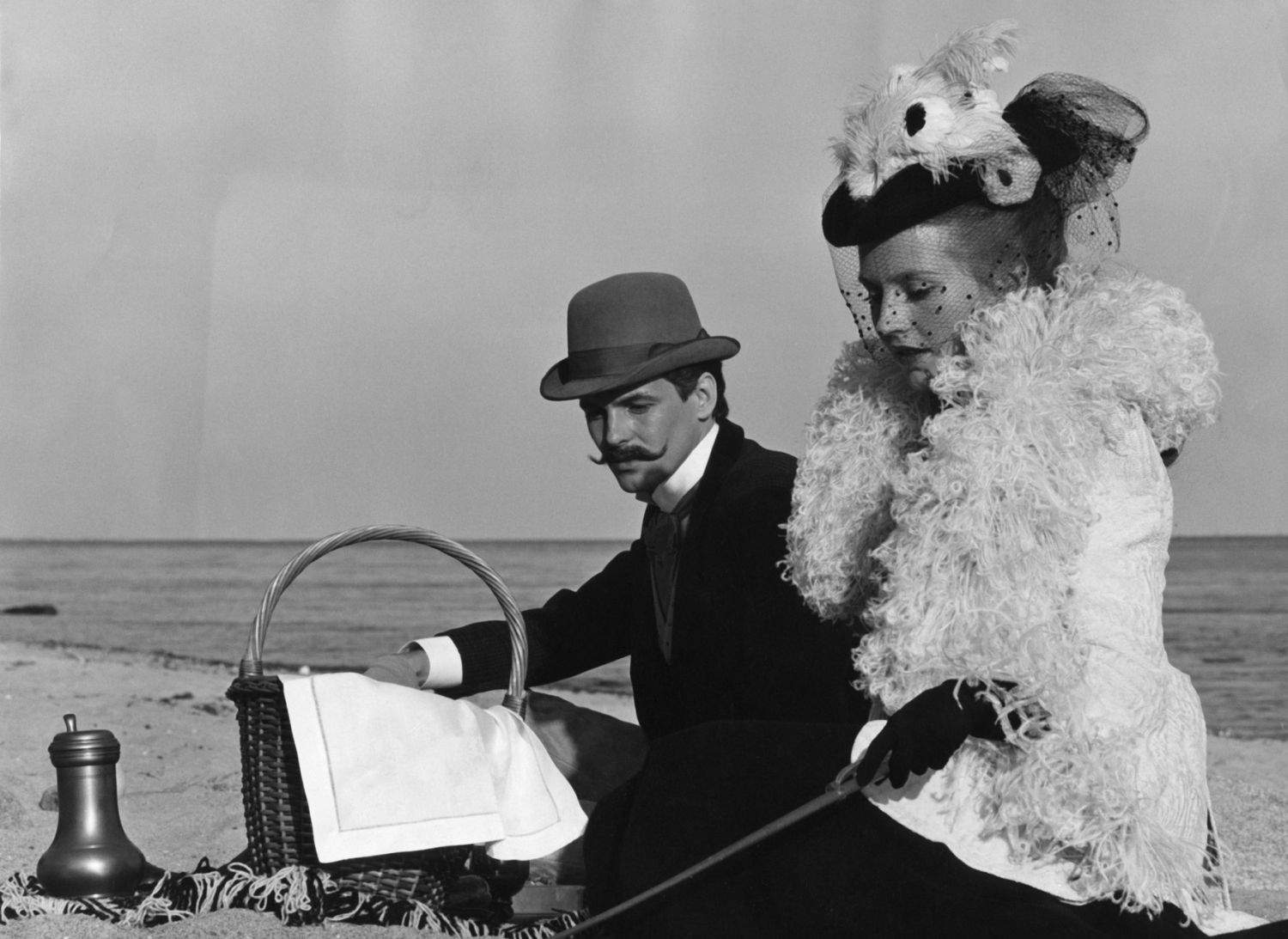
Rainer Werner Fassbinder’s <em>Effi Briest</em> (1975)
Theodor Fontane’s Effi Briest has been successfully adapted by Rainer Werner Fassbinder, whose slow-moving narrative presents the youthful heroine’s adulterous affair and how it wrecks her life. Only one of Fontane’s picnics is articulated. Effi and her lover, Major von Crampas, eat at a crude wooden table behind the dunes to avoid the Baltic’s gusty […] read more
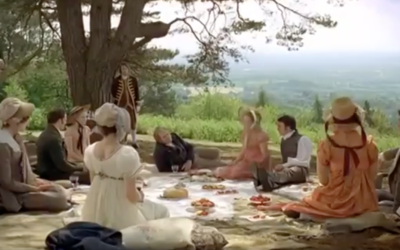
Jim O'Hanlon's <em>Emma </em> (2009)
O’Hanlon supposes Box Hill picnic must be a combination of informality and gentility. Servants carry amenities for a regiment so that Emma, Knightley, et al. sits on a sparkling white cloth (with cushions, of course) drinking wine in crystal goblets, served by staff. A roast turkey or capon is propped on the cloth, uncarved and […] read more
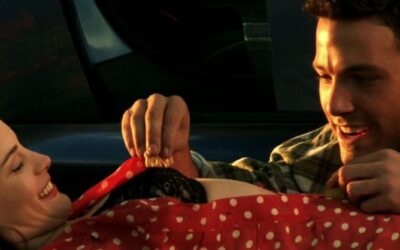
Michael Bray’s <em>Armageddon</em> (1998)
All hell might break loose. Earth may be obliterated, but A. J. Frost and his sweetheart Grace Stamper ignore their food preferring sex foreplay instead. “Do you think,” asks Grace, “that anyone else in the world is doing this very same thing at the same moment?” A.J.’s the ready answer is, “I hope so… Otherwise, […] read more
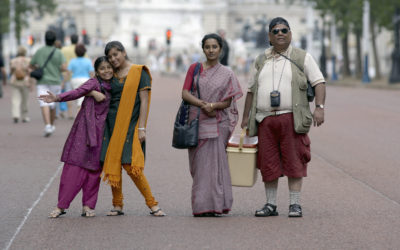
Sarah Gavron’s <em>Brick Lane</em> (2007)
Gavron’s picnic in Brick Lane retells Monica Ali’s Bangladeshi family, outwardly happy but inwardly troubled in London’s East End. After twenty years, Nazneen’s arranged marriage to Chanu Ahmed is wobbly. The picnic is supposed to be a lark, but it’s a kind of torture for Nanzeen. About sixty, paunchy and jobless, Chanu decides that he […] read more
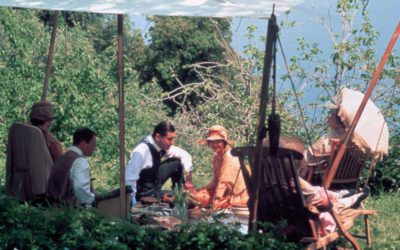
Mike Newell’s <em>Enchanted April</em> (1992)
The picnic at the Castello San Salvatore in Portofino’s vicinity is a happy fairy tale. * Saint Salvatore suggests salvation for the four women, all suffering from emotional depression and finding friendship and renewal of love. Mike Newell’s Enchanted April eliminates the definite article of Von Arnim’s novel The Enchanted April. Deciding von Arnim’s lack […] read more
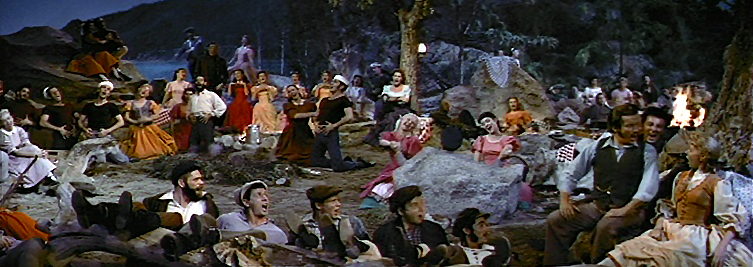
Henry King’s <em>Carousel</em> (1956)
King’s Carousel “A Real Nice Clambake” is full of picnicky camaraderie and good spirits, but it takes a nose-dive when the news comes that Julie Jordan’s lover Billy Bigelow, botched robbery is dead. King is casual about having the actors capture the vernacular diction of Maine. But the clambake is surely familiar and cleverly provides […] read more
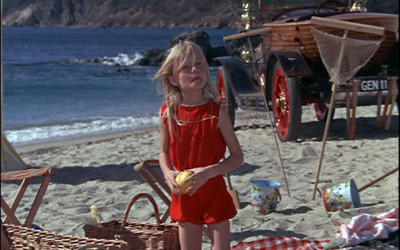
Ken Hughes's <em>Chitty Chitty Bang Bang</em> (1968)
Hughes’ Chitty Chitty Bang Bang is a romantic musical comedy so loosely based on the novel that Fleming would have difficulty recognizing it. Of course, Chitty Chitty Bang Bang, the magical automobile, is present. Commander Potts and his children Jemima and Jeremy, too. But Mom is replaced by Truly Scrumptious, a beautiful young woman […] read more
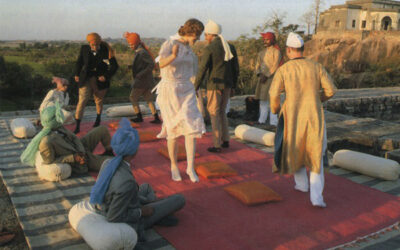
James Ivory’s <em>Heat and Dust</em> (1983)
Ruth Prawer Jhabvala’s Heat and Dust has two picnics. But as the screenwriter for James Ivory’s film, she included only Olivia Rivers, a British colonial wife, picnic with the Nawab, the local ruler of a small state in central India. Bored with her husband, Rivers allows herself to be seduced by the Nawab, an inept […] read more
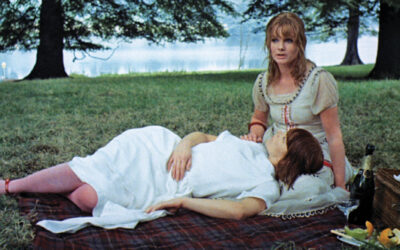
Ken Russell’s <em>Women in Love</em> (1969)
As in Lawrence’s Women in Love, Russell’s water party, a euphemism for a picnic, begins happily in the bright light of the early afternoon but ends dismally in the evening, partially illuminated by gaudy party lights. More like a country fair than an informal picnic, the water party is a busy affair demonstrating the Crich […] read more
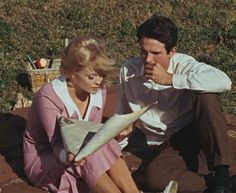
Arthur Penn's <em>Bonnie and Clyde</em> (1967)
Arthur Penn’s picnics seem ordinary. Penn figured that picnics make good human interest episodes and would humanize Bonnie and Clyde’s selfishness and essential nastiness. The Parker family picnic is a temporary lull for Bonnie and Clyde, who are graciously welcomed as local heroes. When the group settles to say grace, Bonnie sits with the family, […] read more
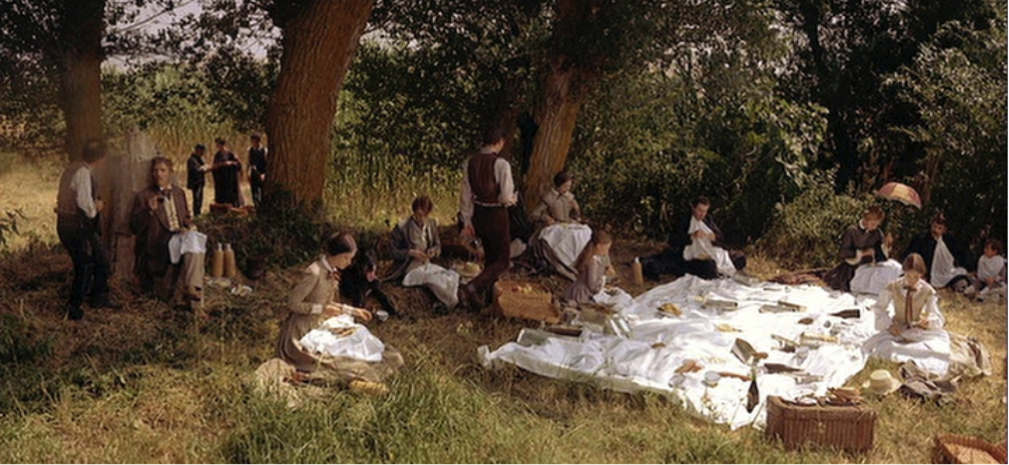
Luchino Visconti's <em>The Leopard</em> (1963)
Lampedusa wanted the picnic in The Leopard to be a metaphor for Don Fabrizio’s outward pleasant condition masking his inward and disillusionment. Visconti wishes it to be a respite on a long dusty ride. Lampedusa describes a “funereal countryside, yellow with stubble, black with burned patches; the lament of cicadas filled the sky. It was […] read more
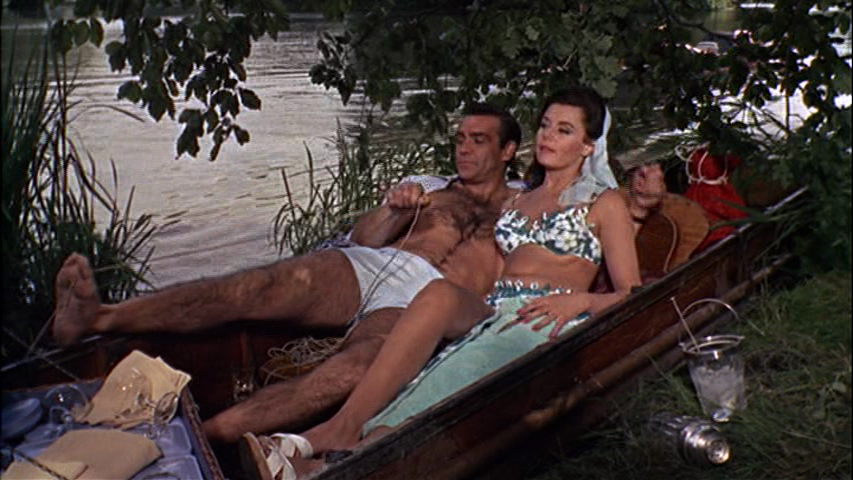
Terrence Young’s <em>From Russia, With Love </em> (1963)
Terrence Young’s picnic in From Russia With Love does not happen in Ian Fleming’s novel. It’s inconsequential, shaken but not stirred. Young’s picnic begins when Bond and his current lover, Sylvia Trench, are punting in a boat on /River Cherwell in Oxford. It’s summer. They are tied up in the shade, dressed in bathing suits, […] read more
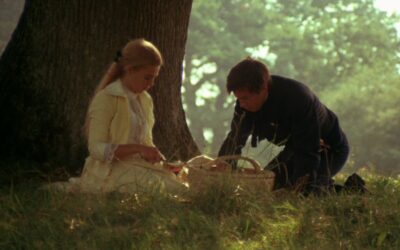
Bo Widerberg <em>Elvira Madigan’s</em> (1967)
Widerberg’s Elvira Madigan has two picnics. The first is a lover’s idyll; the second is sad and deadly. When Elvira Madigan, aka Hedvig Jensen, a circus performer, and Count Sixten Sparre, a married cavalry officer, eloped, their life together was a picnic. Their moment of happiness was brief, and when their picnic fizzled, they died […] read more
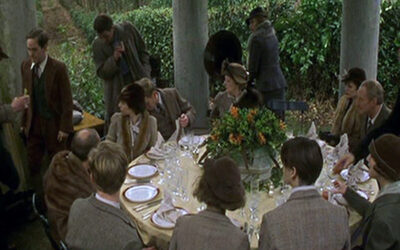
Robert Altman’s <em>Gosford Park</em> (2001)
Altman’s fall shooting party and lunch in Gosford Park is a metaphor for social rot in English aristocracy and their servants circa 1932. The pheasant hunt takes place on a cold rainy day in October at which the lord of the manner, Sir William McCordle, brutally presides. The lunch is without conviviality, and as entertainment, […] read more
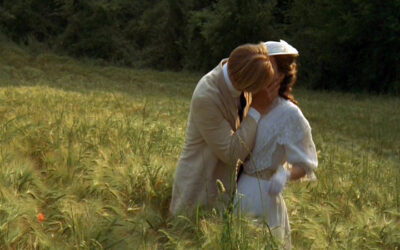
E.M. Foster’s <em>A Room with a View</em> (1985)
.M. Forster’s narrator calls the outcome of this picnic a “social contretemps.” Due to George Emmerson’s exuberance and Lucy Honeychurch’s reticence. He associates the perplexity to the presence of Pan, the god of chaos: Some complicated game had been playing up and down the hillside all the afternoon. What it was and exactly how the […] read more
Susanna White’s <em>Parade’s End </em> (2012)
Christopher Tietjens’ life with his wife Sylvia is no picnic. There are ample instances of Sylvia’s inconstancy in his Parade’s End, but this picnic episode is not one of them. That’s why it seems likely that Susanna White and screenwriter Tom Stoppard added a picnic to their screenplay of Ford’s novel. It is designed to […] read more
Tom Harper’s <em>War and Peace</em> (2016)
For six hours and 17 minutes, Tom Harper’s War and Peace is a parade of armies marching or in battle, explosions, mutilations, death, love and seduction, incest, and constant social intrigue. The final 2:8 minutes is a picnic, a happy situation, if not a fairy tale ending fabricated to bring the narrative to a memorable […] read more
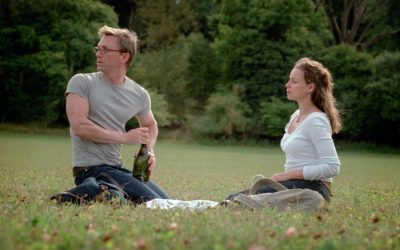
Ian McEwan’s <em>Enduring Love</em> (1998)
Ian McEwan’s <em>Enduring Love</em> (1998) McEwan’s menu for Joe Rose and Clarissa Mellon’s picnic is black olives, mixed salad, mozzarella, focaccia, and white wine, specifically Daumas Gassac, perhaps the author’s favorite. Roger Michel’s adaption Enduring Love (2004) substitutes champagne for the still white wine but scants the food is unspecified. Regardless, the food is untouched, […] read more
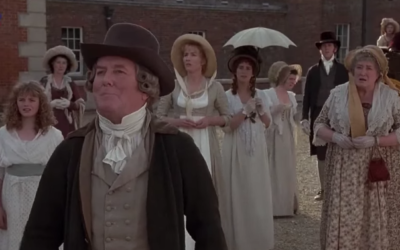
Ang Lee's <em>Sense and Sensibility</em> (1995)
Austen knows how to ruin a picnic, as she does in Sense and Sensibility. Ang Lee and his screenwriter Emma Thompson get the disappointment right. But then invent an original picnic to make up for Austen’s to mitigate the Dashwood family’s letdown. Critics and Austen fans did not care about this revision, and Thompson’s freely […] read more
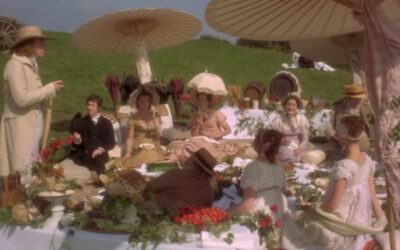
Douglas McGrath’s <em>Emma</em> (1996)
By the last count, seven directors have filmed Austen’s Emma. None of them are definitive or even alike. A list is provided as a separate entry. McGrath’s Emma is lively, and his picnic episode at Donwell Abbey and Box Hill is reasonably close to Austen’s text. But he cannot resist his own version of Austen’s […] read more
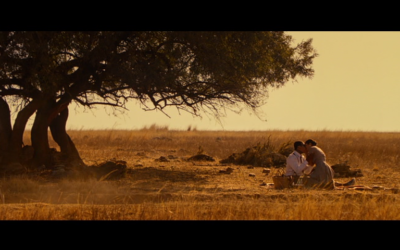
Justin Chadwick's <em>Mandela: Long Walk to Freedom</em> (2013)
Chadwick’s picnic is perfunctory and idealized. Chadwick and his screenwriter William Nicolson liked the idea of a lovers’ picnic because the narrative needed a romantic interlude. Mandela’s autobiography does not mention a picnic during his courtship of Winnie Mamzamo Madikizelain. This is true; at the time, Mandela was married and awaiting trial for treason, but […] read more
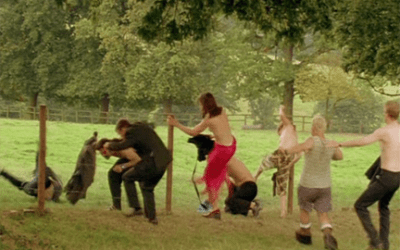
William Marsh's <em>Dead Babies</em> aka <em> Mood Swinger</em> (2001)
Marsh’s Dead Babies, Mood Swingers in the U.S., is a satire of a picnic disaster. If this satire is meant to be crude, it succeeds admirably. If satire aims to amuse, Dead Babies fails miserably. Ditto Martin Amis’s novel on which the film is based. The picnic begins pleasantly upbeat and then spirals downward. Fueled […] read more
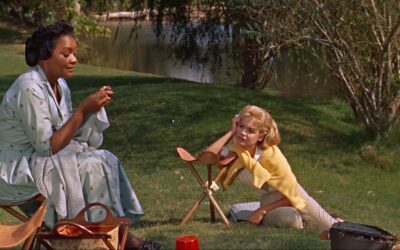
Douglas Sirk’s <em>Imitation of Life</em> (1959)
\Sirk wrote a picnic for Imitation of Life as a happy time away from a hectic work schedule. Needing a break, Lora Meredith collects her daughter Susie and her African American housekeeper Annie Johnson and calls her sometime lover Steve Archer, “Listen. . . I have this Sunday off. . . the first Sunday I’ve […] read more
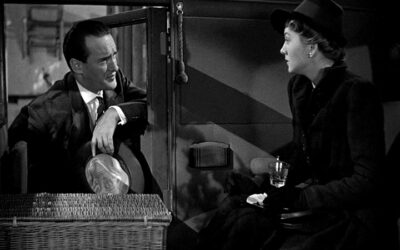
Alfred Hitchcock's <em>Rebecca</em> (1940)
Hitchcock added a picnic to the screenplay of Rebecca to reveal Jack Flavell’s intention to blackmail Max De Winter for the murder of his deceased wife, Rebecca. Flavell’s disquieting revelation occurs on the day of the inquest regarding Rebecca’s death in de Winter’s Rolls. Because current Mrs. De Winter has not eaten breakfast and is […] read more
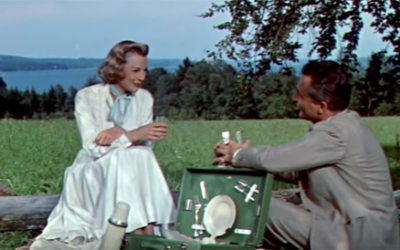
Douglas Sirk’s <em> Interlude</em> (1957)
Sirk’s Interlude is ninety minutes of adultery that ends when Helen says, “We have no chance. It’s impossible,” and Tonio replies, “You are right.” Salzburg is all sunshine when Tonio takes Helen for a picnic in his red Mercedes-Benz convertible. A fairy tale or a picnic? Tonio says, “And I know the right place.” Helen […] read more
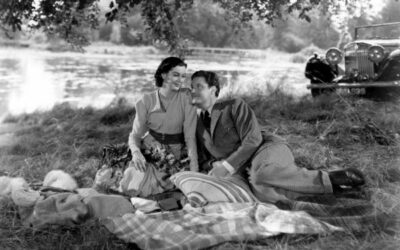
King Vidor’s <em>The Citadel</em> (1938)
Following A.J. Cronin’s The Citadel, King Vidor understands how central the picnic episode is for exploring how success and money distort the lives of Andrew and Elizabeth Manson. Once idealistic, Dr. Andrew Manson has gone over to the dark side, considering money more important than honest medical care. After years of ethical medical practice in […] read more
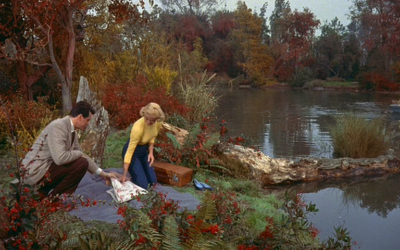
Douglas Sirk’s <em>Written on the Wind</em> (1956)
Douglas Sirk’s picnic episode is a failed attempt by Marylee Hadley to renew her romantic feelings for Mitch Wayne. Mitch is unresponsive. Mitch is friendly, but that’s all. He’s not eager for the picnic and is dressed casually for work. While Marylee spreads a cloth, she says. “I brought everything but rain and ants, “ […] read more
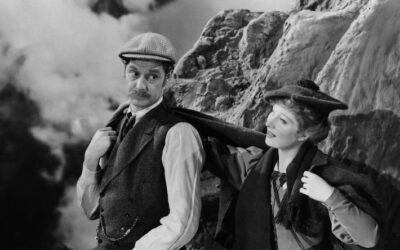
Sam Wood’s <em>Goodbye, Mr. Chips</em> (1939)
Sam Wood’s romantic picnic on a mountain in Goodbye, Mr. Chips is his idea. James Hilton’s Charles Chipping and Katherine Ellis meet while hiking in the Lake District, fall “head over heels in love,” and marry soon after. Wood sets the mountain hiking in the Austrian Tyrol and expands the chance meeting into a picnic […] read more
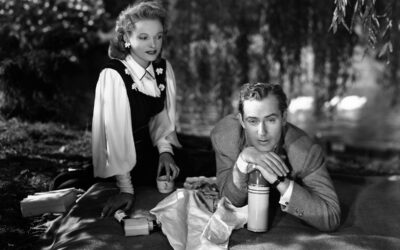
Herbert Wilcox’s <em>Spring in Park Lane</em> (1948)
A picnic in the park is a perfect situation for accommodating a would-be lover. Suspicious that her footman Richard is not what he pretends to be, Judy allows him to picnic with him on the Serpentine in Hyde Park. Conversation is rapid fire and full of innuendo and lines of poetry out of context to […] read more
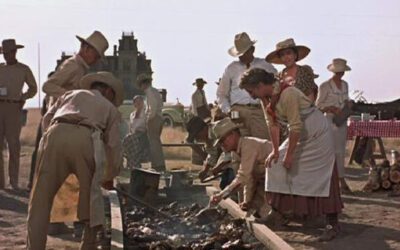
George Steven's <em>Giant</em> (1952)
Stevens’ barbacoa picnic in Giant is sure-fire cinema. When Virginia-born-and-bred Leslie Lynnton attends her first Texas picnic, she faints. Barbacoa is an acquired taste at a picnic or elsewhere. It may be delicious, but it is not for the squeamish. Leslie realizes she is not looking at an ordinary picnic clambake when three vaqueros lift […] read more
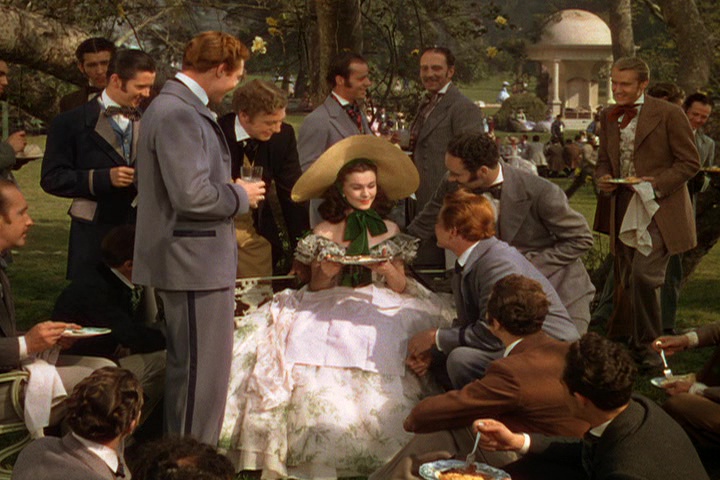
Victor Fleming’s <em>Gone With the Wind</em> (1939)
Arriving at Twelve Oakes, Gerald O’Hara is pleased to say, “Well, John Wilkes, it’s a grand day you’ll be havin’ for the barbecue.” It’s momentous because it is the beginning of Scarlett and Rhett Butler’s relationship and the engagement party for Ashley Wilkes and Melanie Hamilton. As a social gathering, the picnic barbecue is a […] read more