
Drama
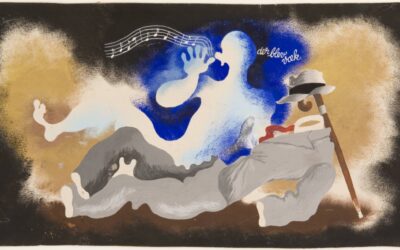
Kjeld Abell’s <em>The Melody that Got Lost</em> : <em>Melodien der blev væk </em> (1936)
Abell’s The Melody That Got Lost is a surrealistic drama with music that severely critiques modern conformity to middle-class values and the insipid qualities of middle-class imagination with a picnic filled with trash. The picnic scene begins when a typically boring Sunday dinner fades into an outdoor setting with a hiking song: “Over hill, we […] read more
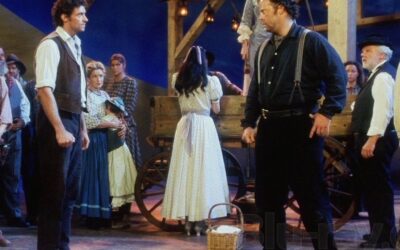
Richard Rodgers and Oscar Hammerstein II's <em>Oklahoma!</em> (1943)
The box social auction, aka picnic basket auction, is Rodgers and Hammerstein II’s original to their production of Oklahoma! It’s a substitute for lovers’ combat. Instead of knights in armor, the good-hearted cowboy Curley and black-hearted farmhand Jud Fry bid for Laurey’s picnic basket. Each man knows the winner is entitled to picnic with Laurey. […] read more
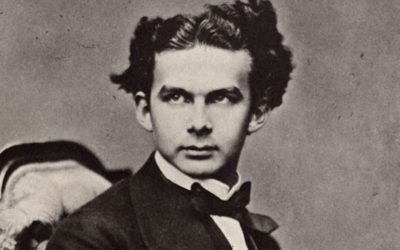
Robert Peters's <em>The Picnic in the Snow: Ludwig of Bavaria<lem> (1982)
Peters’ verse narrative The Picnic in the Snow: Ludwig of Bavaria (1982, rev. 1986) is a bio-drama about Ludwig II, King of Bavaria, an unhappy gay man, creative and destructive, who “cultivated the esthetic experience and the dream world.” Ludwig’s picnic in the snow is a sexual liaison with Richard Hornig, his equerry. The picnic […] read more
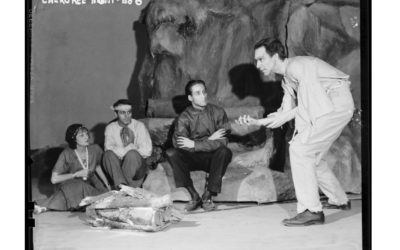
Lynn Riggs’s <em>Cherokee Night</em> (1936)
Riggs’s campfire picnic is atop Claremore Mound, a barren hill, 785 high that juts up from the flat landscape that was the scene of a battle between the Cherokees and the Osages. “At the right and forward, a fire burns. Three couples–boys and girls– sit about it, eating their picnic supper. They are all part […] read more
Eugene O’Neill’s <em>Ah, Wilderness!</em> (1933)
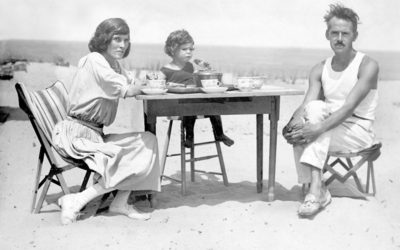
There is no picnic scene in Ah, Wilderness! There is a Sachem Men’s Club picnic on Strawberry Island, but audiences never get to see it. All we know is that Uncle Sid Davis returns home tired and drunk. Featured Image: Eugene O’Neill with his wife and daughter in Cape Cod, 1922. The New York Times […] read more

Edward Albee's <em>Seascape</em> (1975)
Albee’s Seascape is set on a beach, the evolutionary boundary from which sea creatures emerged to walk on land. The action begins innocently. Charlie and Nancy Man are just finishing a picnic when they encounter two primordial green lizards, Leslie and Sarah, who have crawled up the beach. The confrontation is antagonistic and often cruel. […] read more
Menander’s <em>The Bad Tempered Man</em> (316 BCE)
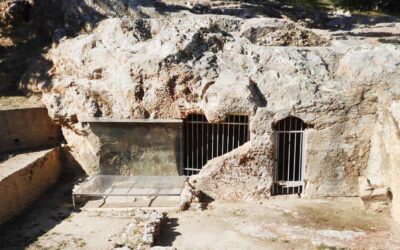
Menander’s comedy The Bad-Tempered Man [aka Dyskolos] was lost for centuries until discovered in the 1950s. A pivotal episode is a pilgrimage to the shrine of Pan at Phyle on a hillside in what is now Athens, where a sacrificial meal will cooked to appease the god. The offering is meant to help Sostratus, a […] read more
Beth Henley's <em>Ridiculous Fraud</em> (2007)
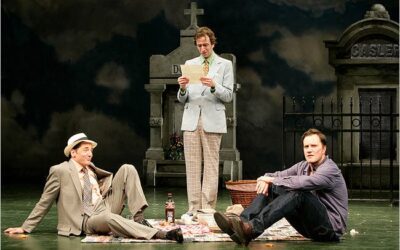
Beth Henley’s play Ridiculous Fraud, a one-act play, climaxes with a family picnic in a cemetery. “Picnics in the graveyard! A great New Orleans tradition,” says Uncle Baites, “Why weep over the dead? We come, we go. We come, we go!” It is the annual Clay family Easter Sunday reunion, and they gather at the […] read more
Tennessee Williams's <em>A Lovely Sunday for Creve Coeur</em> (1979)
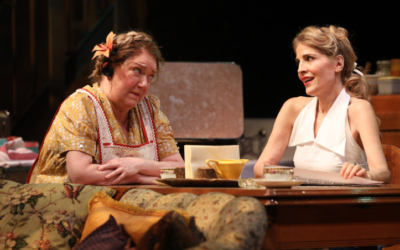
Tennessee Williams’s A Clear Day for Creve Coeur, a one-act play, is so anti-picnic that it ends the action before the picnic begins. The play’s title is a pun on the French creve coeur, which means heartbreak. In the mid to late 1930s, Creve Coeur was an active amusement park in St. Louis. The action […] read more
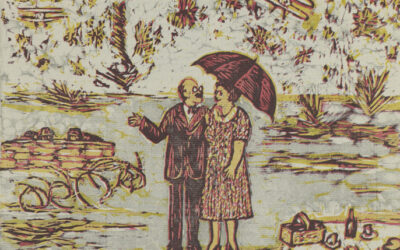
Fernando Arrabal's <em>Picnic on the Battlefield</em> (1959c.)
Fernando Arrabal’s Picnic on the Battlefield I, a one-act play, is a metaphor for the stupidity of war. Arrabal undermines picnic expectations as the well-meaning but obtuse Tépans march onto an active battlefield to entertain their son Zapo. When the action begins, Zapo is surprised to see them and cautions them to leave because they […] read more
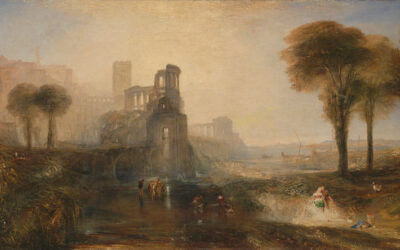
Maurice Baring's <em>Caligula's Picnic</em> (1911)
Before the picnic breaks up and all the guests are drowned in the Bay of Naples, peacock and eels are served. Baring’s sense of humor is satirical and macabre. Here is one of his jokes in Caligula’s Picnic, a one-act closet drama: Proteus: I once knew a man who ate twenty-seven eels for a bet. […] read more
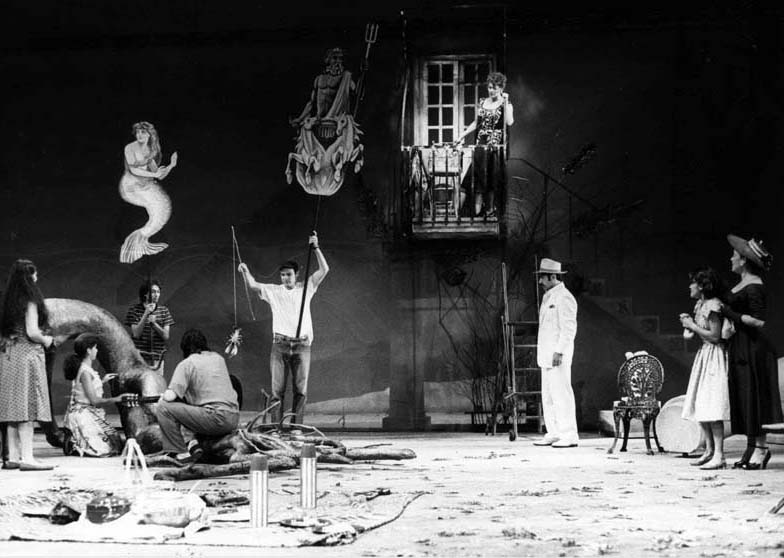
Jane Bowles' <em>In the Summer House</em> (1953)
Bowles’s In the Summer House is an absurd play, and she admirably proves the rule that some people do silly things at picnics. The action begins with a lawn picnic at which characters with tenuous relationships incessantly bicker. When Mr. Solares enters, bringing a picnic to Gertrude Eastman Cuevas, she is unenthusiastic. “I think I’ll […] read more
Tom Stoppard's "Wickerwork Picnic Baskets" (1972)
Tom Stoppard’s Artist Descending a Staircase (1972) includes the memorable simile: “Skill without imagination is craftsmanship and gives us many useful objects such as wickerwork picnic baskets. Imagination without skill gives us modern art.” A neat turn of phrase. The artist Donner speaks it during a chatty intellectual argument with this friend and rival Beauchamp. […] read more
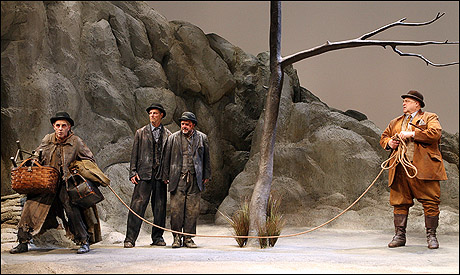
Samuel Beckett's <em>Waiting for Godot</em> (1953)
The setting for Samuel Beckett’s Waiting for Godot, aka En antendant Godot, is an unlikely place for an unhappy picnic — an empty stage and a tree without leaves. The picnic begins when Pozzo and Lucky arrive. Pozzo brandishes a whip and holds Lucky at the end of a long, heavy rope, like a packhorse […] read more
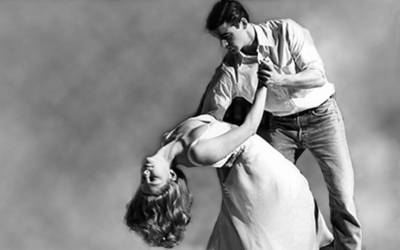
William Inge's <em> Picnic</em> (1953)
When Hal Carter tells Madge Owens, “We’re not goin’ on no goddamn picnic,” he means they are “goin'” to make love instead. Madge is willing. They are so passionate, their lust so potent, audiences never notice that when the curtain falls, there is no picnic. Audiences love it not because of what they miss seeing […] read more
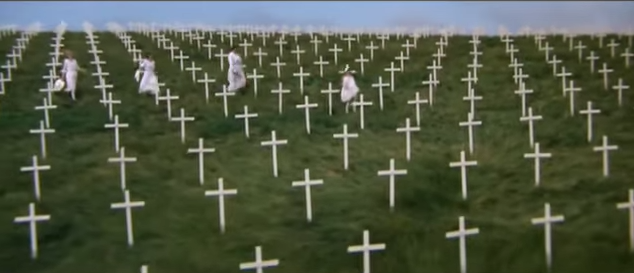
Richard Attenborough's <em>Oh! What a Lovely War</em> (1969)
Attenborough’s Oh! What a Lovely War keeps the essential anti-war satire originally envisioned by Charles Chiltern and Joan Littlewood. New and effective, however, is the film’s final sequence, which begins as a picnic on the grass and ends with a panoramic view of four women meandering through a military cemetery, white crosses on a field […] read more
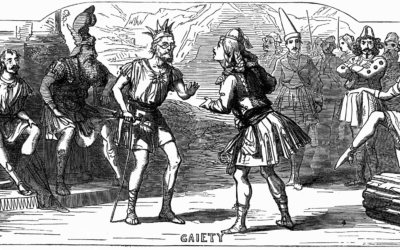
Gilbert & Sullivan's <em>Thespis</em> (1872)
Gilbert and Sullivan’s Thespis or the Gods Grown Old is an early collaboration and not one of their best. It’s a topsy-turvy derivative version of Jacques Offenbach’s operetta Orpheus in the Underworld or Orphée aux envers. Instead of comedy in the Underworld, there is comedy on Mount Olympus as a troupe of silly actors walk […] read more