
Battlefield
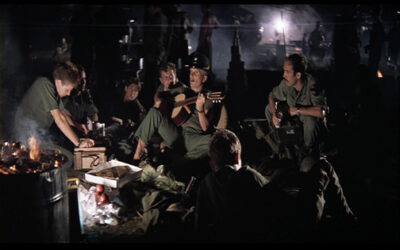
Francis Ford Coppola’s <em>Apocalypse Now</em> (1979)
Coppola’s Apocalypse Now is inspired by Conrad’s The Heart of Darkness. Coppola adapted the action and characters to his conception of the “insane” war in Vietnam, and the beach party picnic is his addition to the narrative. Coppola ensures nothing is quite right in his narrative, especially Lt. Col. Bill Kilgore’s war in Vietnam. As […] read more
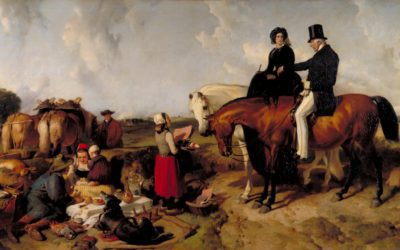
Edwin Landseer’s<em>A Dialogue at Waterloo</em> (1850)
Landseer’s A Dialogue at Waterloo is a portrait of Arthur Wellesley, Duke of Wellington, and his daughter-in-law, Lady Douro, visiting the battlefield. As the Duke describes the scene as thirty-five years before, they are accosted by a young peasant girl selling souvenirs of the battle. Behind her, enjoying a picnic is her family. The great […] read more
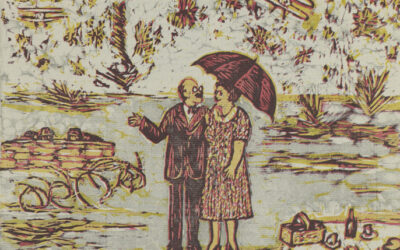
Fernando Arrabal's <em>Picnic on the Battlefield</em> (1959c.)
Fernando Arrabal’s Picnic on the Battlefield I, a one-act play, is a metaphor for the stupidity of war. Arrabal undermines picnic expectations as the well-meaning but obtuse Tépans march onto an active battlefield to entertain their son Zapo. When the action begins, Zapo is surprised to see them and cautions them to leave because they […] read more
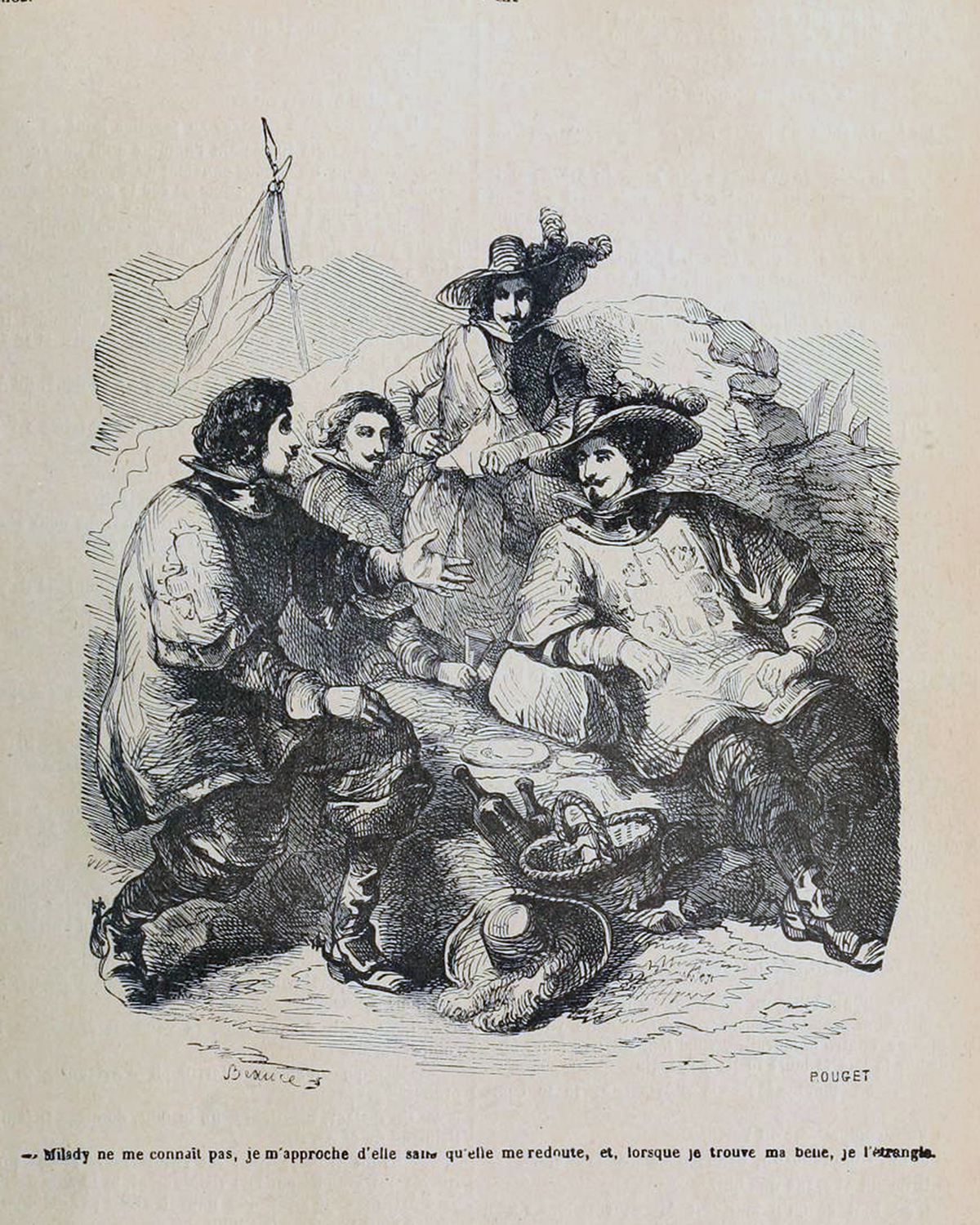
Alexandre Dumas and Auguste Maquet's <em> The Three Musketeers</em> (1844)
The battlefield déjeuner sur l’herbe in The Three Musketeers set a pattern for sardonic picnic humor. * Dumas and Auguste Maquet (his co-author) add comic relief to the severe Siege of La Rochelle when during a lull in the battle, Athos makes a bet that he, D’Artagnan, Porthos, and Aramis will have a successful dejeuner […] read more
Leonid Andreyev's <em>The Red Laugh</em> Picnic (1904)
Leonid Andreyev’s morose, anti-war story conjures the nightmare of Russia’s war in Manchuria. The picnic is described in a chapter titled “Horror and Madness” that occurs just after soldiers “rescue” a dead comrade on the front line. “That same evening,” the narrator says, “we got up an entertainment — a sad and strange entertainment, at […] read more
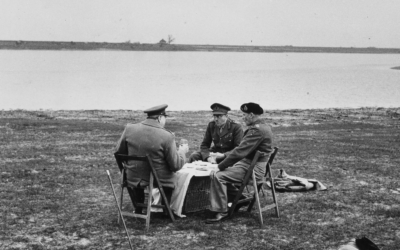
Winston Churchill Picnics on the Battlefront (1945)
With the Nazi army retreating, Churchill picnicked in Holland on the west bank of the Rhine River with Gen. Bernard Montgomery and Field Marshall Alan Brooke in February 1945. Allied armies had already crossed the Rhine and invaded Germany, and though the area was secure, German artillery and snipers were a threat. It is unclear […] read more
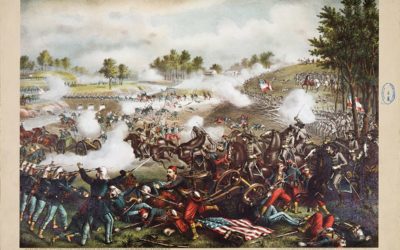
Herman Melville’s “The March into Virginia Ending in the First Manassas (July, 1861)” (1866)
The phrase “No picnic in May” was already a cliché in July 1861 when Melville wrote in the aftermath of Bull Run, also known as the Battle of Manassas. It was an unexpected defeat for the Union army that deflated expectations of an easy victory against the Confederacy and indicated a protracted war: Who here […] read more
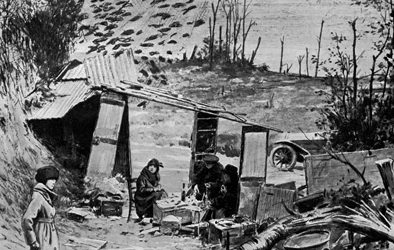
<em>Illustrated London News’s </em> Picnics on the Old Front” (1919)
When the war began in 1914, picnic baskets were shelved. But when the peace was negotiated at Versailles in June 1919, wickers were dusted off and repacked. Signaling the change, The Illustrated London News editors suggested that it was time for picnicking—in the trenches on the French front of the battlefield, “Picnics on the Old […] read more