
Cookbooks
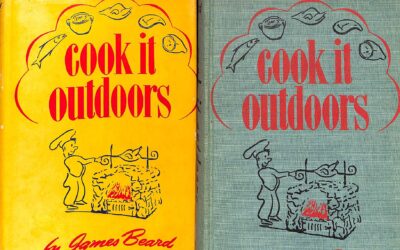
Selected Cookbooks
Picnic cookbooks are relatively new. The first in 1915 was Linda Larned’s One Hundred Picnic Suggestions. Like the song from Gypsy, “You Gotta Have a Gimmick.,” new cookbooks, each striving for novelty, appear every year. Some are prettier than others. Some use photographs, line drawings, or copies of original art. Beard, J., Cook It Outdoors […] read more
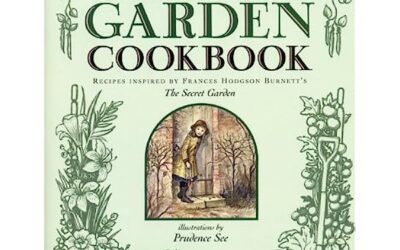
Amy Colter’s The Secret Garden Cookbook (1999)
Colter’s The Secret Garden Cookbook is mainly a collection of high calory, sugary and fatty foods. She starts with Burnet’s essential food path and never wanders far off. “You can trifle with your breakfast and seem to disdain your dinner,” Burnet writes, “if you are full to the brim with roasted eggs and potatoes and […] read more
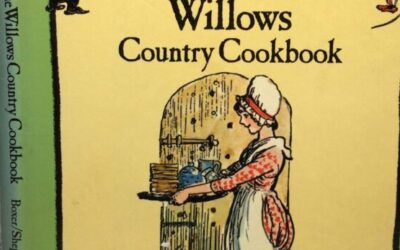
Arabella Boxer’s The Wind in the Willows Country Cookbook (1983)
Boxer’s “Food for Excursions” is mainly a collection of carbohydrates, sweets, and fatty meats. Her suggestions include Riverside Sandwich, Sausage Sandwich, Potted Shrimp Sandwich, Toad Hall Steak Sandwich, Stuffed Eggs, River-Bankers Lunch, hard-cooked Eggs with Nutty spice island Mixture, Sausage Rolls Leafy Summer, Lettuce Snacks, Cornish pasties, Hot meat pasties, Rabbit pasties, Easy Meat Loaf, […] read more
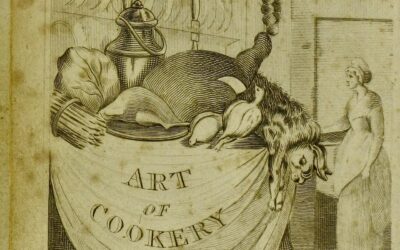
Eliza Rundell’s Fricassee and Cold Beef in A New System of Domestic Cookery (1806)
Fricassee is picnic food when dining indoors. It’s mentioned in Samuel Foote’s The Nabob (1772) and Mary Belson Elliott’s The Mice and Their Pic Nic (1809). Had Elliott needed a recipe, she might have found it in Mrs. Rundell’s A New System of Domestic Cookery, Formed Upon Principles of Economy, and Adapted to the Use of Private Families (1806). Fricassee of […] read more
Constance Spry and Rosemary Hume’s Recipe for Sausage Rolls in The Constance Spry Cookery Book (1937)
In “Picnics and Outdoor Meals,” Spry writes, “The nicest outdoor meals are those cooked on the spot,” and among the best are barbecues.” She does not like “grand picnics,” the kind for which everything is transported and served by staff. “This is not the best way to enjoy a picnic,” she asserts. Paradoxically the recipe […] read more
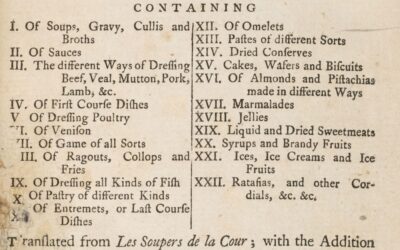
Benjamin Clermont ‘s Recipe for Perigord Pie in The Professed Cook (1769)
Among Clermont’s recommendations for traveling is a cold Perigord pie. It’s an expensive food ordinary folks might not afford, but a favorite of the posh Pic Nic Club of London. clermont’s text is a translation of Menon’s 1755 Soupers de la cour. Pâté de (Perigueux), A cold loaf for traveling. Take a farce with partridge […] read more
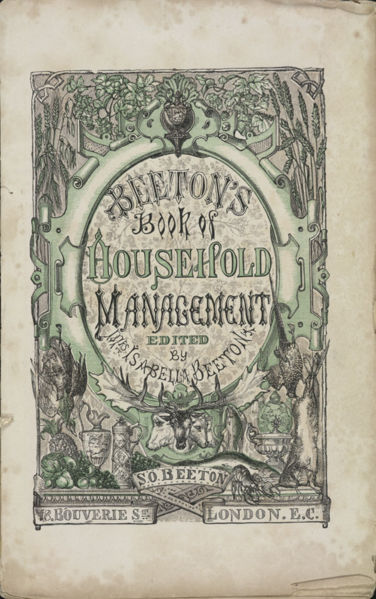
Isabella Beeton’s “Veal Pie” in The Household Management (1861)
Unlike Sam Weller’s “weal pies,” Mrs. Beeton’s includes a recipe for a proper veal pie.* Veal Pie Ingredients.—2 lbs. of veal cutlets, 1 or 2 slices of lean bacon or ham, pepper and salt to taste, 2 tablespoonfuls of minced savoury herbs, 2 blades of pounded mace, crust, 1 teacupful of gravy. Mode.—Cut the cutlets […] read more
Mary Lincoln ‘s Mrs. Lincoln’s Boston Cook Book: What to Do and What Not to Do in Cooking (1884)
Lincoln’s Mrs. Lincoln’s Boston Cook Book: What to Do and What Not to Do in Cooking was influential, especially because Fannie Merritt Farmer was among her students at the Boston Cooking School. Specifically, Lincoln offers these “Picnic Dishes”: Woodlawn Chicken, Sweetbread Sandwiches, Potted Liver, Highland Eggs, and Chantilly Cakes (chocolate with coconut icing). But she […] read more
Wyvern’s Picnic Ham and Picnic Tongue in Culinary Jottings (1879)
Picnic Ham is a staple cut of pork that’s cheap and needs extensive cooking or smoking. It is sometimes retailed as a picnic shoulder or pork shoulder since it is the entire front leg and shoulder. Retailers cut the meat in two, about six pounds, and may call it a Boston butt. The picnic ham […] read more
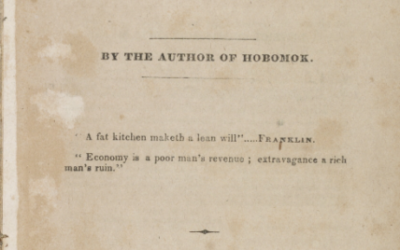
Lydia Maria Child’s The Frugal Housewife, Dedicated to Those Who Are Not Ashamed of Economy (1829)
Child’s The Frugal Housewife is among the most popular American cookery and domestic manuals but has no specific recommendations for picnics. The 1830 edition does have a recipe for buffalo’s tongue; “Buffalo’s tongue should soak a day and a night and boil as much as six hours.” But the rising popularity of picnicking made no […] read more
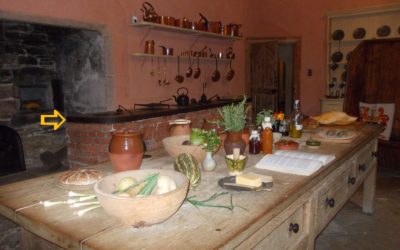
Maggie Black’s The Jane Austen Cookbook (1995)
Suggested contemporary picnic fare for jane Austen includes many dishes requiring extensive preparation. We know who does the eating, but who does the prepping and the cooking? Broccoli (served hot or cold) Salmagundi Oysters, Stewed and in Loaves A Pretty Dish of Eggs Sliced hard-boiled eggs quick-fried in butter seasoned with salt, pepper, nutmeg, and […] read more
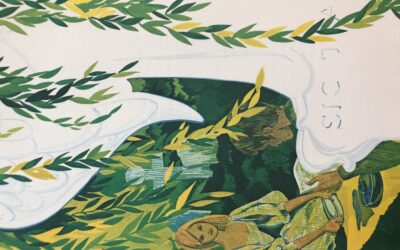
Nikka Hazelton’s The Picnic Book (1969)
Hazelton prefers picnics that are not spontaneous.. She contends a picnic begins when you “invite the people and then figure out the food.” “My idea of a good picnic, she writes, “is one that I can fix up at home and need only carry and unpack at the chosen spot. I loathe cooking out-of-doors, which […] read more
James Beard’s Menu’s for Entertaining (1965)
Tucked into Beard’s many cookbooks are informative and playful suggestions for picnicking. He writes, “Wherever it is done, picnicking can be one of the supreme pleasures of outdoor life. At its most elegant, it calls for the accompaniment of the best linens and crystal and china; at its simplest, it needs only a bottle of […] read more
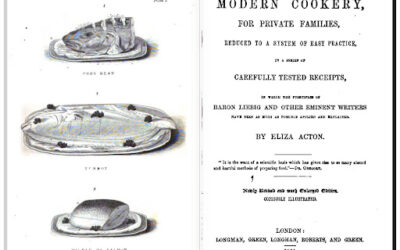
Eliza Acton’s Modern Cookery recipe for Lobster Salad (1845)
Eliza Acton’s recipe for lobster salad is contemporary with Gilbert & Sullivan’s Thespis. Lobster Salad. First, prepare a sauce with the coral of a hen lobster, pounded and rubbed through a sieve, and very gradually mixed with a good mayonnaise, remotdade (remoulade), or English salad-dressing of the present chapter. Next, half fill the bowl or […] read more

Elizabeth David’s A Book of Mediterranean Food (1950)
David’s favorite picnic food is tian. She asserts that it’s simple for the experienced cook, especially if you have a tian, the Provençal earthenware casserole it is cooked in. You also need freshly baked bread, butter, cheese, and wine. David’s recipe is helpful: “The dish consists of gratin of green vegetables, spinach, and chard (blettes), […] read more
Elizabeth David’s Summer Cooking (1955/65)
David’s books are suffused with references to picnics. She could be informal or according to her whims, something she adopted from her youth, which she wrote about in Summer Cooking, “Picnic addicts [like herself] seem to be roughly divided between those who frankly make elaborate preparations and leave nothing to chance, and those others whose […] read more
Sunset Books’ Picnics and Tailgate Parties (1982)
Good advice for packing a picnic: “Pack the unbreakable items first, the French bread last of all.” See Cornelia Fogle. ed. Sunset Books, Picnics and Tailgate Parties. Menlo Park, California: Lane Publishing, 1982 read more
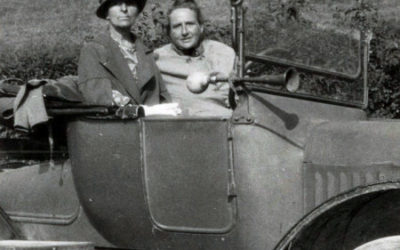
Alice Toklas’s Picnic Sandwiches in The Alice B. Toklas Cookbook (1954)
Toklas suggests that chopped roast beef and chopped chicken with mushrooms make the best picnic sandwiches. When these were not enough, Toklas and her partner Gertrude Stein stopped at restaurants where they might dine on Morvan Ham with Cream Sauce, three-minute veal steak, grilled perch with fennel, puree of artichoke soup or bouillabaisse. Toklas mischievously describes the picnic sandwiches […] read more
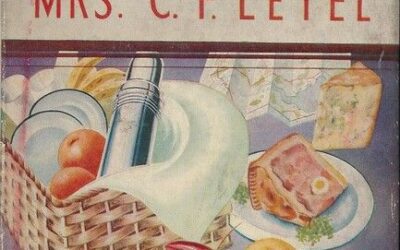
C.F. Leyel’s Picnics for Motorists (1936)
Leyel’s Picnic for Motorists is designed for an emerging market linking the joy of picnics with the pleasure of motoring. “There are many people with cars who make a regular habit of spending Saturday or Sunday in the country,” Leyel trills, “with a hamper of food, they are independent of hotels and can eat their […] read more
Mrs. Rundell’s A New System of Domestic Cookery (1806)
A fricassee is picnic food when dining indoors. It’s mentioned in Samuel Foote’s The Nabob (1772) and Mary Belson Elliott’s The Mice and Their Pic Nic (1809). Had Elliott needed a recipe, she might have found it in Mrs. Rundell’s A New System of Domestic Cookery, Formed Upon Principles of Economy, and Adapted to the Use […] read more
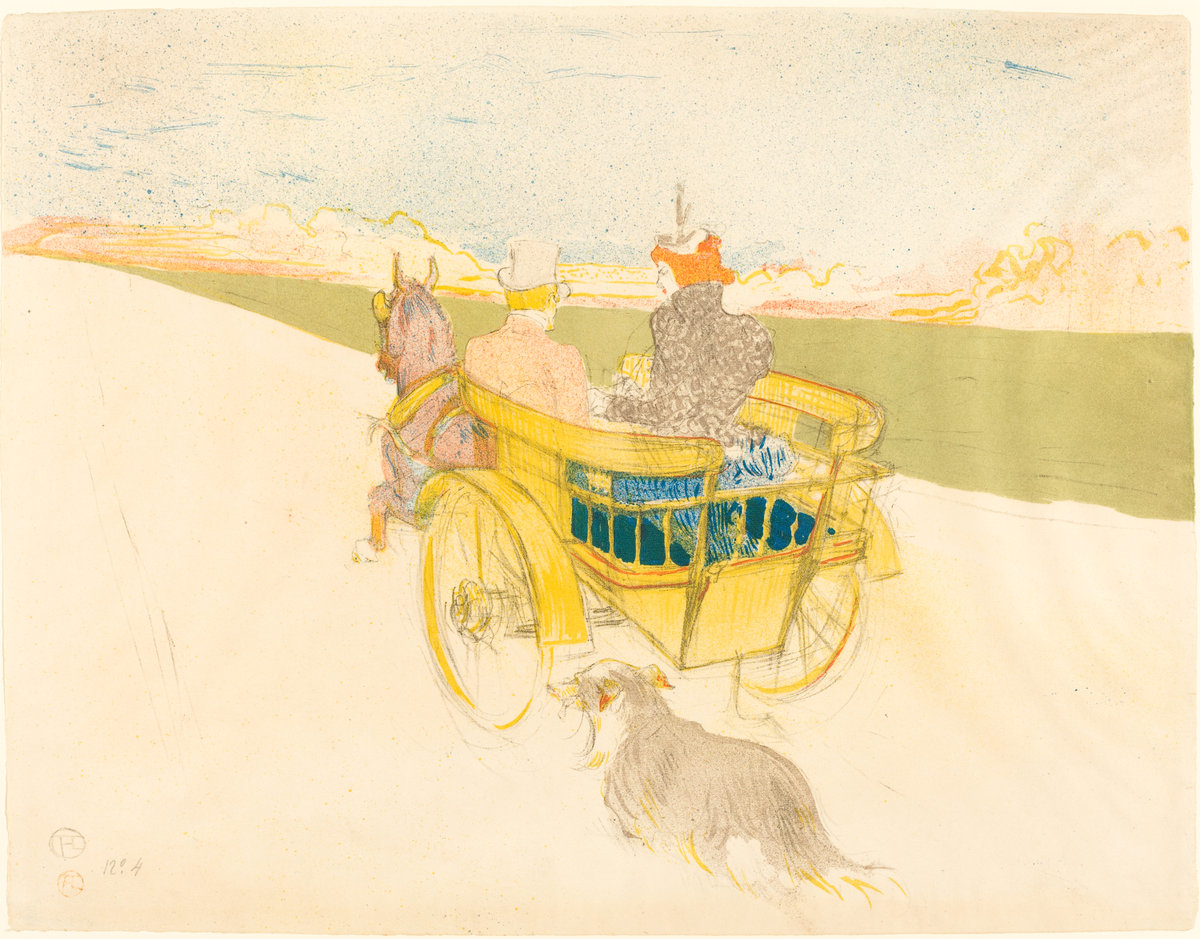
Henri de Toulouse-Lautrec’s Partie de Campagne (1897)
Henri de Toulouse-Lautrec’s Partie de Campagne, an 1897 lithograph, depicts a couple going off to spend a day in the country. Lautrec makes a visual pun by having a dog run behind the conveyance known as a dogcart. According to French usage of the day, Lautrec prefers the euphemism for partie de campagne. Julia Child […] read more
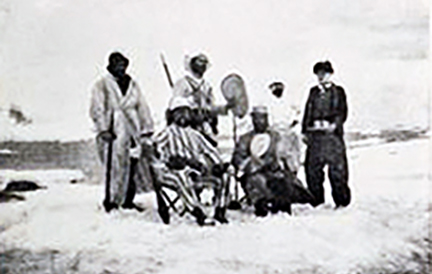
Auguste Escoffier’s The Complete Guide to the Modern Art of Cookery (1903)
For all we know, Jean-Baptiste Charcot’s chef on the Pourquoi Pas! Used this recipe for Crêpes Suzette when the crew celebrated Mardi Gras in Antarctica (1909). 2450— SUZETTE PANCAKES Make these from preparation A, flavoured with cura9oa and tangerine juice. Coat them, like Gil-Bias pancakes, with softened butter, flavoured with curacoa and tangerine juice. 2403— PREPARATIONS […] read more
Isabella Beeton’s The Book of Household Management(/em> (1861)
Beeton’s picnic entry appears almost as an afterthought in the last chapter of Household Management. As with other formal dinner suggestions, the picnic is not a casual affair but a staged “dinner held in the “rough.” Where Beeton situates her picnic is left unmentioned, perhaps a public park, a garden, anyplace suitable for a group of […] read more
Claudia Roden’s Picnic(1981)
Roden’s Picnic appeared in England as Picnic (1981), then revised and retitled Everything Tastes Better Outdoors (1984). Her impetus is the belief that “There is something about fresh air and the liberating effect of nature which sharpens the appetite and heightens the quality and intensity of sensations.” Everything Tastes Better Outdoors (1984) is divided broadly into […] read more
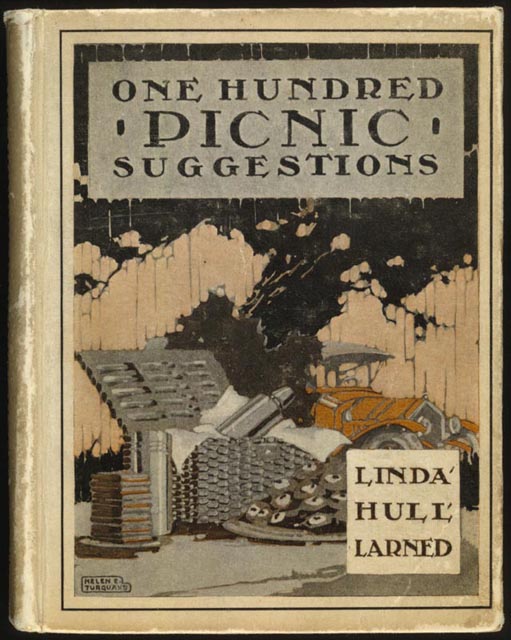
Linda Larned’s One Hundred Picnic Suggestions (1915)
Linda Larned One Hundred Picnic Suggestions is the first picnic cookbook to recognize the value of automobiles for picnicking. Because picnics require transporting food and beverages, automobiles, which she regularly refers to as motor cars, made this practical. The book’s cover shows a picnic basket, sandwiches, a thermos in the foreground, and a motorcar in […] read more
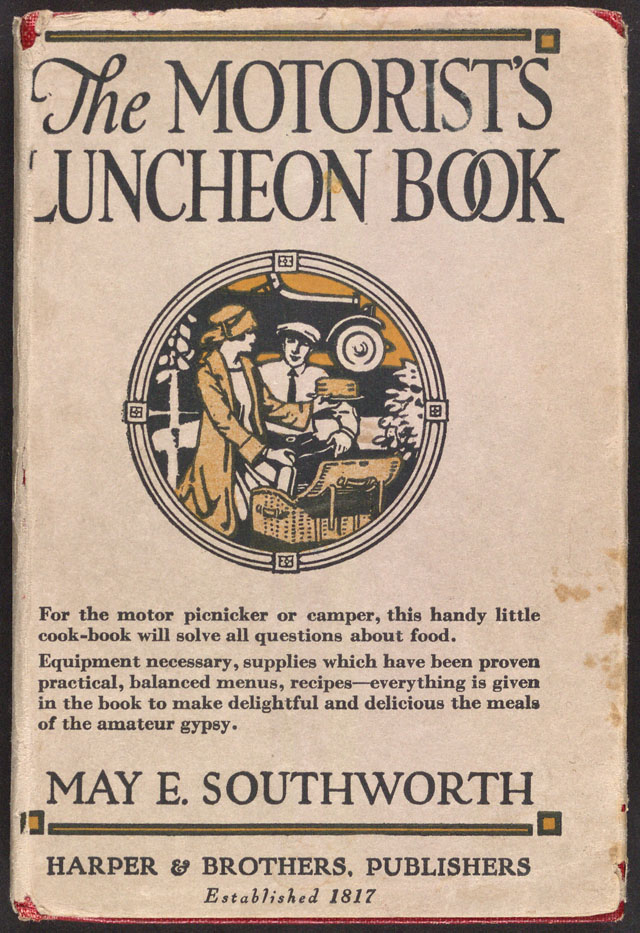
May E. Southworth’s The Motorist’s Luncheon Book (1923)
Southworth’s The Motorist’s Luncheon Book hypes motor picnicking. “The love of the great outdoors grows with each new automobile,” she writes, “The friendly road beckons, the trusty motor champs at the brake.” It’s very like Ford Motors’s advertisements for the 1923 Touring Car and the slogan “Every day without a Ford means lost hours of […] read more