
Timeline
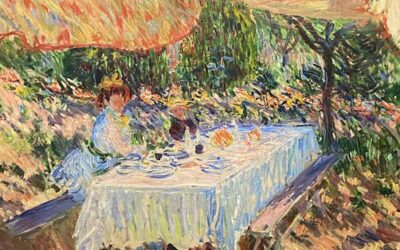
Claude Monet <em>The Tent, Giverny</em> (1883-1886). Also, <em>Lunch Under the Tent and <em>Lunch Under the Canopy</em>
Claude Monet The Tent, Giverny, about 1883-1886. read more
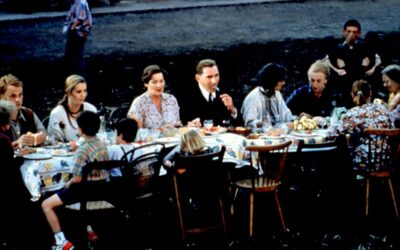
Marleen Gorris <em>Antonia’s Line</em> (1995)
Antonia is the matriarch of an extended family: her daughter, child, and partner, her friends, and castoffs who need a home. Each year, a long table is set in the barnyard for the extended family to picnic. See Marleen Gorris. Antonia’s Line (1995). Screenplay by Marleen Gorris. Also, Emma Bovary’s wedding party in Vincente Minnelli’s […] read more
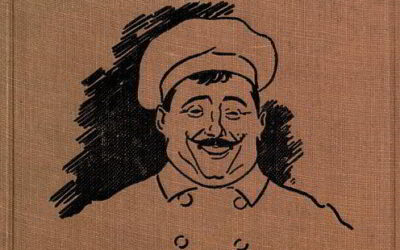
“Thumbers” or Bookmaker’s Sandwiches
“Thumbers” are thick beef, pork, or mutton sandwiches that were popular crowd food at the Newmarket racetrack. The name alludes to the small-sized sandwiches held between the thumb and forefinger. Except for gastronome Edward Spencer. in his Cakes & Ale: A Memory of Many Meals and a recipe for “Thumbers,” dignified with the name Bookmaker’s […] read more
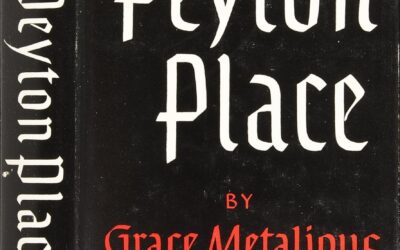
Grace Metalious's <em>Peyton Place</e> (1956)
Allison McKenzie and Norman Page teenagers ride bicycles to a picnic on the Connecticut River. Metalious's picnic is similar to Carson McCullers’s in The Heart is a Lonely Hunter; during which Mick Kelly and Harry Minowitz talk about adult life and relationships. Mick and Harry make love; Allison and Norman talk and eat ham or […] read more
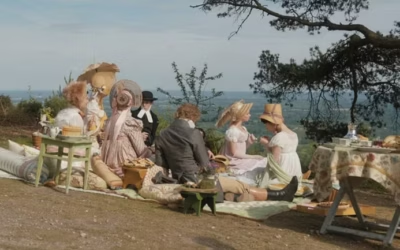
Jane Austen’s <em>Emma</em) (1816)
Austen’s Emma has two picnic episodes, one of which never happens * and the other a proper picnic at Box Hill. During strawberry season, Emma Woodhouse and her crowd gather in Knightley’s Donwell Abbey garden. Mrs. Elston’s enthusiastic plan for a “pic-nic parade” is cutesy. Addressing Knightley, she says, “It is to be a morning […] read more
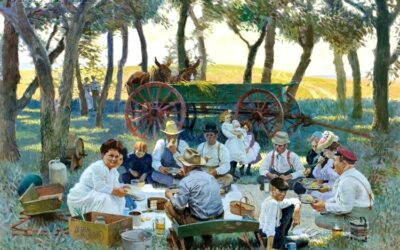
John Philip Falter's <em>Prairie Grove Picnic</em> (1977)
Falter was a commercial artist and illustrator mostly known for his Saturday Evening Post magazine covers. Featured Image: John Philip Falter Prairie Grove Picnic. Oil on Linen (1947) read more
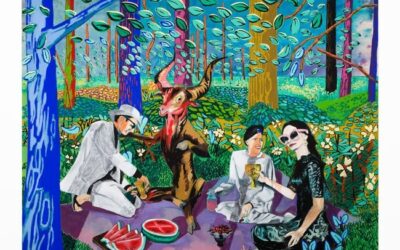
Theodore Boyer's <em> Luncheon with the Devil</em> (2012)
The Devil is portrayed as a smiling horned goat enjoying a picnic with a man and two women dressed in contemporary clothing. The food is watermelon. There is a story for this picnic that is yet to unfold. Featured Image: Theodore Boyer. Luncheon with the Devil. Oil and casein on dyed canvas (2022) read more
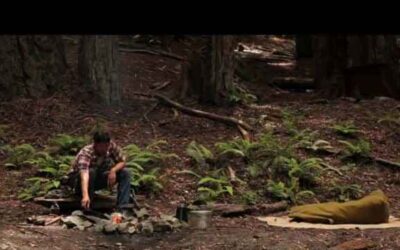
Ernest Hemingway's "Big Two-Heated River, Part Two" (1925)
It resembles a picnic; it’s recreational, but it’s lunch on a trout-fishing excursion on Michigan’s Upper Peninsula. In Ernest Hemingway’s story “Big Two-Hearted River, Part Two,” Nick Adams breaks to have a sandwich. Nick is depressed and trying desperately to get over his war memories and a nagging injury. Fishing for trout in a cold […] read more
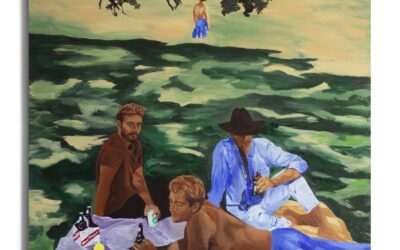
R.F. Alvarez's <em>Luncheon on the Pasture</em> (2022)
Beer and apples. Featured Image: Luncheon on the Pasture, acrylic on canvas. read more
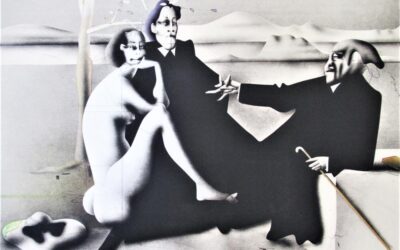
Paul Wunderlich’s <em>Das Frühstuck im Grünen</em> [<em>Luncheon on the Grass</em?] (1977)
Wunderlich’s Das Frühstuck im Grünen [Luncheon on the Grass] is a surrealistic adaptation of both Édouard Manet’s Luncheon on the Grass. Sensuality, sex, and any semblance of pleasantries are absent. Distorted, seemingly unhappy, figures sit in a barren landscape. Featured Image: Paul Wunderlich, Das Frühstuck im Grünen, #2 (1977), lithograph. (1977) read more
J.V. Davidson-Houston's "Siberian Picnic" (1939)
In August 1939, Russia and Germany signed a non-aggression pact. The following October, Major Davidson-Houston was spying for the British Army, and “Siberian Picnic” is his public account of his 5,772-mile Trans-Siberian “Hard Class” train ride in late October 1939, which was long, dirty, and cold was no picnic. Curiously, Davidson-Houghton took careful notes of […] read more
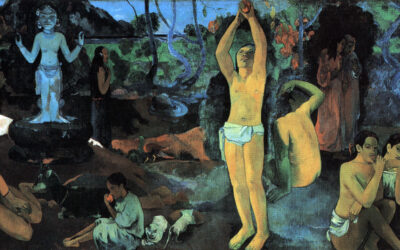
Paul Gauguin’s <em>Where Do We Come From? What Are We? Where Are We Going? </em> (1897/98)
Gauguin’s Where Do We Come From? What Are We? Where Are We Going? Vague vaguely suggests a picnic. Escaped from France, Gauguin seemed to believe his Tahitian life was picnicky. “Everything in the landscape blinded me, dazzled me,” he wrote in the Noa Noa journal. It was a feeling that never subsided. The painting’s narrative begins […] read more
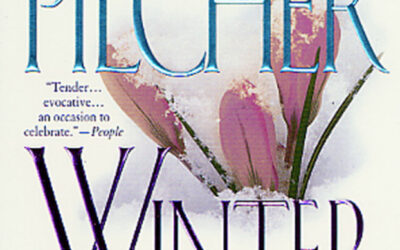
Rosamunde Pilcher's <em>Winter Solstice, A Novel</em> (2000)
After much tribulation, Elfirida Phipps Oscar Blundell and friends gathered at a Christmas Eve picnic for the start of a happy future. The timing purposefully combines the celebration of the birth of Jesus Christ and the winter solstice that is the beginning of the celestial new year; both bring tidings of good cheer. As Pilcher […] read more
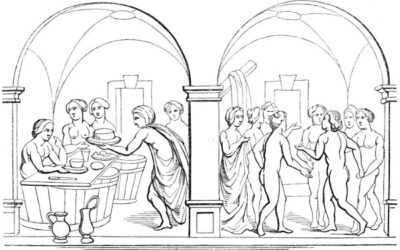
Thomas Wright’s <em>The History of Domestic Manners and Sentiments in England</em> (1862)
Thomas Wright found songs, now obscure, about women having meals in taverns and bathhouses that are suspiciously like picnics. He writes about this in The History of Domestic Manners and Sentiments in England, suggesting that sharing food and entertainment is common among the lower classes. In one song, women meeting in a tavern each contribute […] read more
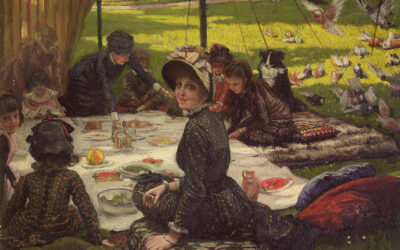
James [Jacques] Tissot’s <em>Picnic on the Grass</em> (1881/82)
Elizabeth Newton and her children enjoy a birthday party in Tissot’s garden in St. John Wood, London. The partygoers sit on cushions beside a picnic cloth laden with food and drinks prominently placed in the immediate foreground. The children are of secondary importance. Tissot was in love with Newton, and they were partners for five […] read more
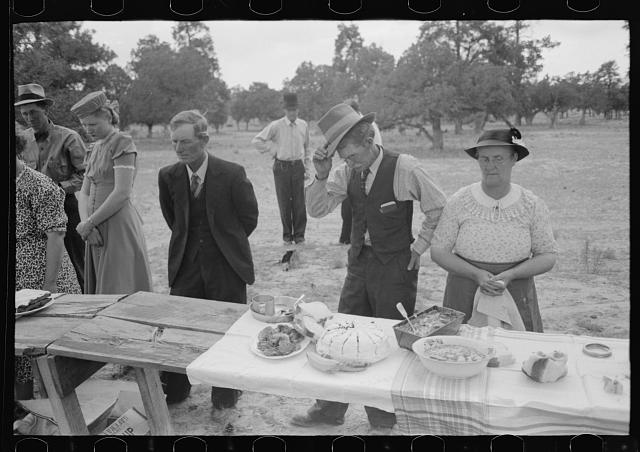
Russell Lee’s <em> The Blessing at Dinner on the Grounds at the All-Day Community Sing, Pie Town, New Mexico</em> (1940)
Featured Image: Russell Lee. The Blessing at Dinner on the Grounds at the All-Day Community Sing, Pie Town, New Mexico (1940). Courtesy Library of Congress. LC-USF33- 012785-M5 [P&P] Also, Dinner on the Grounds, Nell Choate Jones. Church Supper (1945) Greenville Museum of Art Greenville, SC; Edna Lewis’s The Taste of Country Cooking \ (1977); Paul […] read more
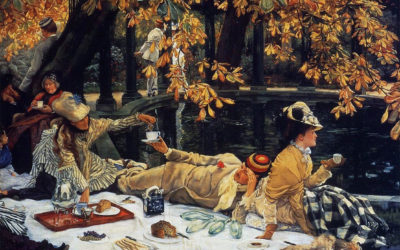
James [Jacques]Tissot <em>Holyday</em> (1876c.)
The epitome of a Victorian picnic is Tissot’s Holyday. Tissot arranged a picnic of a family and friends in the garden of his home in St. John Woods. They sit beside a sparkling white cloth, china, flatware, a cake, sliced cheese on a platter, a platter of grapes, tea, and fizzy water. The picnickers are […] read more
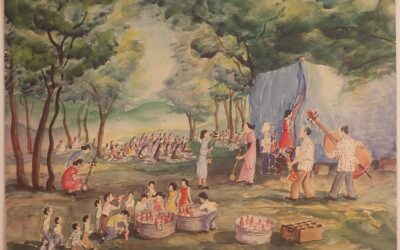
Estelle Peck Ishigo’s <em>Japanese Picnic in Elysian Park</em> (1954)
Ishigo accompanied her Japanese husband Arthur when he was interred in 1942 until World War II ended. Japanese Picnic in Elysian Park exemplifies Ishigo’s renewed spirits a decade after the hardship of unjust confinement. Elysian Park is among Los Angeles’s largest parks. Featured Image: Estelle Ishigo’s Japanese Picnic in Elysian Park (1954). watercolor on paper. UCLA […] read more
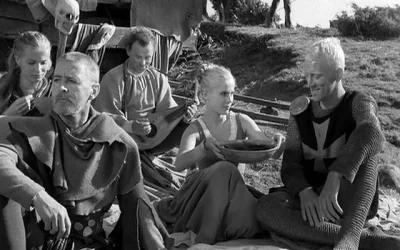
Ingmar Bergman’s <em>The Seventh Seal </em> (1957)
Bergman’s picnics in The Seventh Seal [Det Sjunde Inseglet], are moments of relief in an otherwise deadly serious drama about death and the meaning of God. When Block interrupts his game of chess with Death, he joins Jof (Nils Poppe) and Mia (Bibi Andersson) travelling performers, for a picnic-style lunch. for Block, a knight errant […] read more
Jacques Lartigue’s <em>Chou Valton at la Garoupe, Cap d’Antibes, July 1932</em>
Sunbathing on the beach with champagne. Lartigue’s shadow is seen in the lower left corner. See Jacques Henri Lartigue. Chou Valton at the plage de la Garoupe, Cap d’Antibes, July 1932. Silver Gelatin Print. read more
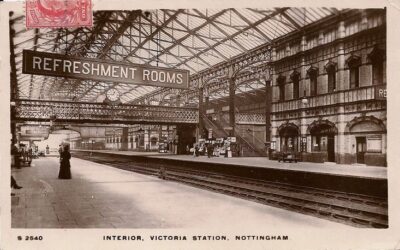
Charles Dickens. "The Boy at Mugby Junction" and the "Universal French Refreshment Sangwich" (1866)
Dickens vented his distaste for English travel food, especially sandwiches served in cold, comfortless train stations. The Boy at Mugby Station working in h Refreshment Room gleefully tells anyone who will listen (or not) how awful the refreshments (if they can be called refreshments are: “You don’t know what I mean? What a pity! But […] read more
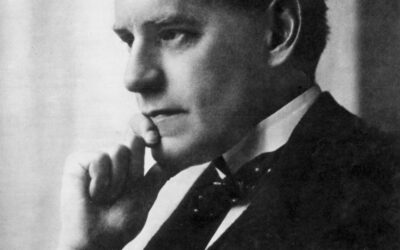
John Galsworthy's "The Apple Tree" (1916)
Galsworthy’s is a moral tale about the “deeply buried” guilt. What is supposed to be a romantic picnic celebrating a silver anniversary turns achingly poignant. Ashurst’s past is vividly recalled when inadvertently picnicking with his wife, Stella, next to the grave of his first love, Megan David, a simple farm girl. They were to be […] read more
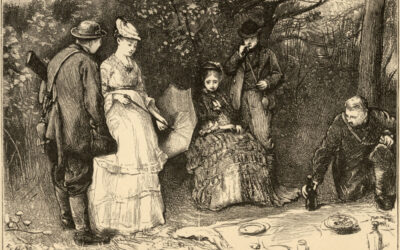
Anthony Trollope’s <em>Phineas Redux</em> (1874)
Trollope’s Phineas Redux is the fourth book in the Phineas Finn Series. It was among his most popular novels. Numerous hunt scenes and references suggest Finn’s plight evading his enemies. A halt during a fox hunt provides the opportunity for a simple picnic lunch in the field. Featured Image: Frank Holl’s illustration caption is “You […] read more
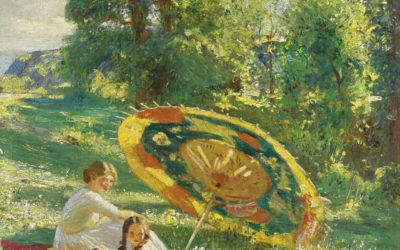
Georgina Battiscombe’s <em>English Picnics</em> (1949)
Georgina Battiscombe’s 1949 English Picnics is a study of English picnics in literature and art that has become a go-to standard because it was the first of its kind. Her writing is distinctive, authoritative voice and her examples and explanations usually first-rate. Though, alas, she does not reveal her sources. Battiscombe asserts the English picnicker […] read more
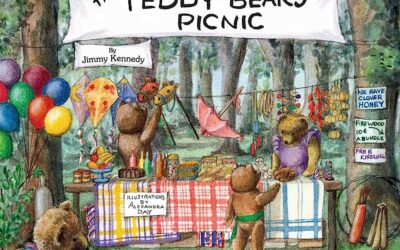
Alexandra Day’s <em> The Teddy Bears Picnic </em> (1983)
As they should, Day’s illustrations for The Teddy Bears’ Picnic emphasize a picnic where the bears are stocked with honey, bananas, pears, oranges, cake, soda, jellybeans, marshmallows, and chips. Inexplicably included are garlands of red peppers and garlic. See Alexandra Day. The Teddy Bear’s Picnic (London, 1983) read more
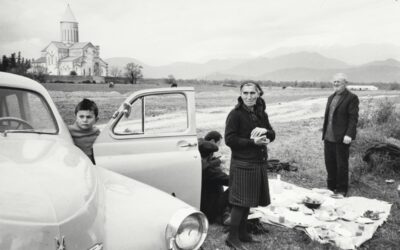
Henri Carter-Bresson’s <em>Alverdi Monastery</em> (1972)
Cartier-Bresson’s Alaverdi Monastery, Geprgis, (USSR) records a family having a roadside picnic while celebrating St. George’s Day. In the midground beyond them looms the Alaverdi Monastery. In the foreground, picnic food is neatly placed on a picnic blanket. read more
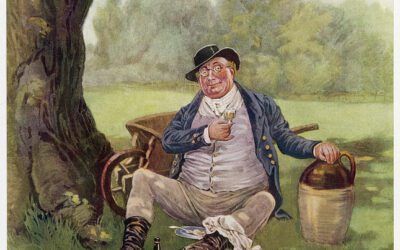
Fred Barnard’s <em>Mr. Pickwick’s Picnic</em> in <em>The Pickwick Papers</em> (1870c)
Pickwick’s picnic on a hunt in Dingley Dell is part of an abortive hunting expedition. It’s famous for Pickwick getting drunk and Sam Weller’s discussion of veal pies, pronounced “weal” in Weller’s Cockney accent. This picnic is served under the welcome shade of an old oak to make it easy for Pickwick, who suffers from […] read more
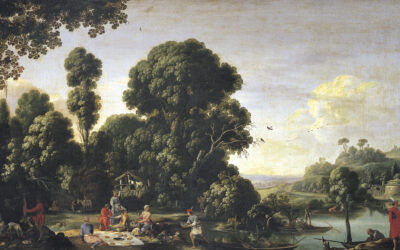
Filippo Napoletano’s <em>Merenda sull’erba</em> (1619)
Napoletano’s Merenda sull’erba is a landscape with Florentines enjoying an informal outdoor lunch by a lake. Merenda is Italian for picnic, which was not coined until 1649 in Paris. The picnickers have spread their cloth in the shade. To the left, a cook works at a fire; to the left, a servant brings fish from […] read more
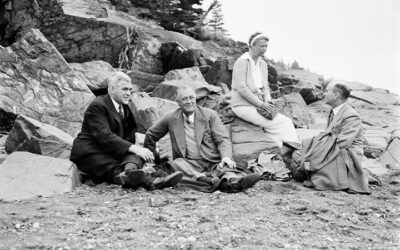
Eleanor Roosevelt on Campobello Island (1931)
During the first summer of FDR’s presidency, the Roosevelts hosted a Fourth of July picnic at their vacation home on Campobello Island, New Brunswick [about a half mile off the coast of Lubec, Maine]. Formality ruled, and men and women dressed in a causal style, the men in light-colored suits and the women in light-colored […] read more
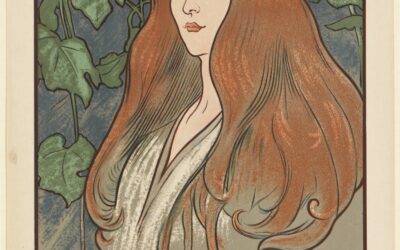
Harold Frederic’s <em>The Damnation of Theron Ware </em> (1896)
Frederic’s The Damnation of Theron Ware, or Illumination, is a satire of American Methodism. The narrative explores the mid-life crisis of Theron Ware, a married Methodist Episcopal pastor who falls for Celia Madden, an Irish Catholic, in a small town in New York State. During a staid, conservative Methodist camp meeting, Ware sneaks off to […] read more
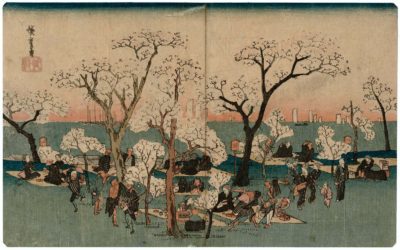
Hiroshige’s <em>Picnic at Gotenyama </em> (1833)
Hiroshige aims to depict activity relevant to the moment in a specific landscape. In this respect, his scenes in Japan correlate with J.M.W. Turner’s picturesque landscapes of the United Kingdom. While picnicking under the blooming cherry trees at Gotenyama, too much food and sake instigate a drunken brawl. Compare this with the rowdy sailors at […] read more
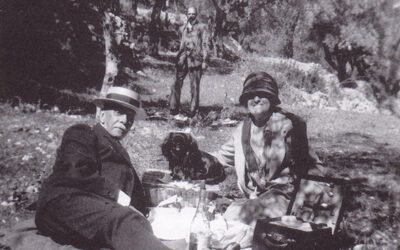
Percy Lubbock's Description of Edith Wharton Picnicking (1947)
Lubbock’s Portrait of Edith Wharton is definitive: “Edith settled, the strapped hampers (which she likes to think of as ‘corded bales’) set side by side, the rugs spread, the guests ‘star-scattered in their places: poetic allusion is never amiss at these symposia. Nobody at this point is to help her; she unpacks, distributes, and apportions […] read more
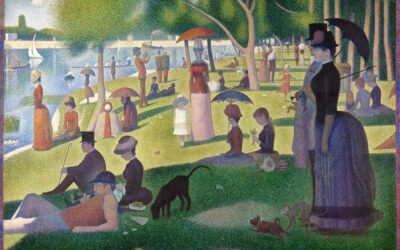
Georges Seurat’s <em>Sunday Afternoon on the Island of La Grande Jatte <?em> (1884/86)
Seurat’s La Grande Jatte is picnicky. Having a combination of leisure, ease, and easy conviviality, it’s absent food. People of all classes coexist amiably. Some sit on the grass in the shade of trades, some promenade, but there are no signs of a luncheon on the grass. Featured Image: Georges Seurat. Sunday Afternoon on […] read more
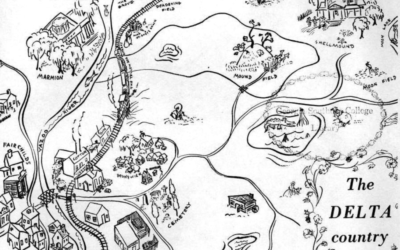
Eudora Welty's <em>Delta Wedding</em> (1946)
Under a magical starry sky, Welty’s picnic at the Grove calms the frayed edges of family life after a momentous wedding. Though it is held at night, the air is cool and still summery warm, the stars twinkles as shooting stars burst across the sky, and the sound of the horse and wagon is reassuring. […] read more
Arthur Conan Doyle’s “No picnic at Vaalkranz.” in <em>The Great Boer War</em> (1900)
Doyle was knighted for his service during the Boer War (1899-1902), in which he served as a medical doctor. Much of Doyle’s The Great Boer War was written in hospital tents where he treated the wounded and diseased. The memories are a nationalistic view of a war unpopular in Britain, making the case that war […] read more
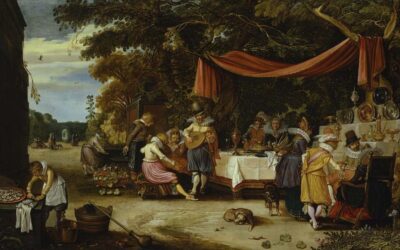
Esaias van de Velde’s <em> An Elegant Company in a Garden</em> (1614)
Van de Velde’s reputation is now based on his naturalistic landscape. But he was in demand among the affluent Amsterdam community, for whom he painted many scenes of their parties, especially garden parties, of which An Elegant Company in a Garden is an exemplar. The Boston Museum of Fine Arts’s title is misleading. There is […] read more
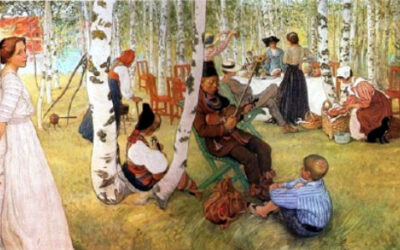
Carl Larsson’s <em>Breakfast in the Open</em> (1910)
Larsson’s outdoor breakfast is among his favorites. It’s set in a birch grove away from the family house.. Food is packed in a big hamper by a servant. The table, covered with a white cloth, has wooden chairs. In the center foreground is a man playing a fiddle, and a girl plays a lute or […] read more
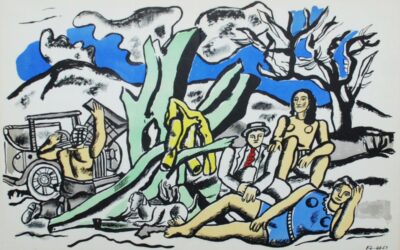
Fernand Leger's <em>Partie de Campagne</em> (1951)
Leger’s style is unmistakable and memorable. Partie de Campagne, a series variously translated as The Picnic or The Country Outing, is a series of variations, and part of a project he called the Great Parade. As lithographs, these were among Léger s most famous works. Léger’s picnickers are interested in food. In the oil paintings, […] read more
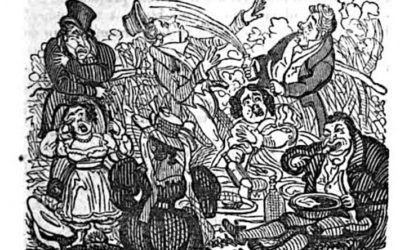
<em>The Pic-Nic</em> Song (1829)
Corny picnic satire was in vogue among English music before Gilbert and Sullivan’s 1871 Thespis, or The Gods Grown Old. Typical “The Pic-Nic” is sung to the air of “Here’s the Maiden of Bashful Fifteen” from Sheridan’s The School for Scandal. Its inclusion in Arliss’ The Melodist, a collection of popular songs, suggests opportunities for […] read more
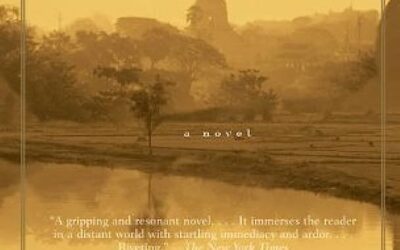
Daniel Mason’s <em>The Piano Tuner</em> (2002)
Mason’s The Piano Tuner is an adaptation of Conrad’s The Heart of Darkness. Edgar Drake, the piano tuner, is Charlie Marlow, and Anthony Carroll, Surgeon-Major in the British Army, then annexing Burma. Carroll is accused of setting up his state in defiance of British authority, and Drake is an unwitting dupe in the conflict. Unlike […] read more
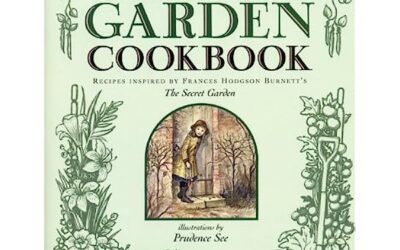
Amy Colter’s <em>The Secret Garden Cookbook </em> (1999)
Colter’s The Secret Garden Cookbook is mainly a collection of high calory, sugary and fatty foods. She starts with Burnet’s essential food path and never wanders far off. “You can trifle with your breakfast and seem to disdain your dinner,” Burnet writes, “if you are full to the brim with roasted eggs and potatoes and […] read more
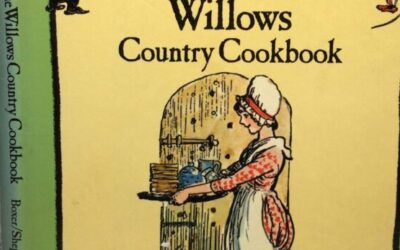
Arabella Boxer’s <em>The Wind in the Willows Country Cookbook</em> (1983)
Boxer’s “Food for Excursions” is mainly a collection of carbohydrates, sweets, and fatty meats. Her suggestions include Riverside Sandwich, Sausage Sandwich, Potted Shrimp Sandwich, Toad Hall Steak Sandwich, Stuffed Eggs, River-Bankers Lunch, hard-cooked Eggs with Nutty spice island Mixture, Sausage Rolls Leafy Summer, Lettuce Snacks, Cornish pasties, Hot meat pasties, Rabbit pasties, Easy Meat Loaf, […] read more
Jan Miel’s <em>La Merienda</em> and <em>Hunters at Rest</em> (1640s/50s)
Miel’s halt on the hunt and repas de chasse depicts hunters stopped by a rustic inn. In the Prado’s La Merienda, hunters have spread a cloth beside their horses and are settling in to relax. This is a perfunctory meal of sliced ham, cheese, bread, and wine. Unlike Watteau’s fashionable hunters and their ladies in […] read more
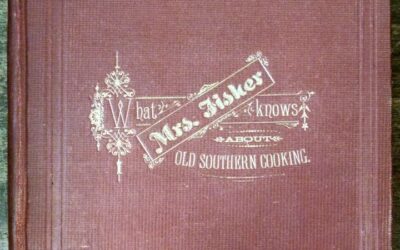
Abby Fisher's Fried Chicken (1881)
The second oldest African American cookbook is Fisher’s What Mrs. Fisher Knows About Old Southern Cooking, Soups, Pickles, Etc. She does not mention picnics in her text, but fried chicken is a picnic staple. Fried Chicken: Cut the chicken up, separating every joint, and wash it clean. Salt and pepper it, and roll into flour well. […] read more
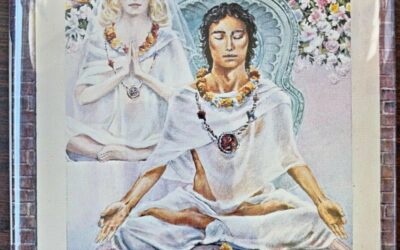
Drunken Behavior and Sexual Liaisons in Ruth Prawer Jhabvala’s “Picnic with Moonlight and Mangos” (1976)
“Picnic with Moonlight and Mangos” from Jhabvala’sHow I Became a Holy Mother (1976) is about a drunken picnic in the garden of Moti Bagh, a 17th-century palace in a suburb of New Delhi. This annual event is often an excuse for sexual liaisons. The pattern is always the same: friends and families visit Moti Bagh […] read more
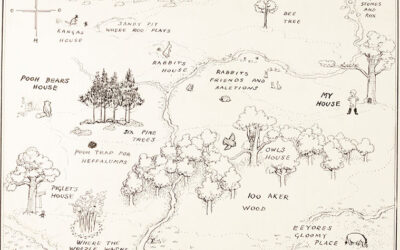
A.A. Milne”s <em>Winnie-the-Pooh</em> (1926)
A.A. Milne’s picnics in Winnie-the-Pooh (1926) are happy and leisurely held in “The Hundred Aker Wood.” It’s a location just above the “Sandy Pit where Roo Plays” with a sign that says “a Nice Place for Piknicks.” No doubt, where Christopher Robin holds a formal picnic party for which Pooh agrees to attend because pink […] read more
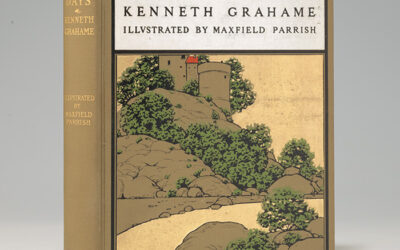
Kenneth Grahame’s <em>Dream Days</em> (1898)
Grahame’s Dream Days are more evidence of his affinity for boats and picnics. Before Ratty’s picnic in Wind in the Willows, Grahame relates a pleasant dream about boating on a river in an Arcadian world. “I just go. But generally, it begins by–well, you’re going up a broad, clear river in a sort of a […] read more
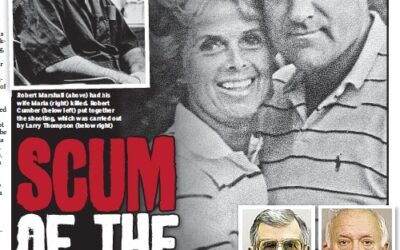
Joe McGuiness’s <em>Blind Faith</em> (1989)
McGinnis’s’ Blind Faith is dramatized reportage of a New Jersey murder case in which Rob Marshall was accused of hiring hitmen to free himself to marry his flamboyant mistress. According to McGuiness, when Marshall thought something was wrong with one of his tires, he pulled off the Garden State Parkway into a pitch-black, deserted picnic […] read more
Harry Hoffman's <em>Harvest Moon Walk</em> (1912c.)
Hoffman’s Harvest Moon Walk is a masquerade picnic where revelers dress as vegetables. According to the Griswold Museum, “Hoffman’s eccentric depiction of strangely clad figures captures one of the Lyme Art Colony’s most festive rituals. On an October evening, merrymakers arrived at Florence Griswold’s house imaginatively costumed as fruits and vegetables. The marchers, a mix […] read more
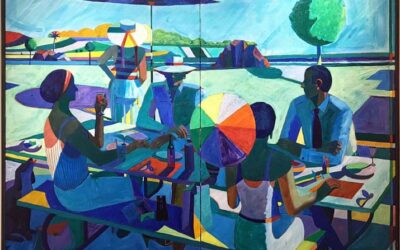
Roland Peterson’s Picnics(1960s ...on)
Petersen’s delightful obsession makes him happy. “Each painting,” he says, “has a different kind of mathematical solution; I’m not always able to solve it, but I try to work out a pattern of shapes.” Petersen’s esthetic is to amalgamate abstraction with realism and develop his theme in an architectural layout, in this case, a picnic. […] read more