

Five Glum Film Picnics tells that picnics are not always. We expect picnics to be happy and vivacious, but this expectation is sometimes upended. In these instances, filmmakers depict the characters’s moodiness as exhibited at a picnic. Ordinarily, there is an expectation of joy and congeniality, but glum picnics turn that expectation topsy-turvy.
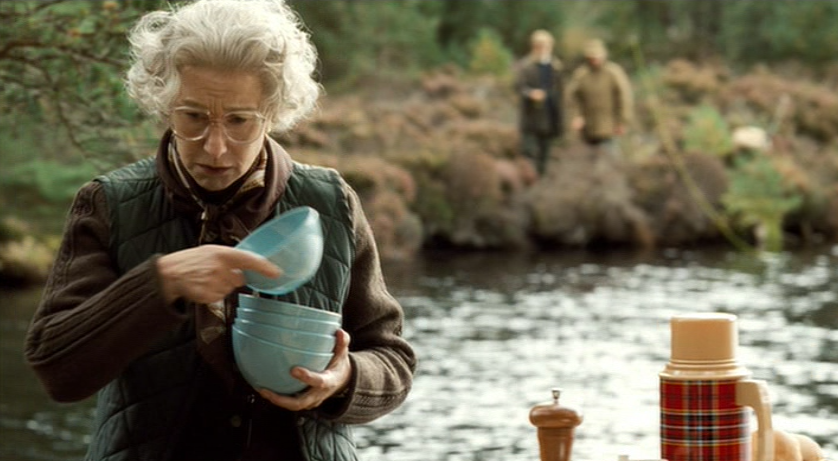
Stephen Frears. The Queen, Screenplay by Peter Morgan. (2007). According to Stephen Frears, the Balmoral picnic is a glum episode as the Queen and family deal with the grief and notoriety resulting from the death of Princess Diana. At the picnic table, the Queen begins to lay out Tupperware bowls and flatware. She is deeply pensive and working mechanically, unable to come to terms with the princess’s death and why a flag ought not be flown at half-mast over Buckingham Palace. Helen Miren as Queen Elizabeth II.
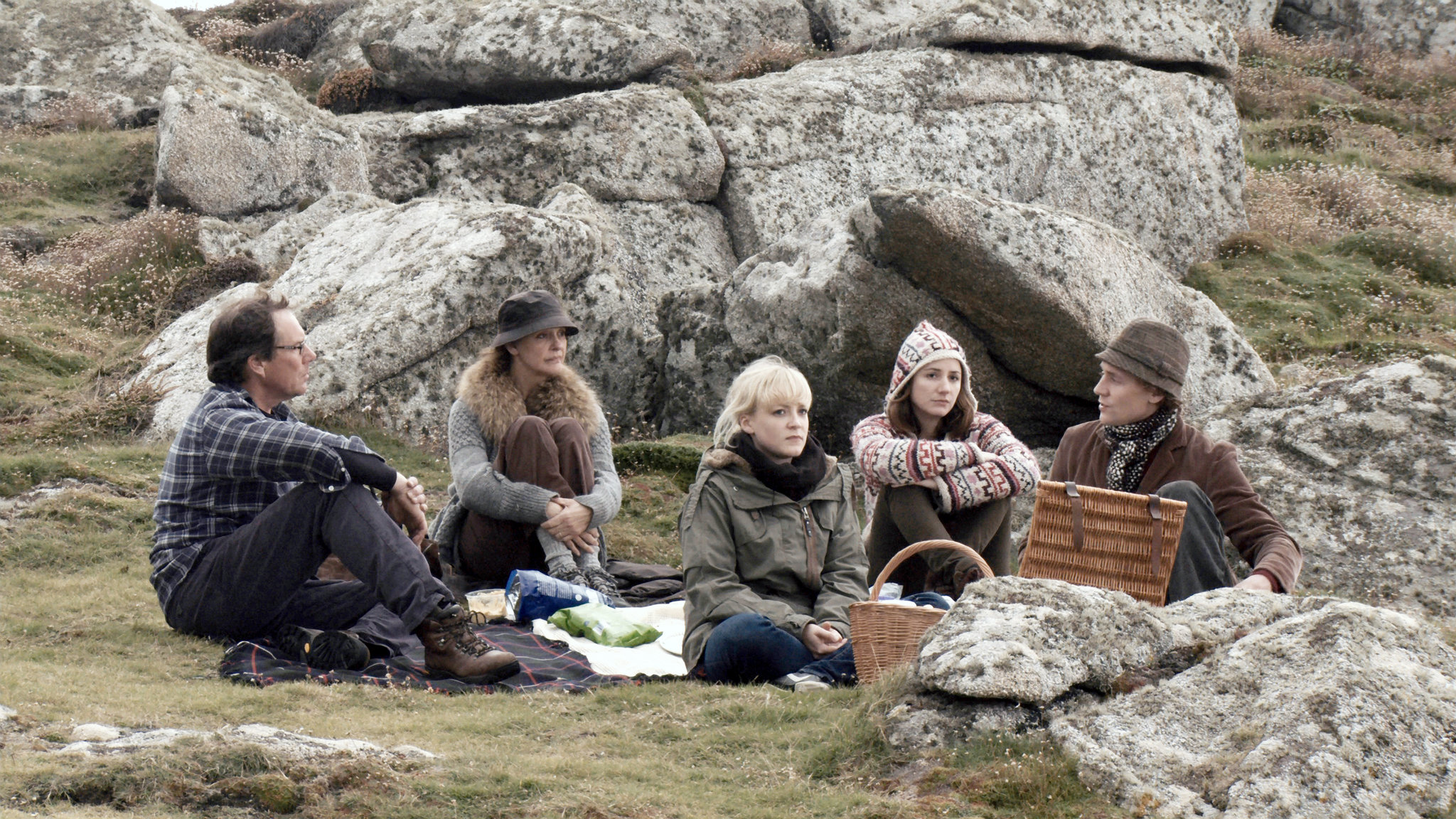
Joanna Hogg. Archipelago (2010). Hogg says that Archipelago is a metaphor for a family just out of touch with one another; “The title relates to the family as a group of islands, linked together beneath the surface. What often links a family together goes unspoken and unacknowledged. Families are a way of protecting individuals from what they need to hear, and often they have techniques for avoiding the real issues.”
Susanna White. Parade’s End (2012) Picnickers talk about the impending war with Germany and Austria on the Continent.
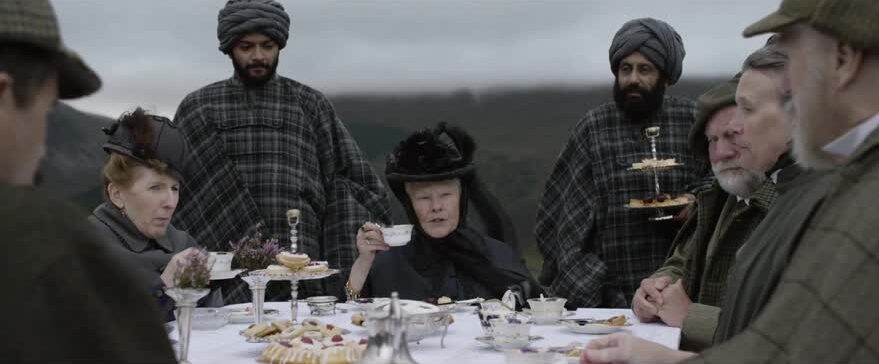
Stephen Frears. Victoria and Abdul (2017). Screenplay by Lee Hill based on Shrabani Basu’s The True Story of the Queen’s Closest Confidant (2010). Frears”Queen Victoria is very well wrapped up. She gorges herself on a sponge cake. Everyone else is cold and miserable.” Judi Dench as Queen Victoria; Ali Fazal as Abdul Karim
Featured Image: François Truffaut. Les deux Anglaises et le continent , aka The Two English Girls and the Continent (1971). Screenplay is by Truffaut and Jean Gruault based on Pierre-Henri Roche’s semi-autobiographical novel (1956). Truffaut’s title Les deux Anglaises et le continent refers to two English girls, Muriel and Anne Brown, and their unrequited lover, Claude Roc, a Frenchman. It’s a confusing title until it is explained that the girls affectionately call Claude “le continent.” Even so, it’s a ditsy commentary on their relationship that is a jumbled ménage a trois in which no one is happy. “When I was fifteen,” Claude says, “I decided to die.” Locking himself in his bedroom, he lit a fire under his bed and slit his wrists. He says that he was saved by the smoke wafting from under his locked door.