
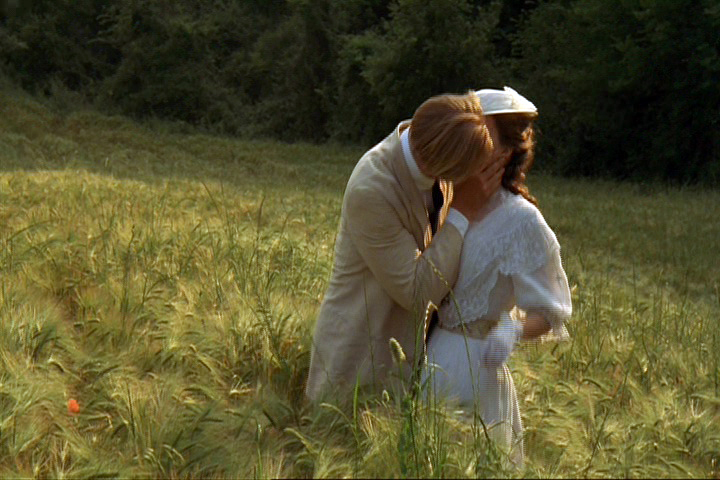
.M. Forster’s narrator calls the outcome of this picnic a “social contretemps.” Due to George Emmerson’s exuberance and Lucy Honeychurch’s reticence. He associates the perplexity to the presence of Pan, the god of chaos: Some complicated game had been playing up and down the hillside all the afternoon. What it was and exactly how the players had sided, Lucy was slow to discover… There was a general sense of groping and bewilderment. Pan had been amongst them—not the great god Pan, who has been buried these two thousand years, but the little god Pan, who presides over social contretemps and unsuccessful picnics.
When George Emerson impulsively kisses Lucy Honeychurch on the hillside above Florence, she doesn’t understand how to respond. She feels different but doesn’t understand what love is. The spell is broken immediately. Afterwards, Lucy is unaccountably uncomfortable, and George decides to walk back despite the threat of rain. Something has happened. And it rains. Lucy is so confused that she leaves Florence the next day.
James Ivory’s film adaptation follows the episode in Forster’s A Room with a View where a group of English tourists gathers for an afternoon of leisure and a chance to enjoy the view. It’s a congenial group, but then the men and women separate, each having their own picnic for some screwy reason.
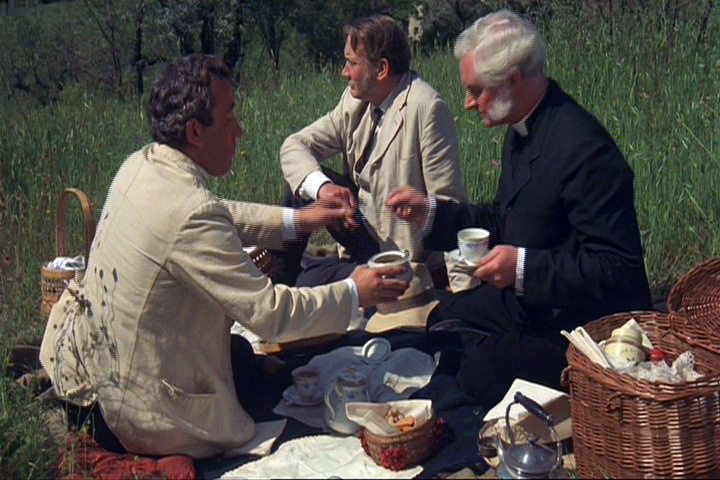
James Ivory. A Room With a View (1986)
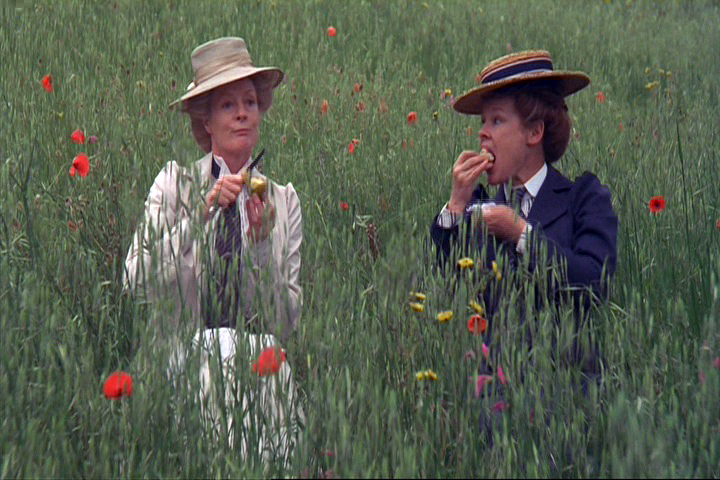
See: E.M. Forster. A Room with a View. London: Edward Arnold, (1908); James Ivory’s A Room with a View (1986). Screenplay by Ruth Prawar Jhabvala based on Forster’s novel. Laura Mackie’s 2007 A Room with a View (2007) is a very loose adaptation.