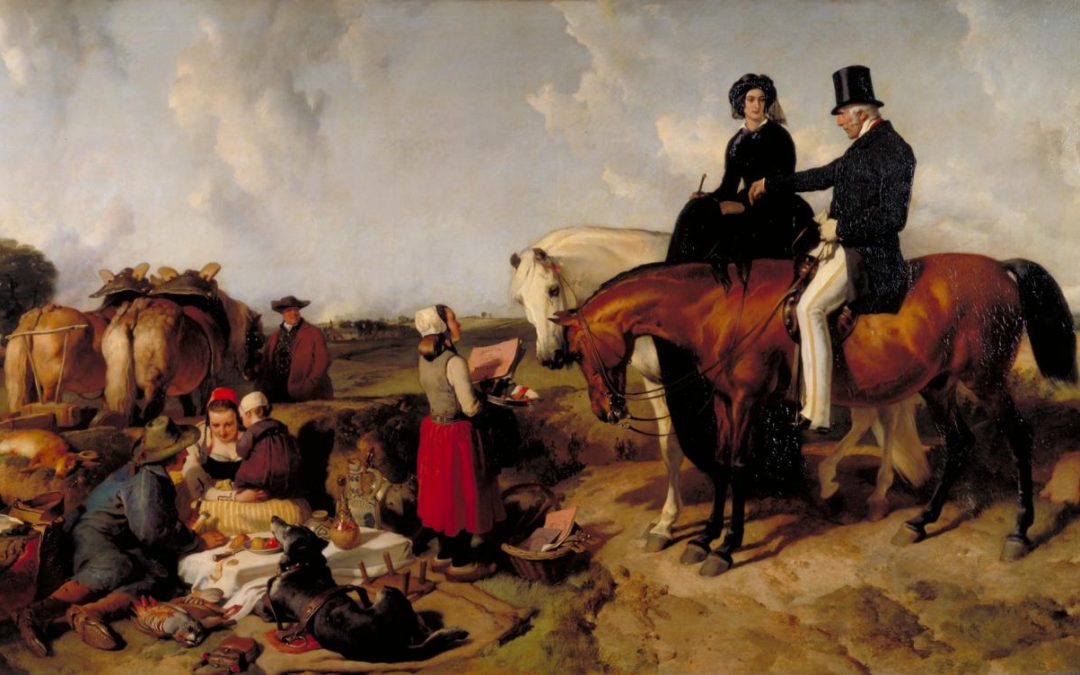
Landseer’s A Dialogue at Waterloo is a portrait of Arthur Wellesley, Duke of Wellington, and his daughter-in-law, Lady Douro, visiting the battlefield. As the Duke describes the scene as thirty-five years before, they are accosted by a young peasant girl selling...
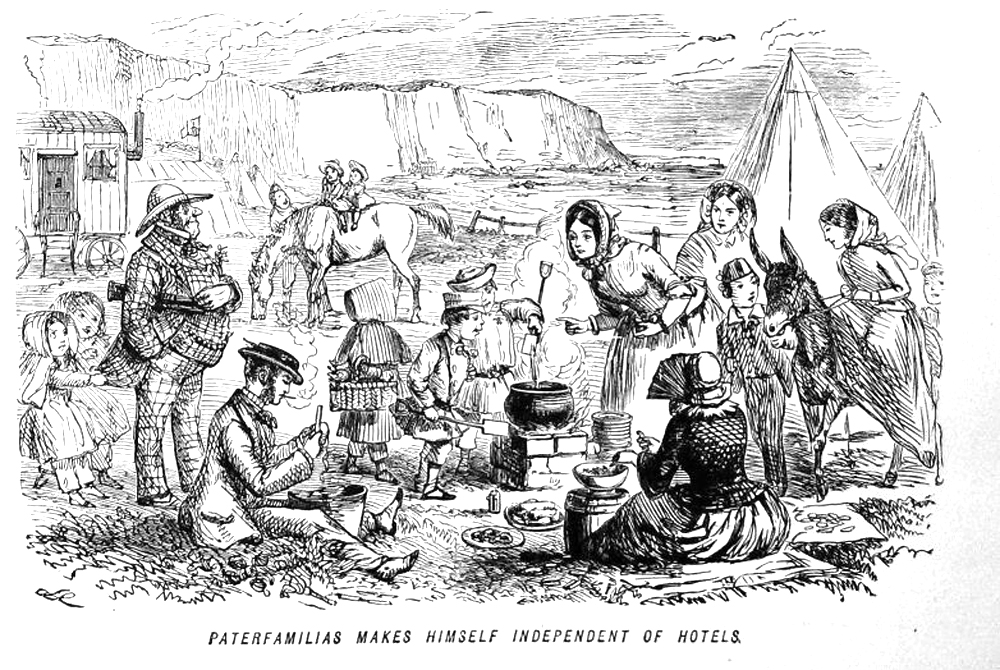
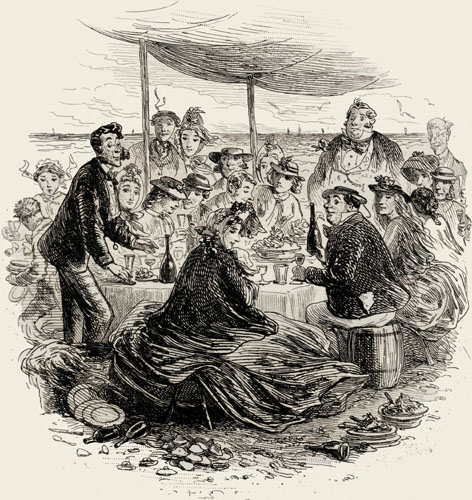
Leech’s joke here is the smugness of the father of the family (paterfamilias), who would rather inconvenience his family by camping on the beach instead of staying at a hotel. This large family putting up with the man is an implicit joke because no one protests...
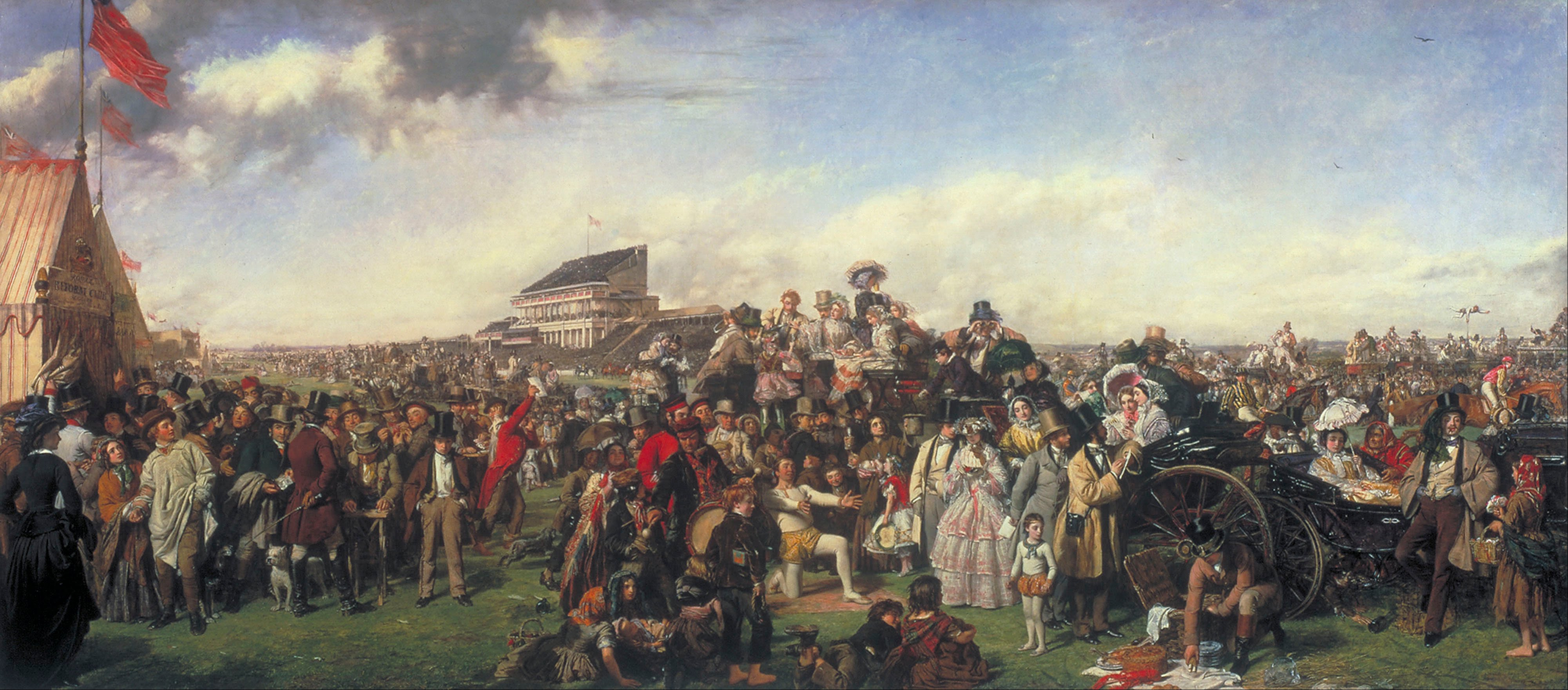
“My first Derby,” William Powell Frith explained, “had no interest for me as a race, but as giving me the opportunity of studying life and character.” after considerable preparation, Frith eventually painted the scene as an amusement tinged...
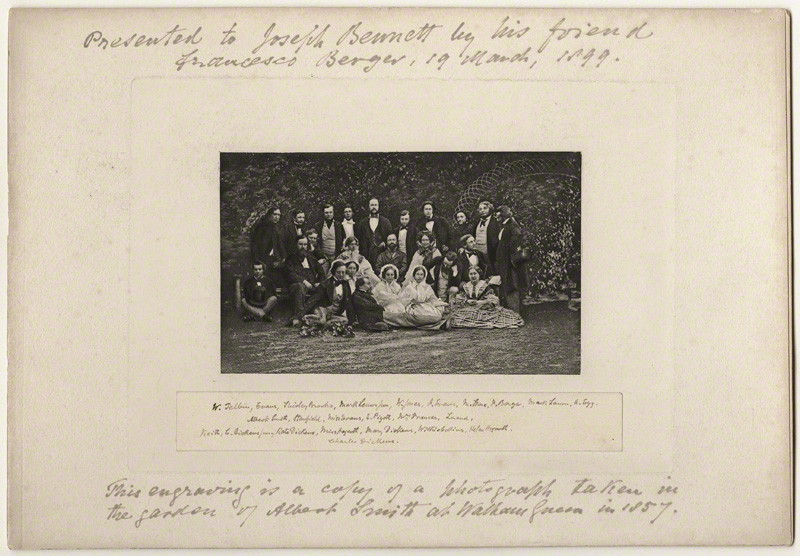
Frederic Ouvry’s invitation to a July garden party at his home in Fulham Green, London, insinuates that guests would gather with two celebrities: Albert Smith, the famous lecturer of “The Glaciers of Mont Blanc,” and Charles Dickens. The latter was...
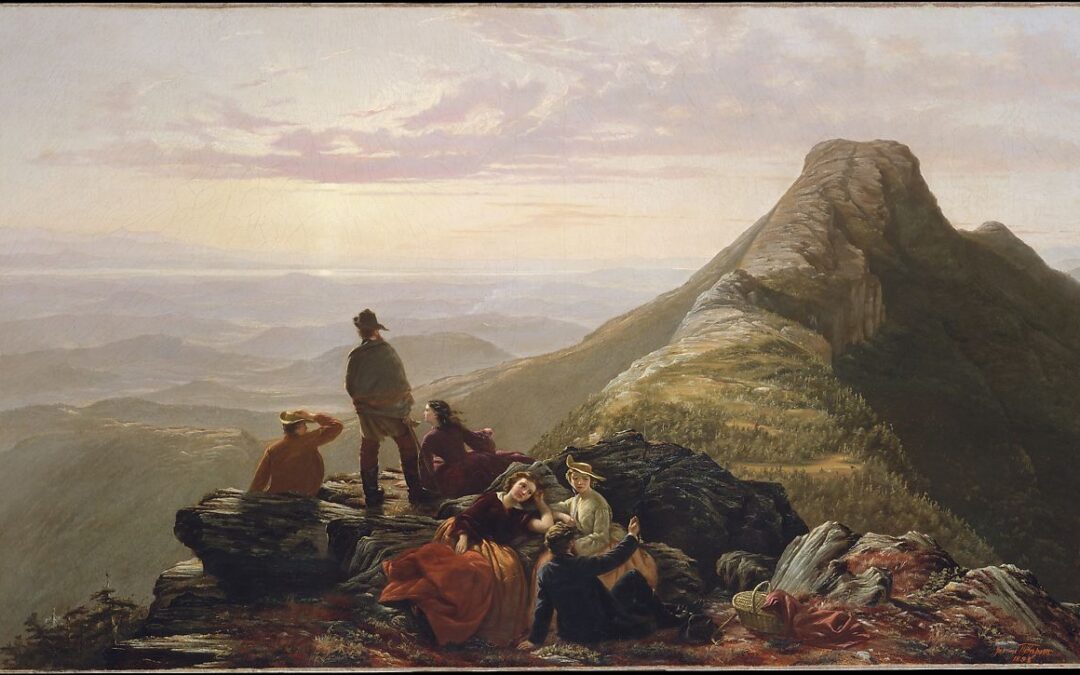
Six hikers have reached a plateau near Mansfield Mountain’s top and are ready to picnic just before sunset. Thompson titled the painting a Belated Party to provide tension, and we wonder if the picnickers will safely walk down the 4400-foot mountain in the...
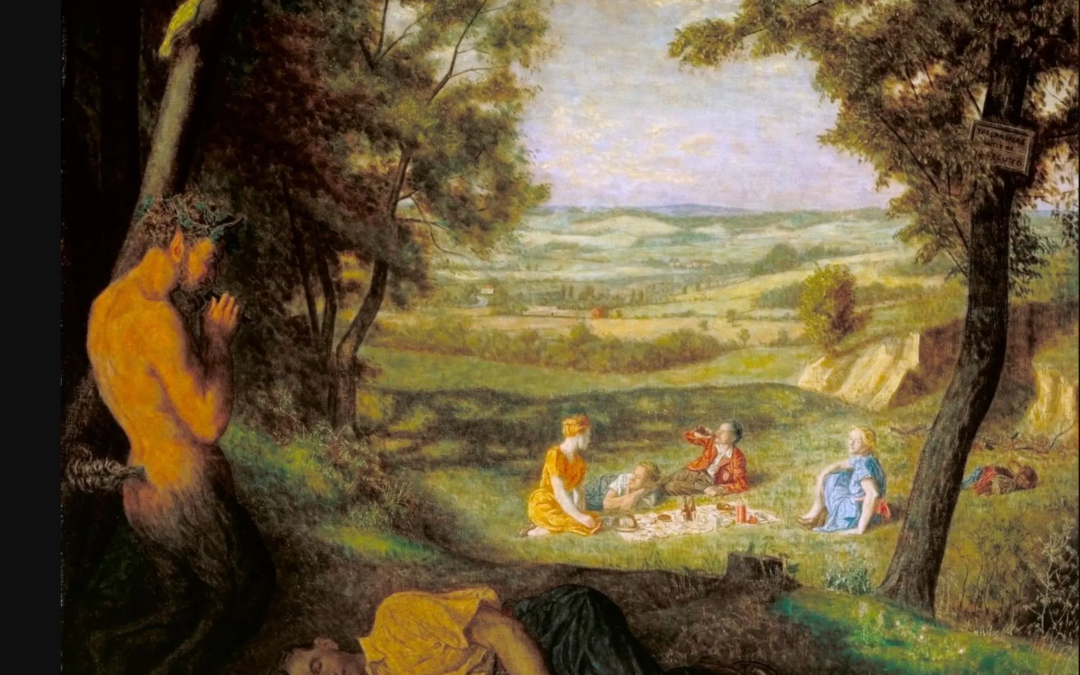
A more placid and joyful allusion to the myth of Pan is George Warner Allen’s adaptation in painting, Picnic at Wittenham (1947-1948). It is a pastoral with an edge and suggests his homosexuality. Allen’s adaptation of Jean-Antoine Watteau’s picnicky social...
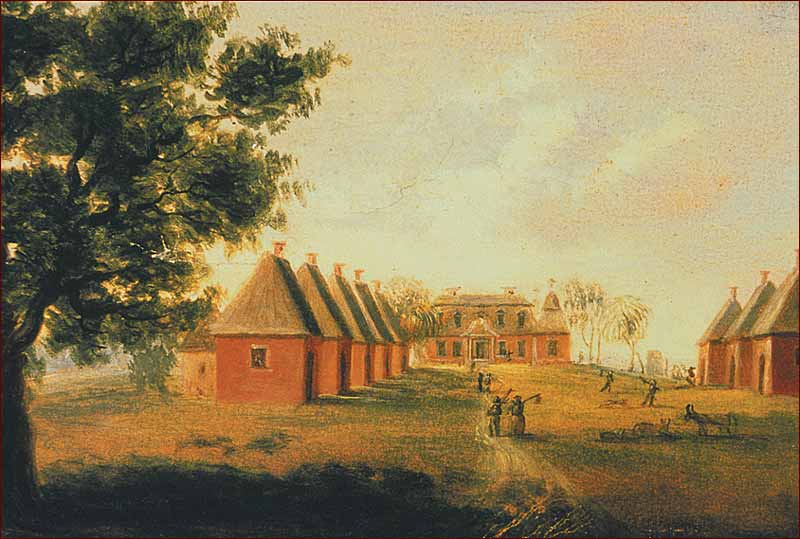
Coram’s View Of Mulberry in 1800 looks up to the rear of the house from the vantage point of “the street” because it was lined with slave quarters, of which houses are visible. Coram’s view suggests “the street” was a matter of...
Egg‘s Traveling Companions is a testimony of the ease and comfort of train travel. The two elegantly dressed women, virtually mirroring images of each other, sit without even looking out of the window at the long view of the shoreline beyond. One reads the other...
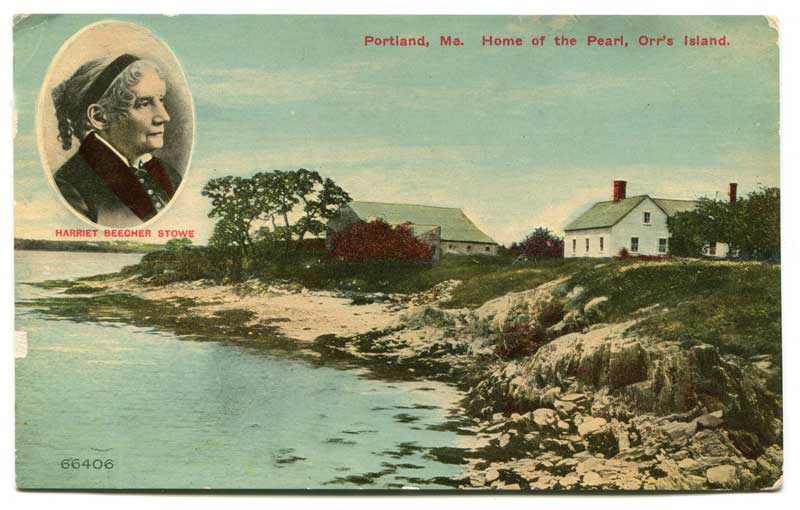
Stowe’s The Pearl of Orr’s Island, published ten years after Uncle Tom’s Cabin (1852), is a story of the people who speak in the vernacular of Maine, on the road to the Kennebec, below the town of Bath. Its basis is Shakespeare’s The Tempest,...
Trollope’s beach picnic in Can You Forgive Her (1864) is highlighted with a stern warning: “Yarmouth is not a happy place for a picnic. A picnic should be held among green things. Green turf is absolutely essential. There should be, if possible, rocks, old...
Landseer’s A Dialogue at Waterloo is a portrait of Arthur Wellesley, Duke of Wellington, and his daughter-in-law, Lady Douro, visiting the battlefield. As the Duke describes the scene as thirty-five years before, they are accosted by a young peasant girl selling...
Leech’s joke here is the smugness of the father of the family (paterfamilias), who would rather inconvenience his family by camping on the beach instead of staying at a hotel. This large family putting up with the man is an implicit joke because no one protests...
“My first Derby,” William Powell Frith explained, “had no interest for me as a race, but as giving me the opportunity of studying life and character.” after considerable preparation, Frith eventually painted the scene as an amusement tinged...
Frederic Ouvry’s invitation to a July garden party at his home in Fulham Green, London, insinuates that guests would gather with two celebrities: Albert Smith, the famous lecturer of “The Glaciers of Mont Blanc,” and Charles Dickens. The latter was...
Six hikers have reached a plateau near Mansfield Mountain’s top and are ready to picnic just before sunset. Thompson titled the painting a Belated Party to provide tension, and we wonder if the picnickers will safely walk down the 4400-foot mountain in the...
A more placid and joyful allusion to the myth of Pan is George Warner Allen’s adaptation in painting, Picnic at Wittenham (1947-1948). It is a pastoral with an edge and suggests his homosexuality. Allen’s adaptation of Jean-Antoine Watteau’s picnicky social...
Coram’s View Of Mulberry in 1800 looks up to the rear of the house from the vantage point of “the street” because it was lined with slave quarters, of which houses are visible. Coram’s view suggests “the street” was a matter of...
Egg‘s Traveling Companions is a testimony of the ease and comfort of train travel. The two elegantly dressed women, virtually mirroring images of each other, sit without even looking out of the window at the long view of the shoreline beyond. One reads the other...
Stowe’s The Pearl of Orr’s Island, published ten years after Uncle Tom’s Cabin (1852), is a story of the people who speak in the vernacular of Maine, on the road to the Kennebec, below the town of Bath. Its basis is Shakespeare’s The Tempest,...
Trollope’s beach picnic in Can You Forgive Her (1864) is highlighted with a stern warning: “Yarmouth is not a happy place for a picnic. A picnic should be held among green things. Green turf is absolutely essential. There should be, if possible, rocks, old...