
It’s expected that picnics are happy. Here’s proof of how our expectations are met by five Nineteenth Century artists (and writers, too). Dora Spenlow’s birthday picnic party is probably Charles Dickens’s happiest and most romantic episode in The Personal History of David Copperfield (1850). Dickens titled the chapter “Blissful” and in it describes Copperfield’s tenderest and obsessive memories of Dora Spenlow, his first love. On the way to the party site, Copperfield rides horseback next to the Spenlow’s carriage: I shall never have such a ride again. I have never had such another. There were only those three, their hamper, my hamper, and the guitar-case, in the phaeton; and, of course, the phaeton was open; and I rode behind it, and Dora sat with her back to the horses, looking towards me. She kept the bouquet close to her on the cushion, and wouldn’t allow Jip to sit on that side of her at all, for fear he should crush it. She often carried it in her hand, often refreshed herself with its fragrance. Our eyes at those times often met, and my great astonishment is that I didn’t go over the head of my gallant grey into the carriage.
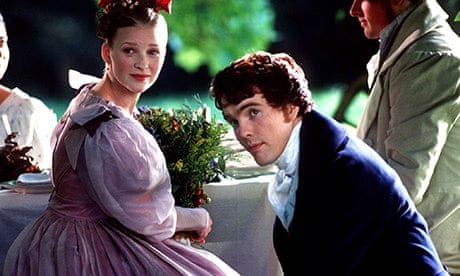
Simon Curtis. David Copperfield (1999). The Screenplay by Adrian Hodges is based on Charles Dickens’s novel (1850)
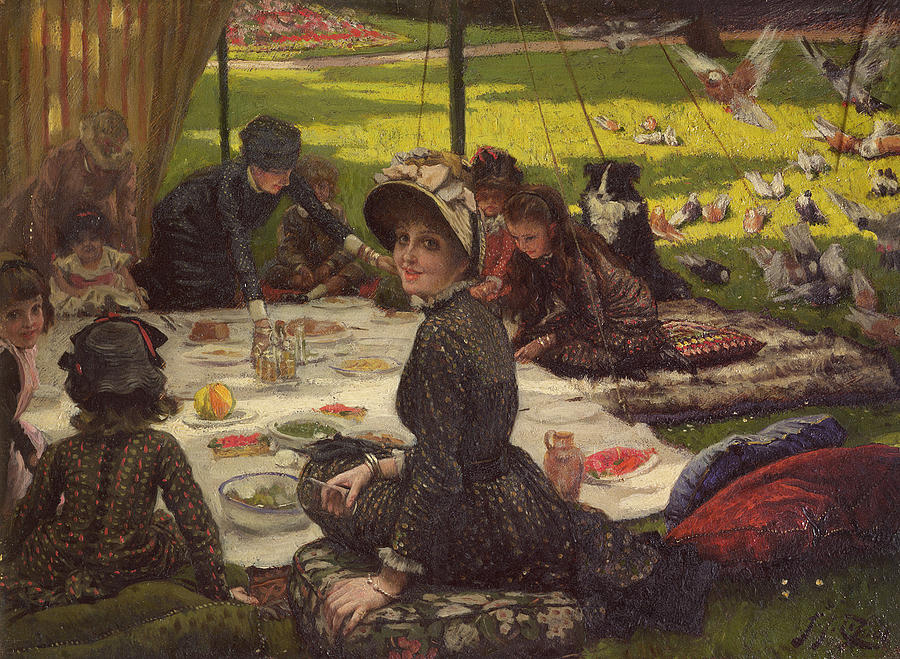
James Jacques Tissot. Le déjeuner sur l’herbe. oil on canvas. (1881-82).Musée des Beaux-Arts, Dijon
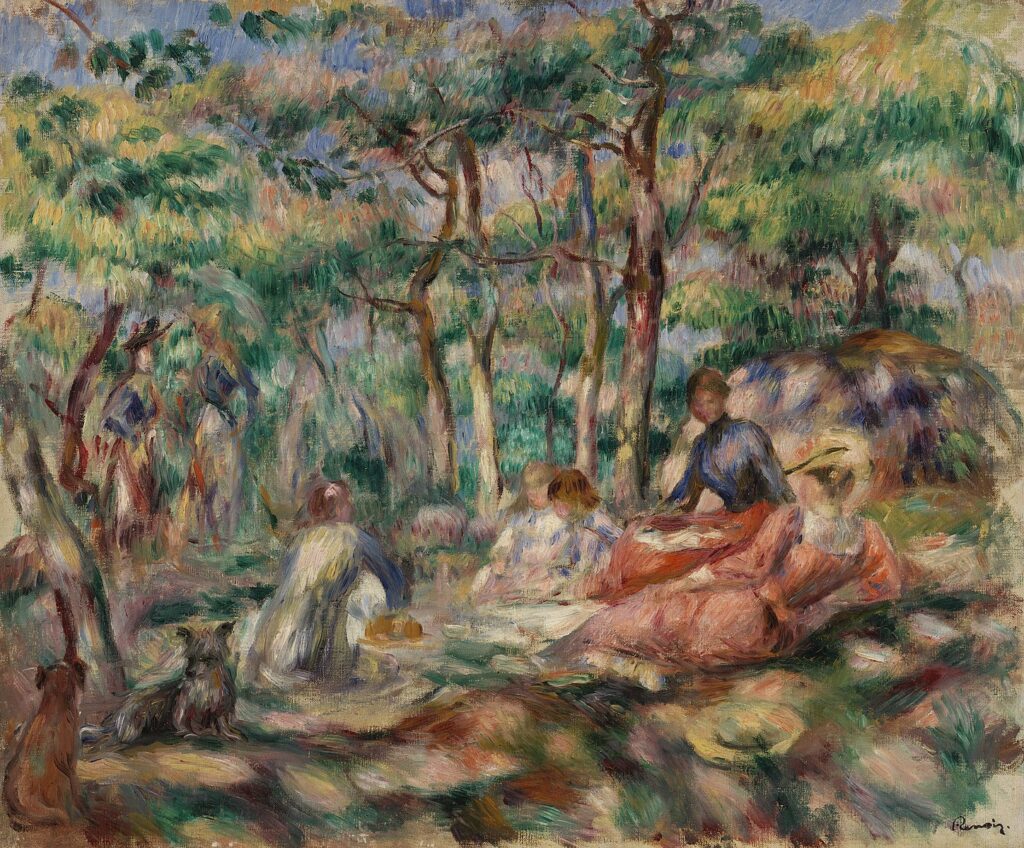
Pierre-Auguste Renoir. Le déjeuner sur l’herbe aka Luncheon on the grass.
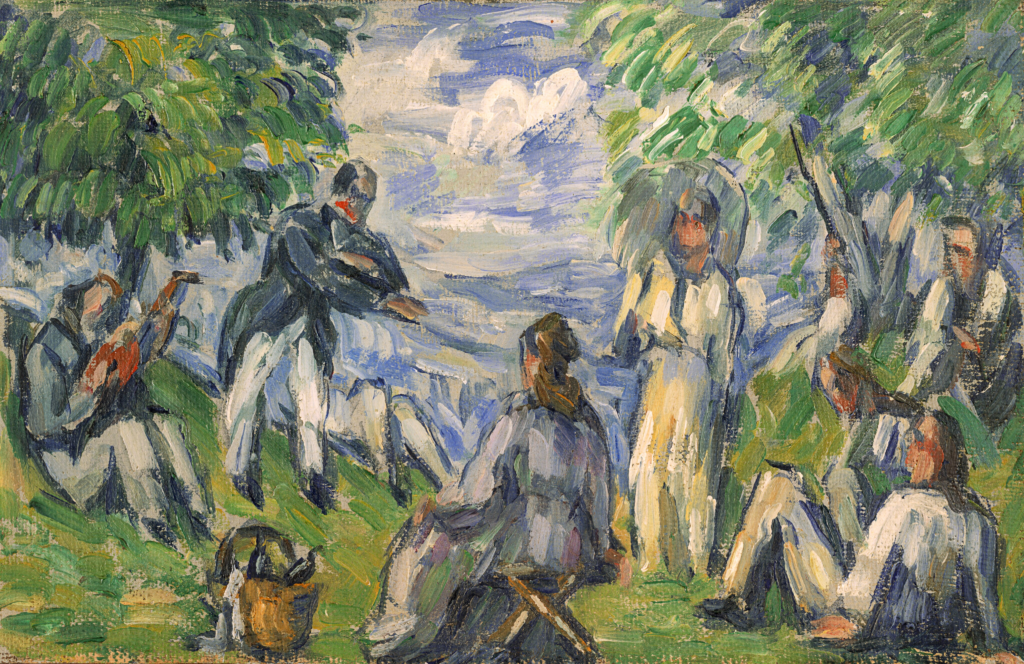
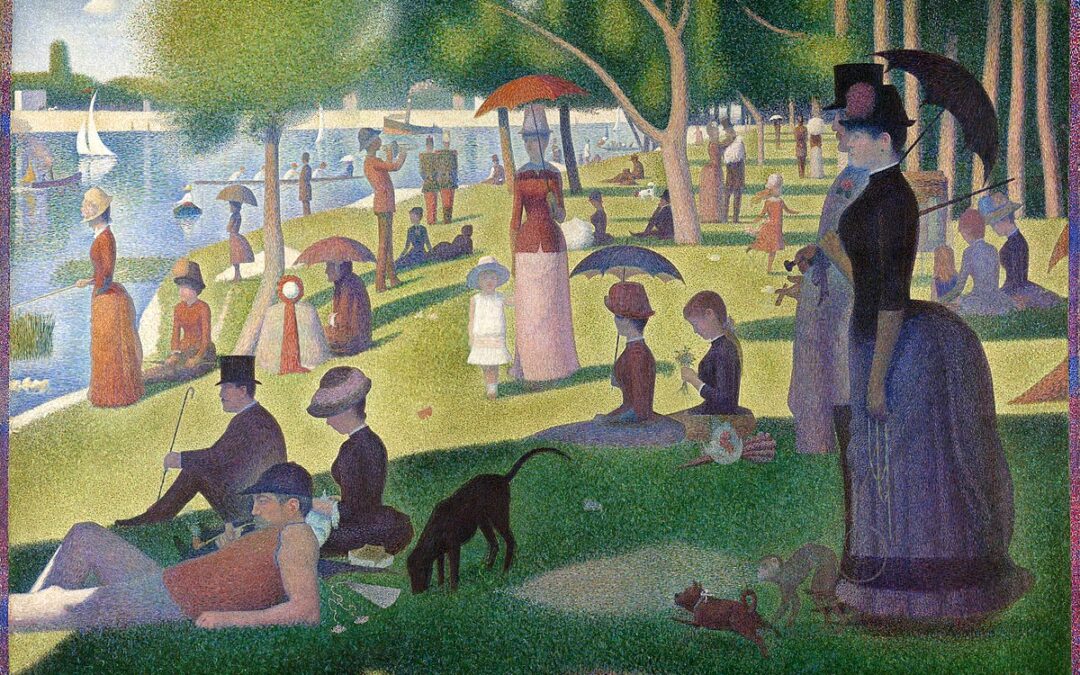
Paul Cezanne. Partie de compagnie aka Le déjeuner sur l’herbe. oil on canvas (1876-1877) Featured Image: Georges Seurat. Un dimanche après-midi à l’Île de la Grande Jatte. aka A Sunday on La Grande Jatte (1884-1886). oil on canvas. Art Institute of Chicago