
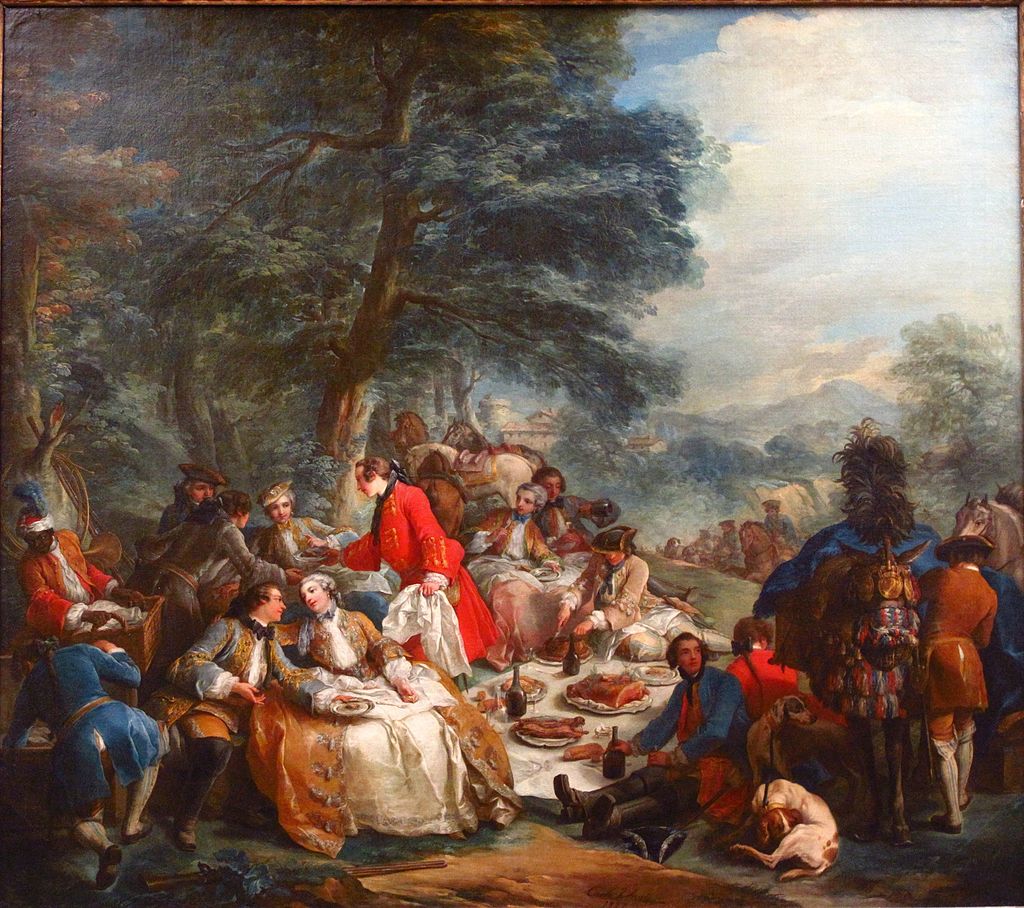
The halte de chasse has a long history predating what we think of as a picnic. Since hunting began early, at midday there was a break for a meal, un repas de chasse, which might be casual or formal. The first of these gatherings, called an assemblée by Gaston Phebus in his 1387 The Book of Hunting, The assemblée was not a picnic, but an early morning meal during which the master of the hunt discussed hunting prospects. It was a working meal, and as many suggest wrongly, not a picnic. As this assemblée developed over the centuries, it became a more picnicky and more relaxing, catered meal. By 1587, George Gascoigne’s English translation of Gaston’s Book of Hunting, retitled The Noble Art of Venerie or Hunting, describes the assemblée as a dedicated luncheon, the chief hunter, or in his case, Elizabeth I, and later James I.
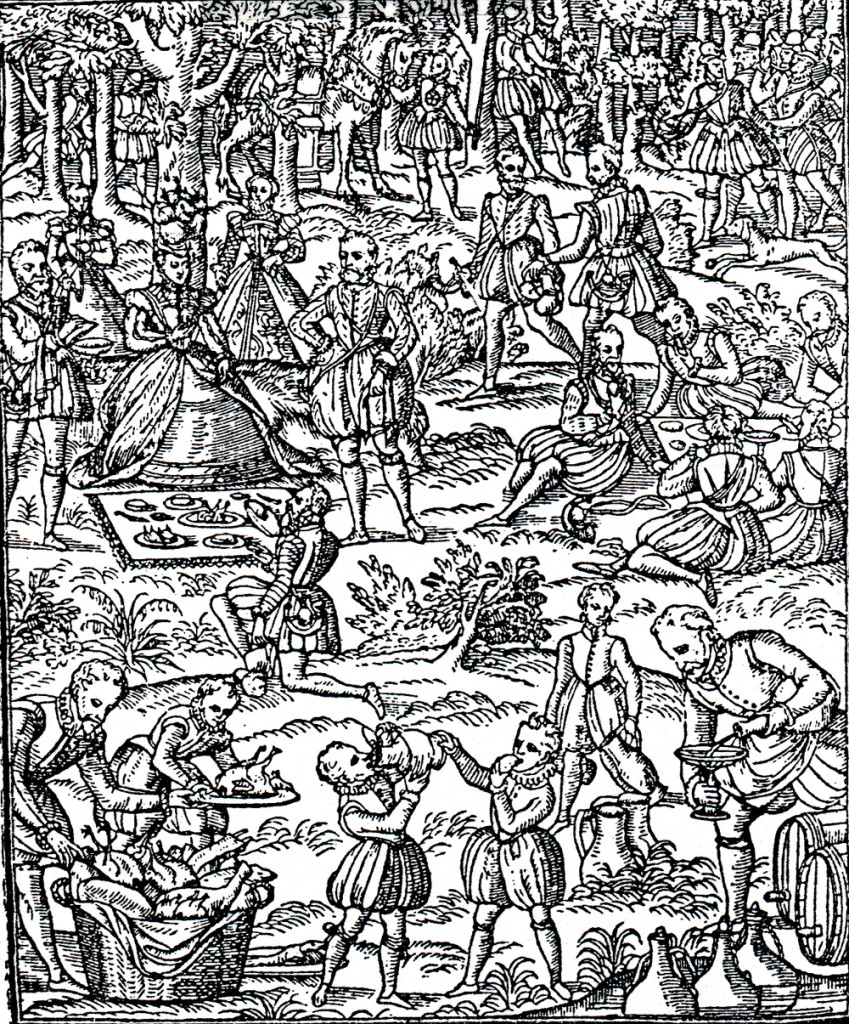
George Gascoigne. “Of the place where and how an assembly should be made, in the preference of a Prince, or some honourable person,” The Noble Art of Venerie or Hunting, aka The Booke of Hunting (1575), woodcut on paper.
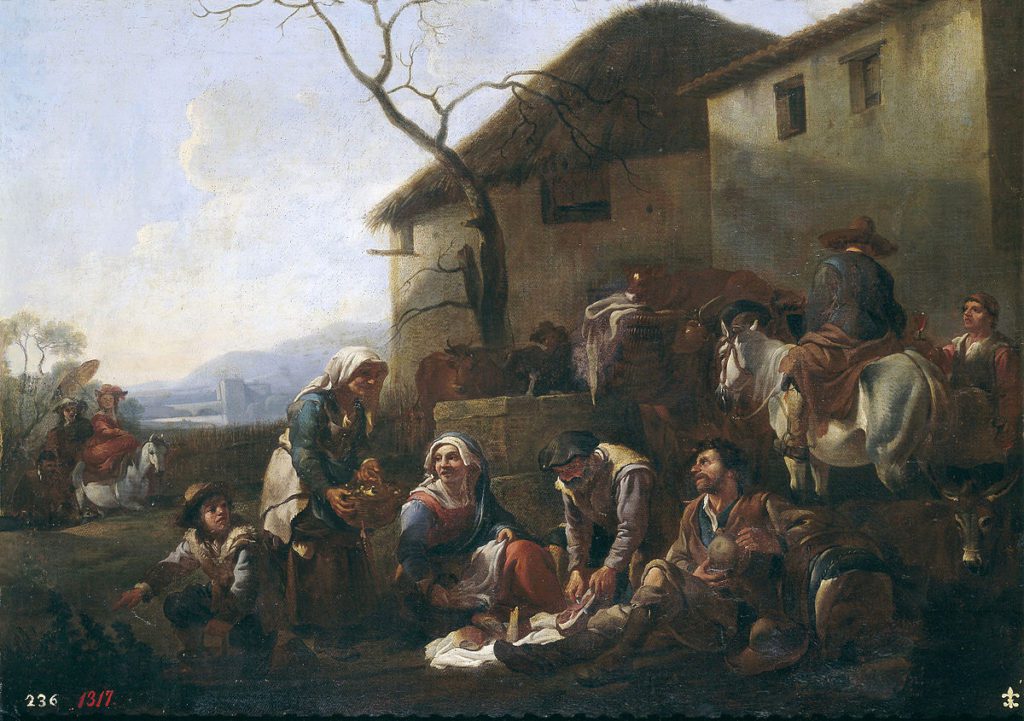
Jan Miel. La Merienda, aka Halt on the Hunt (1650s), oil on canvas. Museo del Prado. La merienda is most often translated as snack, but it might also be picnic. This is an informal meal catered by locals.
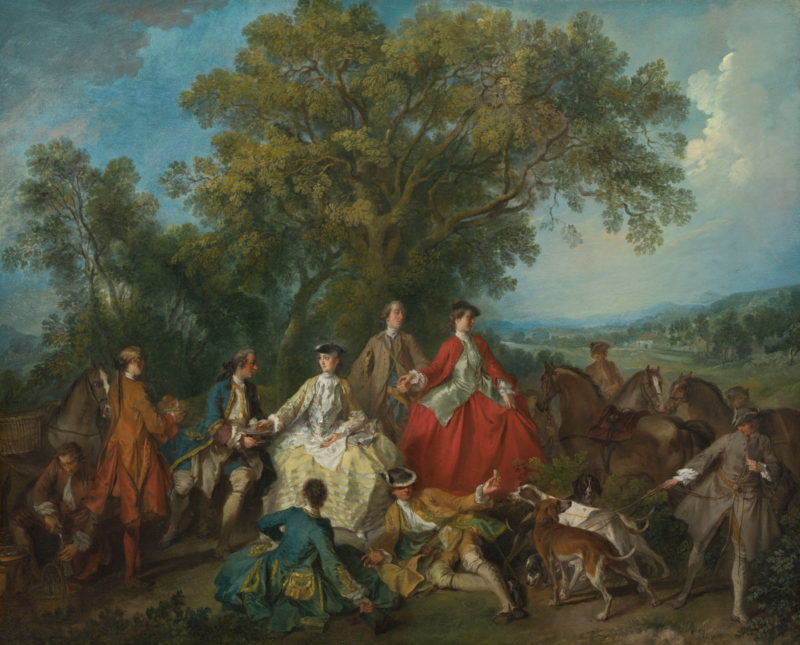
Nicolas Lancret. After the Hunt (1735/1740). oil Samuel H. Kress Collection canvas.
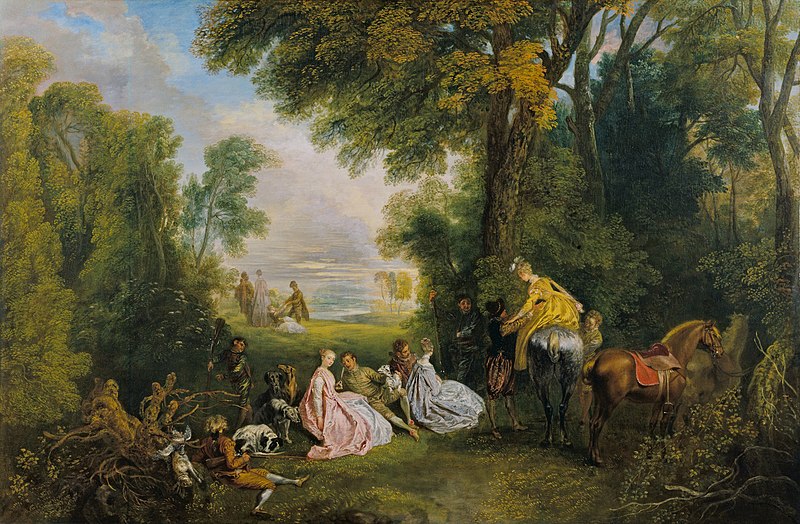
Jean-Antoine Watteau. Rendez-vous de chasse, aka The Halt during the Chase (1718–1720). oil on canvas. The Wallace Collection
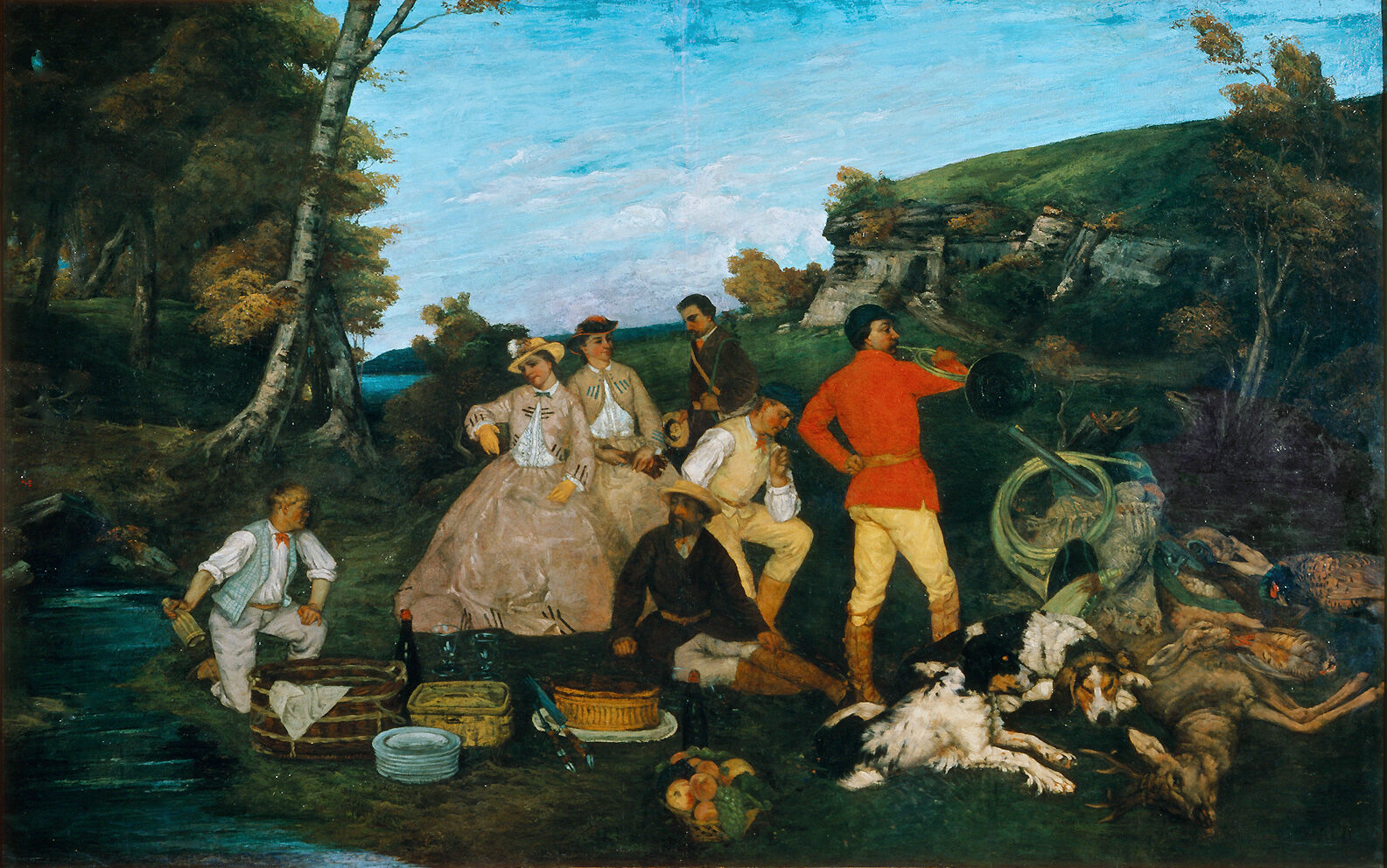
Gustave Courbet. The Hunt Breakfast (1858). oil on canvas. Wallraf-Richartz Museum, Cologne
Featured Image: Carle Andre van Loo. The Picnic after the Hunt, aka Halte de Chasse (1737). oil on canvas. Paris: Musée du Louvre