
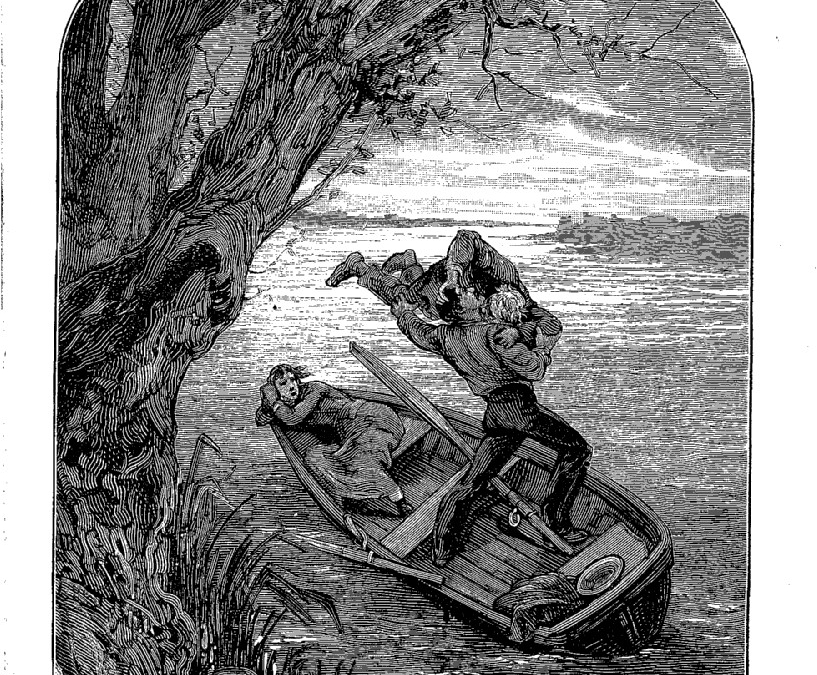
Picnics themed with a murder defy expectations and turn pleasantries topsy-turvy into horror and savagery. It was Emile Zola’s Therese Raquin that defined his notion of the inherent depravity that some people are prone to enact. With deliberate intentions of proving his point, Thérèse Raquin and her lover, Laurent Le Claire, murder her husband Camille at a picnic. It’s a pivotal episode, proving Emile Zola’s contention that people acting out the “fatalities of their flesh” become brutes humaines. Zola does not use pique-nique to characterize this outing because the French usage defined it as an indoor meal.
Waiting to dine at a table at a restaurant, the anticipation of murdering Camille intensifies uncomfortably. In the heat, Camille becomes drowsy and falls asleep on the dead grass. This opportunity allows Laurent to mimic crushing Camille’s head. But without a signal from Thérèse, he resists. Instead, he cunningly improvises a plan to row out on the Seine and drown Camille, who cannot swim.
The murder is astonishingly brutal. In the gathering darkness, Laurent steers to a place obscured by trees, and with mad ferocity, he grabs Camille tightly and throws him overboard. Thérèse remains impassive and then swoons. As Camille tries to climb back into the boat, Laurent leans over to push him away, but “Mad with rage and terror,” Camille bites a chunk of flesh from Laurent’s neck, causing him to release his grip. Still yelling, the current carries Camille away.
The party was silent. Seated at the bottom of the boat drifting with the stream, they watched the final gleams of light quitting the tall branches. They approached the islands. The great russety masses grew sombre; all the landscape became simplified in the twilight; the Seine, the sky, the islands, the slopes were naught but brown and grey patches which faded away amidst milky fog. Camille, who had ended by lying down on his stomach, with his head over the water, dipped his hands in the river.“The deuce! How cold it is!” he exclaimed. “It would not be pleasant to go in there head foremost.”Laurent did not answer. For an instant, he had been observing the two banks of the river with uneasiness. He advanced his huge hands to his knees, tightly compressing his lips. Thérèse, rigid and motionless, with her head thrown slightly backward, waited. The skiff was about to enter a small arm of the river, which was sombre and narrow, penetrating between two islands. Behind one of these islands could be distinguished the softened melody of a boating party who seemed to be ascending the Seine. Up the river in the distance, the water was free. Then Laurent rose and grasped Camille round the body. The clerk burst into laughter. “Ah, no, you tickle me,” said he, “none of those jokes. Look here, stop; you’ll make me fall over.”Laurent grasped him tighter and gave a jerk. Camille, turning round, perceived the terrifying face of his friend, violently agitated. He failed to understand. He was seized with vague terror. He wanted to shout, and felt a rough hand seize him by the throat. With the instinct of an animal on the defensive, he rose to his knees, clutching the side of the boat, and struggled for a few seconds.“Thérèse! Thérèse!” he called in a stifling, sibilant voice. The young woman looked at him, clinging with both hands to the seat. The skiff creaked and danced upon the river. She could not close her eyes; a frightful contraction kept them wide open, riveted on the hideous struggle. She remained rigid and mute.“Thérèse! Thérèse!” again cried the unfortunate man who was in the throes of death. At this final appeal, Thérèse burst into sobs. Her nerves had given way. The attack she had been dreading, cast her to the bottom of the boat, where she remained doubled up in a swoon, and as if dead. Laurent continued tugging at Camille, pressing with one hand on his throat. With the other hand, he ended by tearing his victim away from the side of the skiff, and held him up in the air, in his powerful arms, like a child. As he bent down his head, his victim, mad with rage and terror, twisted himself round, and reaching forward with his teeth, buried them in the neck of his aggressor. And when the murderer, restraining a yell of pain, abruptly flung the clerk into the river, the latter carried a piece of his flesh away with him. Camille fell into the water with a shriek. He returned to the surface two or three times, uttering cries that were more and more hollow.
Josef von Sternberg’s An American Tragedy (1925) and Mervyn LeRoy’s The Bad Seed (1956). George Stevens’s A Place in the Sun (1956), and David Fincher’s Zodiac (2007)
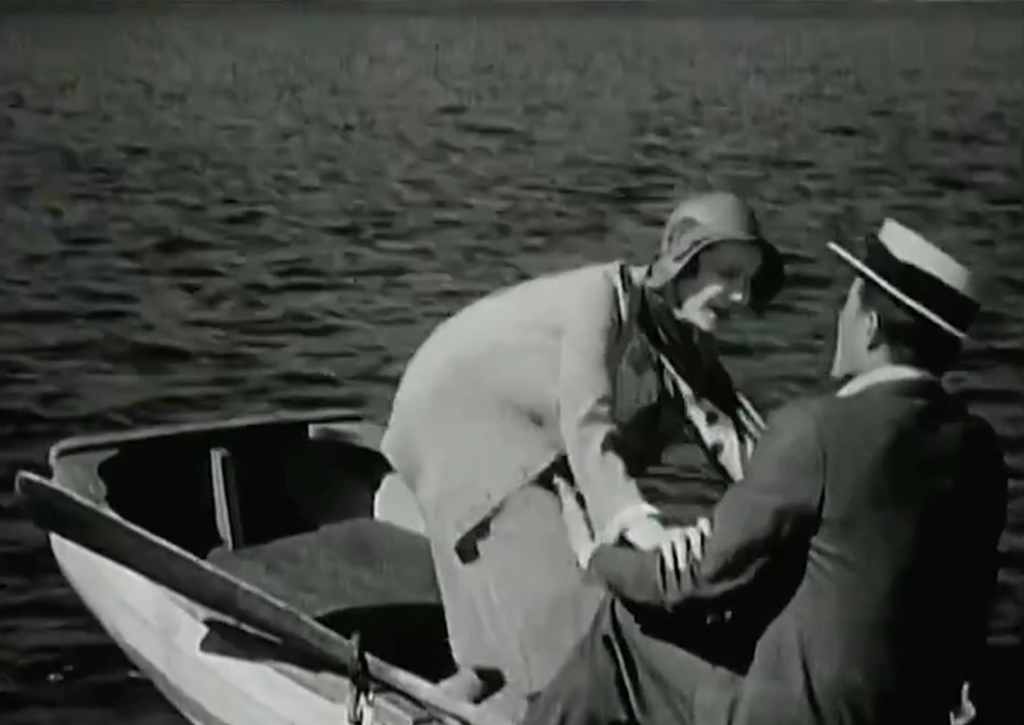
Josef von Sternberg. An American Tragedy (1931). Screenplay by Samuel Hoffenstein based on Dreiser’s novel (1925). Sylvia Sidney as Roberta Alden and Phillips Holmes as Clyde Griffiths.
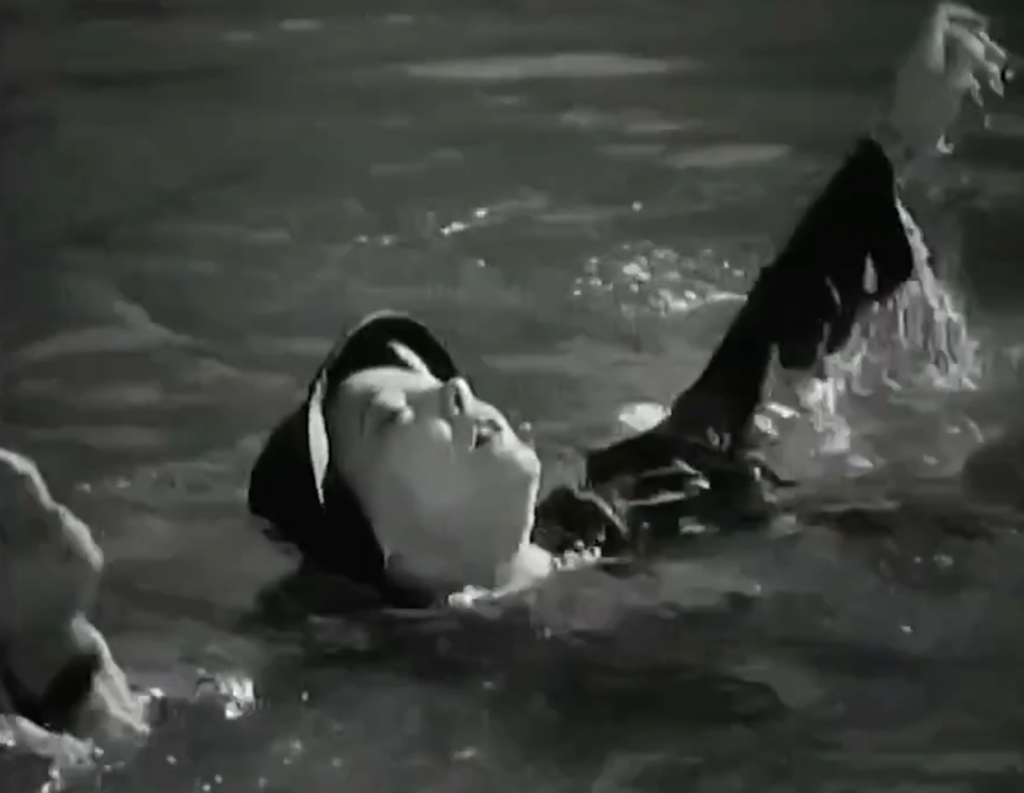
Josef von Sternberg. An American Tragedy (1931). Screenplay by Samuel Hoffenstein based on Dreiser’s novel (1925). Roberta drowns as Clyde swims to shore.
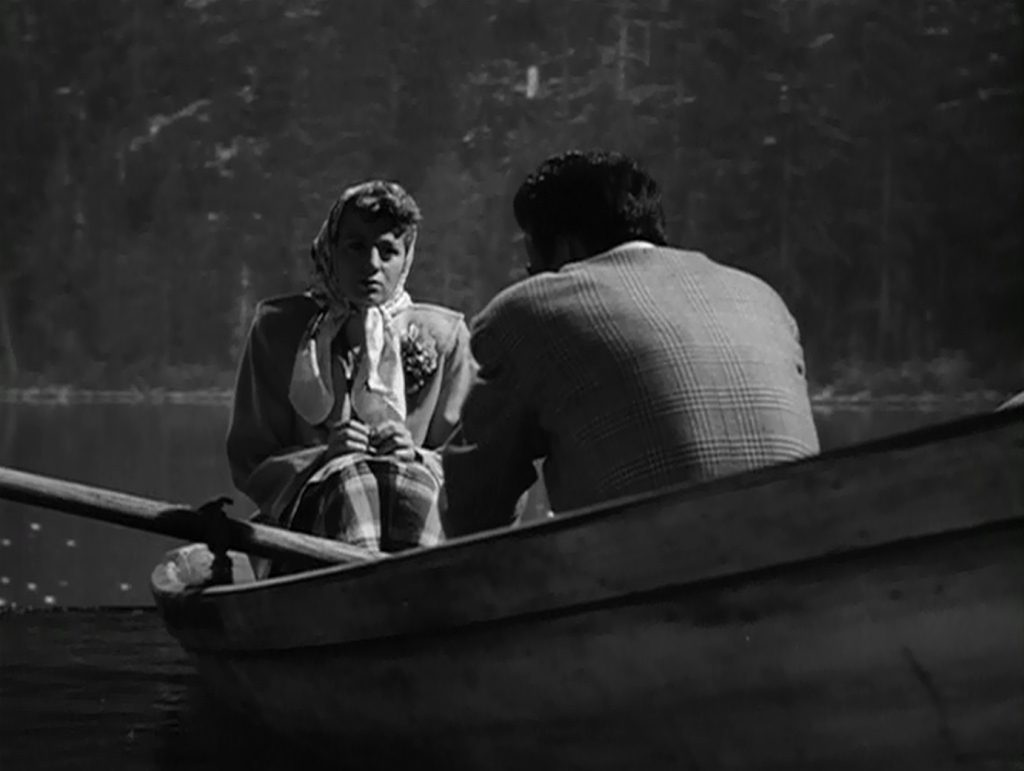
George Stevens. A Place in the Sun (1951). Screenplay by Michael Wilson and Harry Brown based on Theodore Dreiser’s An American Tragedy (1925). Shelley Winters as Alice Tripp and Montgomery Cliff as George Eastman.
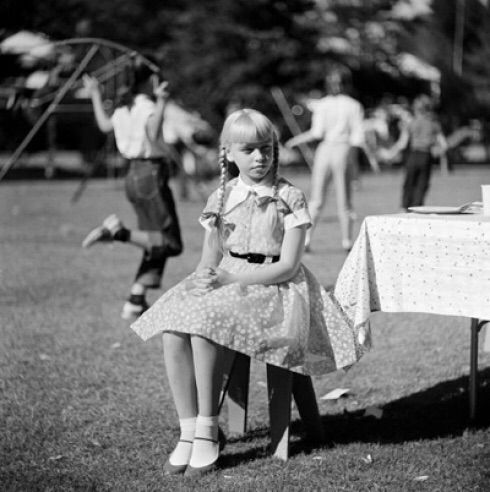
Mervyn LeRoy. The Bad Seed (1956). The screenplay by James Lee Mahin is based on March’s novel and Maxwell Anderson’s 1954 play. The horror of LeRoy’s The Bad Seed is serial killer Rhoda Penmark, a darling little girl with blond pigtails and blue eyes who murders a classmate at a school picnic because she covets his penmanship medal (pun intended). Paty McCormack as Rhoda Penmark.

David Fincher. Zodiac (2007). The screenplay by James Vanderbilt is based on Robert Graysmith’s reportage (1986). Fincher’s Zodiac adapts Robert Graysmith’s obsessive reporting of serial killings in the San Francisco Bay area, named after the killer who identified as Zodiac. The murders began at a picnic in 1968 and did not stop until 1978, by which time 37 people had been murdered. Pell James as Cecelia Shepard; Patrick Scott Lewis as Bryan Hartnell, as Zodiac
.
Featured Image: Kemplen Guest after Horace Castelli. “Camille tomba en poussant un hurlement.” In Emile Zola’s 1867 novel (1883), http://gallica.bnf.fr/ark:/12148/bpt6k5679412r/f128.image