
Theodor Fontane’s Effi Briest has been successfully adapted by Rainer Werner Fassbinder, whose slow-moving narrative presents the youthful heroine’s adulterous affair and how it wrecks her life.
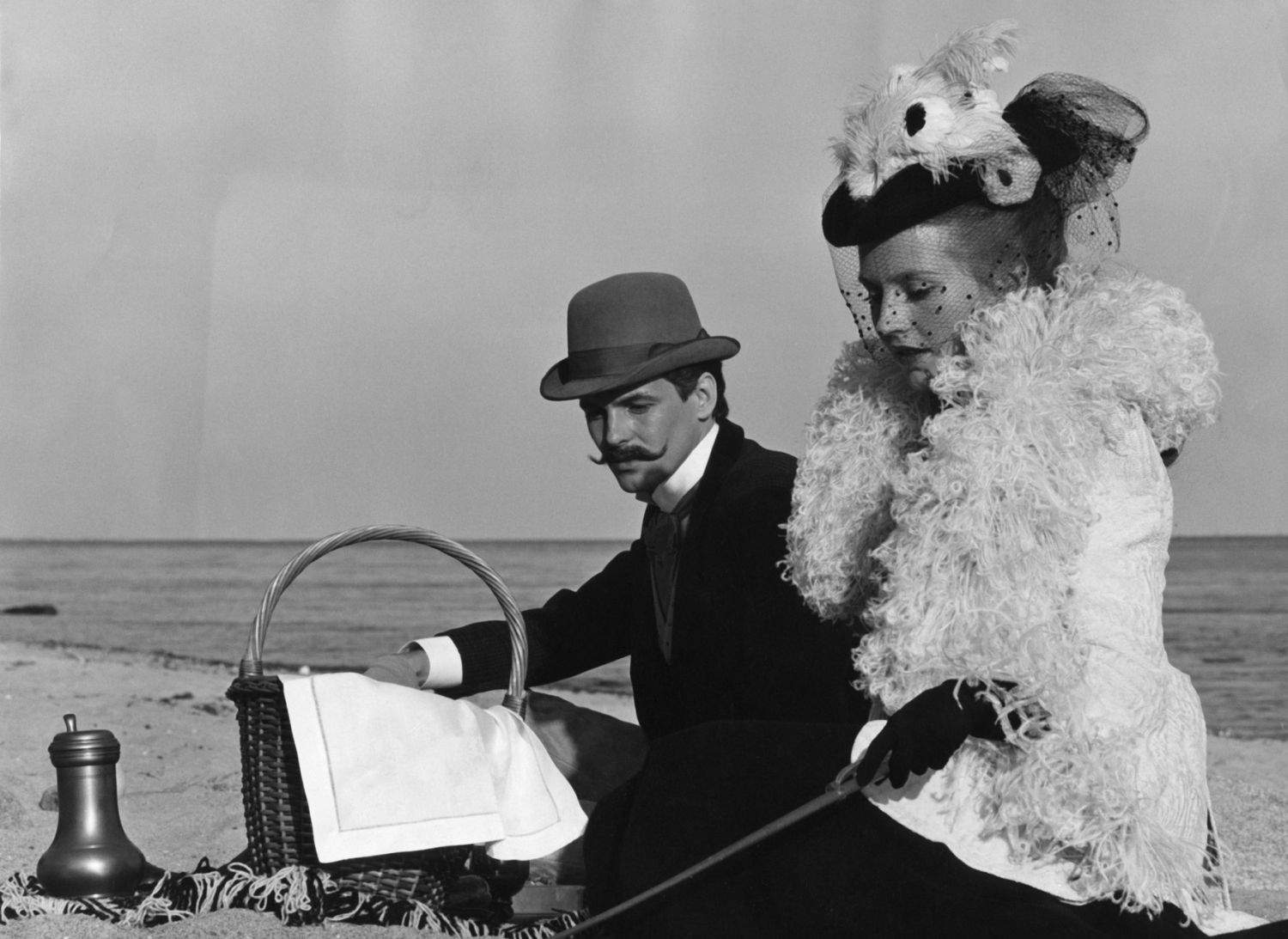
Only one of Fontane’s picnics is articulated. Effi and her lover, Major von Crampas, eat at a crude wooden table behind the dunes to avoid the Baltic’s gusty winds. A servant has set a cloth with slices of cold meat, rolls, and red wine (served in delicate glasses). Fassbinder’s picnics, of which there are two, show a cloth set on the sand with a wicker basket, food, and drink.
At the first of Fassbinder’s picnics, Effi Briest, her husband, Geert von Innstettin, and Crampas (who Instettin does not like) sit correctly but separately. Effi faces Instettin with Crampas between them. Conversation is polite. But Instettin instinctively dislikes von Crampas and obliquely warns him not to get too chummy with Effi. Von Crampas takes the hint, but Effi does not. Subsequent picnics, while Instettin is away on business, become cover for a love affair that we never see consummated.
Fassbinder’s picnics are restrained. Outwardly, Briest is a model of discretion, but inwardly seething with passion. The weather is cool, and the picnickers are dressed in everyday clothes, tightly buttoned. Fassbinder shows her stuffed into Victorian couture that covers her figure and reveals only her face and hair.
Hermine (2009) upends Fontane by tarting up Effi and Crampas’slove. While staid families picnic on the beach, Effi and Crampas cavort naked in a ruined barn.
Featured Image: Effi Briest (Hannah Schygulla) and Major von Crampas (Ulli Lommel) on the beach at Kessin (a fictional town on the Baltic).
See: Rainer Werner Fassbinder. Effi Briest (1975). Screenplay by Rainer Werner Fassbinder based on Theodor Fontane’s novel. Theodor Fontane. Effi Briest (1896). Translated by Hugh Rorrison and Helen Chambers. New York: Penguin, 2001; Hermine Huntgeburth. Effi Briest (2009). Screenplay by Volker Einrauch based on Fontane’s novel.