
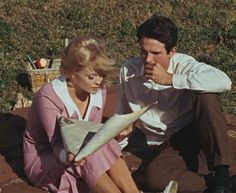
Arthur Penn’s picnics seem ordinary. Penn figured that picnics make good human interest episodes and would humanize Bonnie and Clyde’s selfishness and essential nastiness.
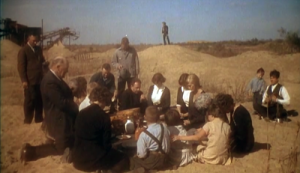
The Parker family picnic is a temporary lull for Bonnie and Clyde, who are graciously welcomed as local heroes. When the group settles to say grace, Bonnie sits with the family, but Clyde remains outside the circle. (He’s an outlaw, of course, pun intended.) Before they depart, Mother Parker admonishes Clyde, “You best keep runnin’.” It’s good advice, and soon they are again racing along country roads at breakneck speed in a Ford, Clyde’s preferred motorcar.
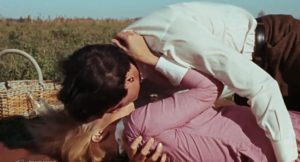
And they do run. Gathering speed and a cult-like reputation, Bonnie writes doggerel about their exploits, “The Ballad of Bonnie & Clyde.” When it’s published in a local newspaper, she reads it to Clyde: You’ve read the story of Jesse James/of how he lived and died./ If you’re still in need,/ of something to read,/here’s the story of Bonnie and Clyde.
Clyde is impressed by Bonnie’s doggerel poetry. He gushes, “You made me,” he says, “somebody to remember.” Until then, Clyde has been incapable of sexual intercourse, but the poem arouses him, and they make love. Poetry and picnics will do that!.
See Arthur Penn. Bonnie and Clyde (1967). Screenplay by David Newman and Robert Benton; Paul Schneider. Bonnie and Clyde: The thieves Behind the Legend. New York: Henry Holt, 2009; Blanche Caldwell Barrow. My Life with Bonnie and Clyde, Edited by John Neal Phillips. Norman, OK: University of Oklahoma Press, 2005.