
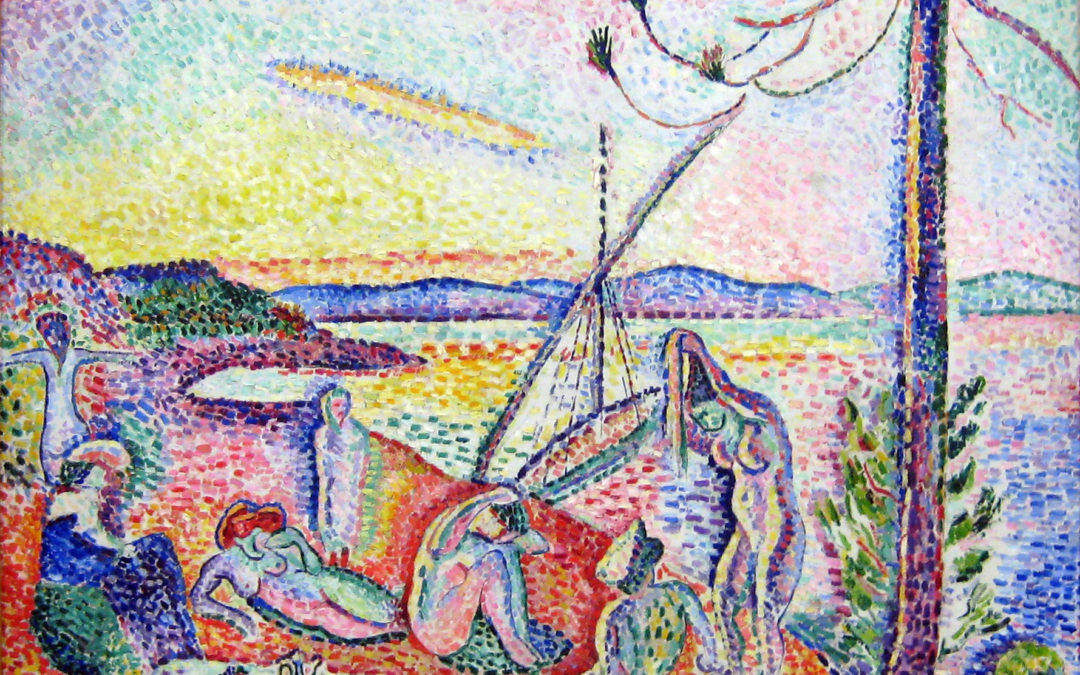
PicnicWit is an exploration of picnics, the kinds you read about, look at, or see in films. Many of these picnics are ordinary and follow the standard picnic script familiar to us all. These are scenes described by writers such as Jane Austen’s picnic of friends at Box Hill in Emma; Charles Dickens romantic picnic birthday party in David Copperfield, and Water Rat’s festive picnic feast in Kenneth Grahame‘s The Wind in the Willows. Among artists, Thomas Cole’s A Pic Nic Party is traditional, as is Henri Matisse’s shimmering picnic in Luxe, Calme, et Volupté.
Others deliberately challenge our expectations and novelty, turning their picnics topsy-turvy. You will be surprised at the variations of picnics that range from A to W.(I have yet to find a theme for Z. ) Édouard Manet’s Le déjeuner sur l’herbe, a sexual tryst, is deliberately risqué. Samuel Beckett’s setting for Waiting for Godot is a picnic outing. But not as surreal and humorous as Michel Gondry’s picnic in Mood Indigo. Even Gondry’s food choices are unusual: bread and wine and an uncooked wild boar’s head.
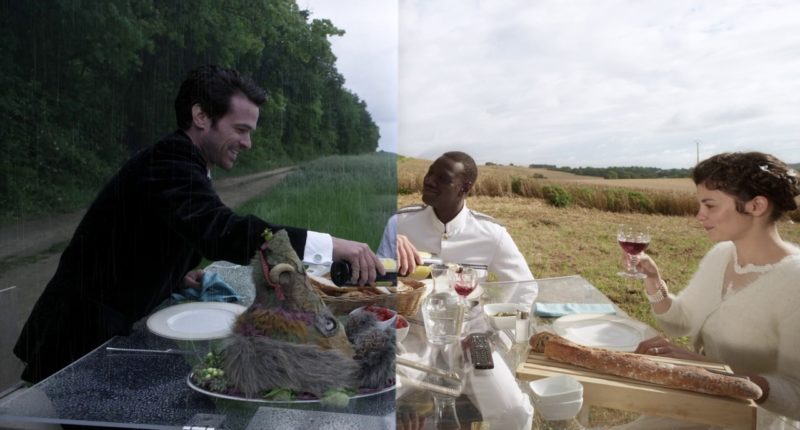
Michel Gondry. Mood Indigo (2014)
Robert Louis Stevenson wrote that looking at a pleasant agricultural landscape arouses “a spirit of picnic.” Never at a loss for words, William S. Gilbert and Arthur Sullivan wrote a comic play about a picnic on Mount Olympus, Thespis or the Gods Grown Old, in which an actor joyfully declares, “Bless you, my people, bless you. Let the revels commence. After all, for thorough, unconstrained unconventional enjoyment, give me a picnic.”
Featured Image: Henri Matisse. Luxe, calme et Luxe, Calme, et Volupté., aka Luxury, Calm and Pleasure (1904)