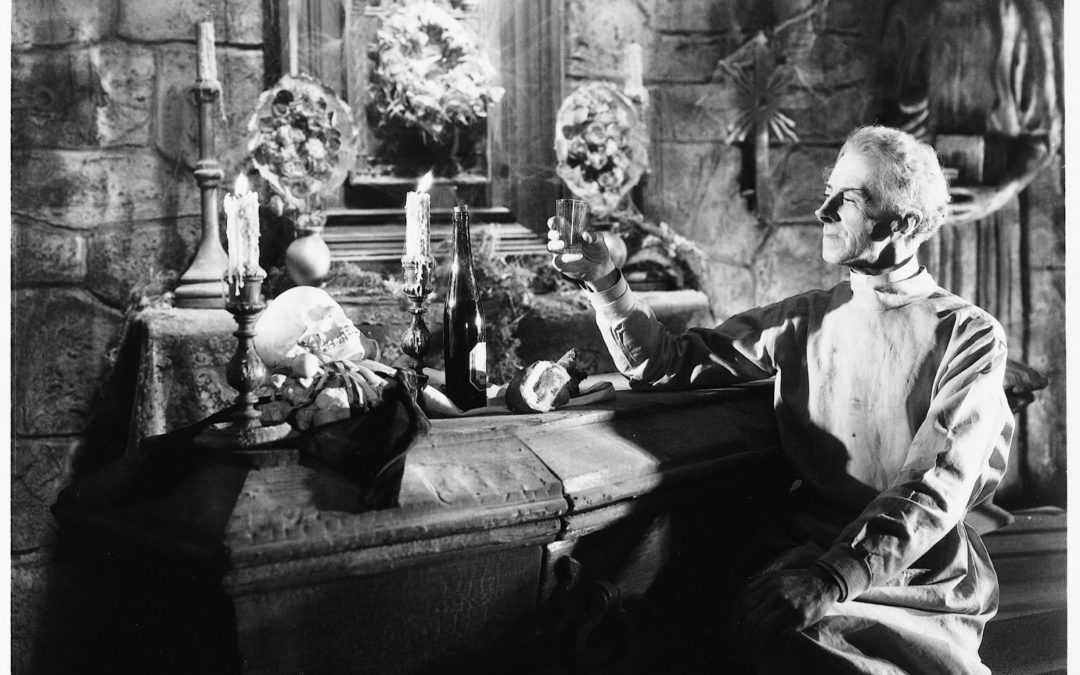
The Bride of Frankenstein is a sequel to Whale’s Frankenstein. It was received as a horror film and was generally highly regarded by critics. But on close viewing, it’s a screwball comedy—a campy hodgepodge of satire that Whale and screenwriters William...
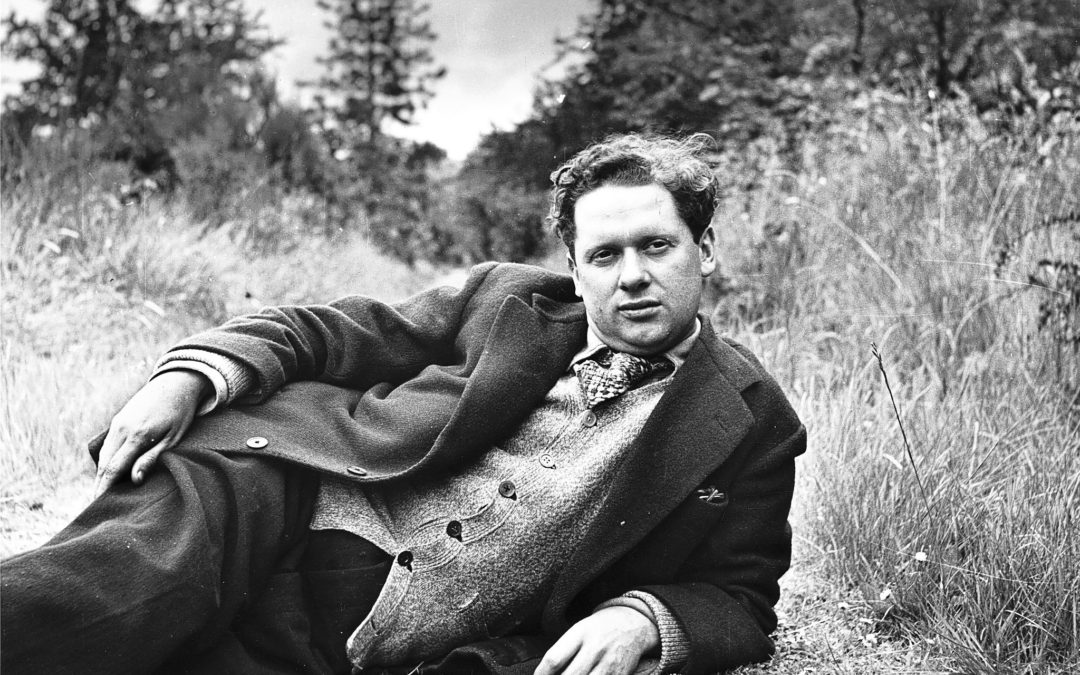
Thomas’s “The Orchards” is a nightmare. It’s a death-in-life story about Marlais, a blocked writer who meets spectral women, demon-lovers, at a horrible picnic. The narrative begins when Marlais contemplates suicide but instead is summoned by...
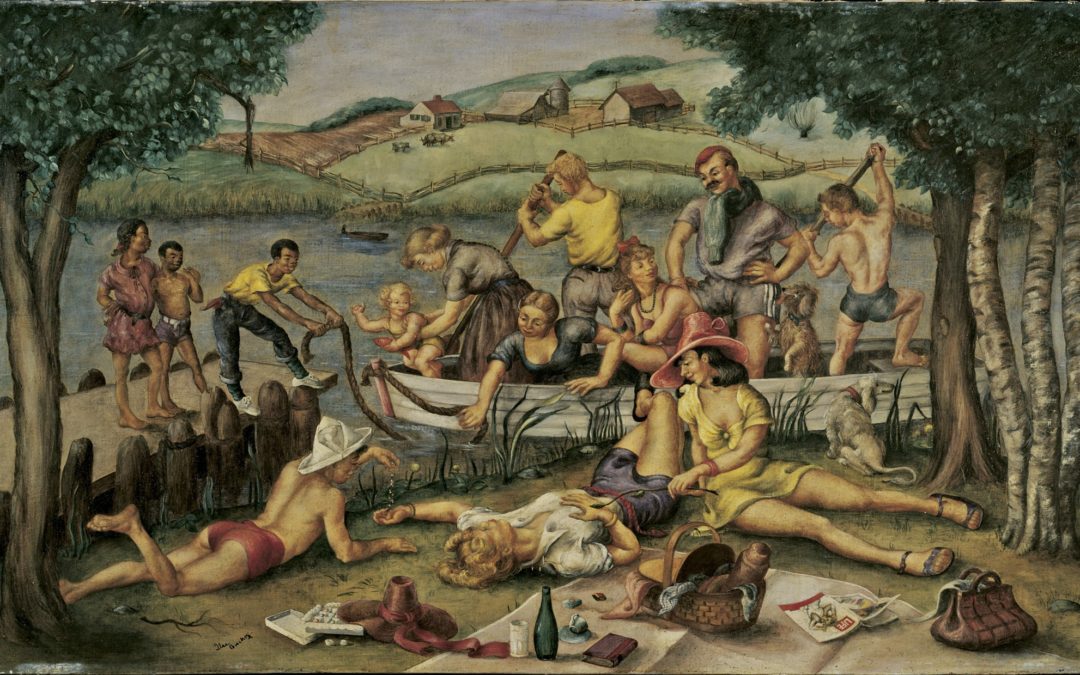
Bischoff’s Picnic on the River is a scene that alludes to a happy time. The picnic cloth is well-stocked with a wicker basket, and wine and food are surrounded by picnickers of all ages. The central character is the woman in yellow sitting beside the recumbent woman...
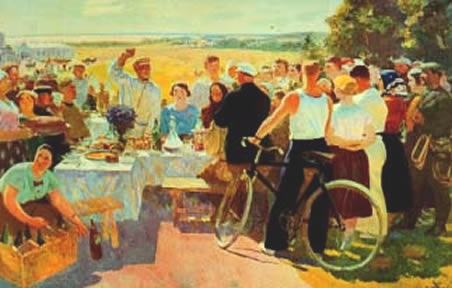
Gerasimov’s celebration of a very abundant harvest is propaganda. Soviet farms were not producing well, and the nation suffered chronic harvest shortages. Stalin’s propaganda program deemed otherwise, and the artists and writers were instructed to portray a land of...
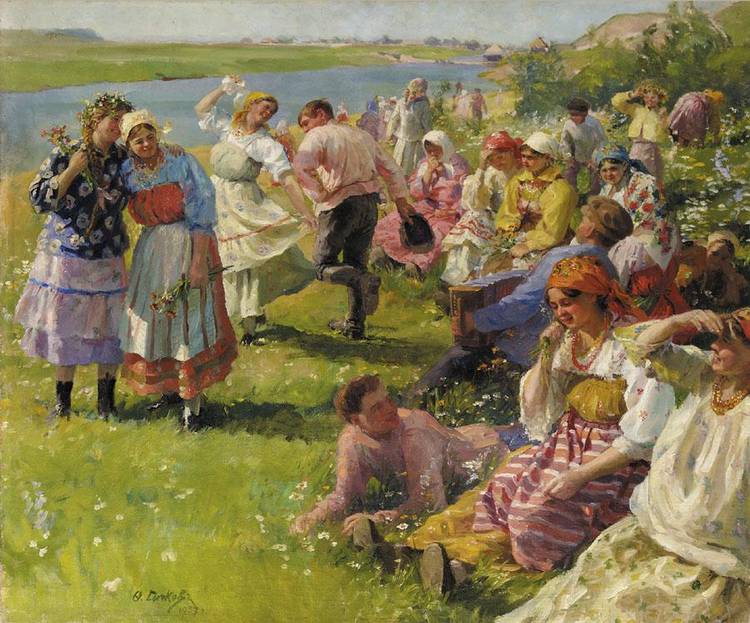
Universal happiness in a “Land of Milk and Honey” was a favorite propaganda theme percolating throughout Stalin’s USSR. It was an alternative reality conforming to State doctrine at odds with reality. Among artists, Fedor Sytskov’s Day Off at...
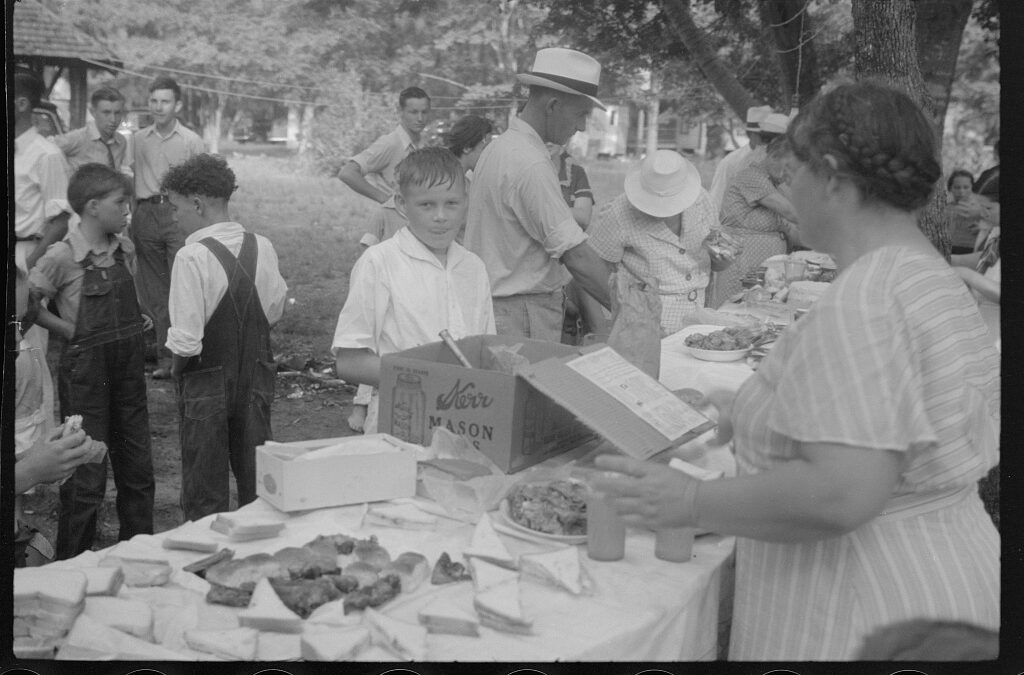
Shahn’s Sunday School Picnic, Ponderosa Homesteads, North Carolina (1937); http://www.loc.gov/pictures/resource/fsa.8a17327/ For a contrast, see The Bad Seed.
Miller’s Picnic (1937) is a photograph lovers’s gossip. At the time, Miller seemed to think of it as just another snapshot, but it’s now among her best sellers. A less well-known photograph of the picnic by Roland Penrose, showing Miller bare-chested, is less...
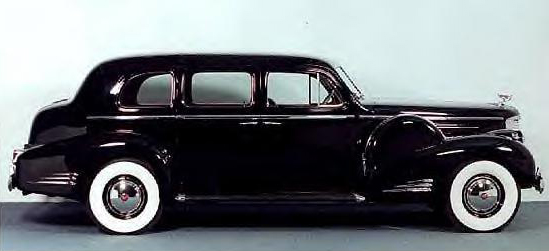
Perhaps it’s gossip, but according to Robert Lewis Taylor, Fields crammed his Lincoln or Cadillac, he was a collector, with hampers of watercress, chopped olives and nuts, tongue, peanut butter, and strawberry preserves, deviled eggs, and spiced ham sandwiches,...
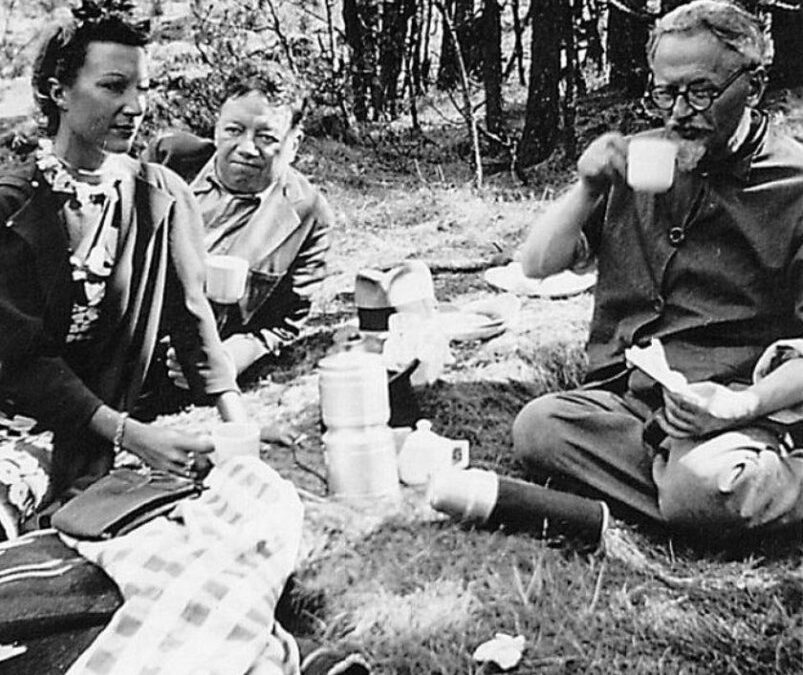
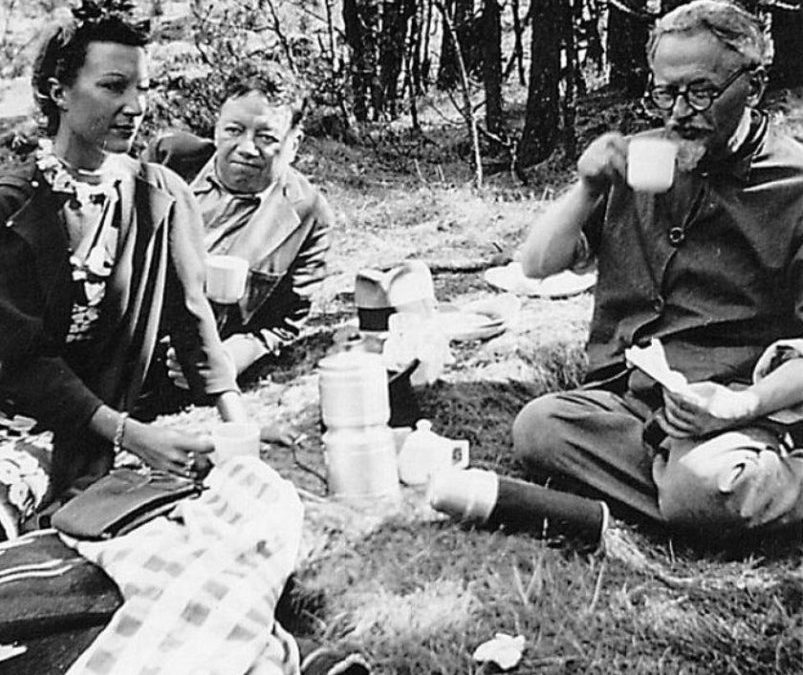
In 1938, Andre Breton and Jacqueline Lambda visited Trotsky, who was living in exile in Mexico City. Also present but not in the photos was Trotsky’s wife Natalia Sedova and Freda Kahlo. When not picnicking, Trotsky worked with Rivera, Breton, and Lambda to...
Exiled in Mexico City, Trotsky and his wife, Natalia, loved to picnic. It was one means of enjoying a sense of freedom, though he was guarded even them. James T. Farrell writes, “At the picnic, Trotsky and Natalia went off to walk in the woods in opposite directions....
The Bride of Frankenstein is a sequel to Whale’s Frankenstein. It was received as a horror film and was generally highly regarded by critics. But on close viewing, it’s a screwball comedy—a campy hodgepodge of satire that Whale and screenwriters William...
Thomas’s “The Orchards” is a nightmare. It’s a death-in-life story about Marlais, a blocked writer who meets spectral women, demon-lovers, at a horrible picnic. The narrative begins when Marlais contemplates suicide but instead is summoned by...
Bischoff’s Picnic on the River is a scene that alludes to a happy time. The picnic cloth is well-stocked with a wicker basket, and wine and food are surrounded by picnickers of all ages. The central character is the woman in yellow sitting beside the recumbent woman...
Gerasimov’s celebration of a very abundant harvest is propaganda. Soviet farms were not producing well, and the nation suffered chronic harvest shortages. Stalin’s propaganda program deemed otherwise, and the artists and writers were instructed to portray a land of...
Universal happiness in a “Land of Milk and Honey” was a favorite propaganda theme percolating throughout Stalin’s USSR. It was an alternative reality conforming to State doctrine at odds with reality. Among artists, Fedor Sytskov’s Day Off at...
Shahn’s Sunday School Picnic, Ponderosa Homesteads, North Carolina (1937); http://www.loc.gov/pictures/resource/fsa.8a17327/ For a contrast, see The Bad Seed.
Miller’s Picnic (1937) is a photograph lovers’s gossip. At the time, Miller seemed to think of it as just another snapshot, but it’s now among her best sellers. A less well-known photograph of the picnic by Roland Penrose, showing Miller bare-chested, is less...
Perhaps it’s gossip, but according to Robert Lewis Taylor, Fields crammed his Lincoln or Cadillac, he was a collector, with hampers of watercress, chopped olives and nuts, tongue, peanut butter, and strawberry preserves, deviled eggs, and spiced ham sandwiches,...
In 1938, Andre Breton and Jacqueline Lambda visited Trotsky, who was living in exile in Mexico City. Also present but not in the photos was Trotsky’s wife Natalia Sedova and Freda Kahlo. When not picnicking, Trotsky worked with Rivera, Breton, and Lambda to...
Exiled in Mexico City, Trotsky and his wife, Natalia, loved to picnic. It was one means of enjoying a sense of freedom, though he was guarded even them. James T. Farrell writes, “At the picnic, Trotsky and Natalia went off to walk in the woods in opposite directions....

![Lee Miller’s Picnic [Ile Sainte-Marguerite] (1937)](https://picnicwit.com/wp-content/uploads/2021/11/Lee-Miller.-Picnic-Ile-Sainte-Marguerite-1937--700x675.jpg)