Myth was a major resource for Renaissance painters, many of whom used Ovid’s Metamorphoses and Fasti. Best known is Giovanni Bellini, the story of the gods gathering as his source for The Feast of the Gods, and Piero di Cosimo, The Battle of the Centaurs and Lapiths....
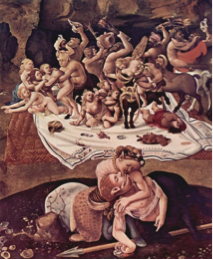
Piero’s primary resource is Ovid’s Metamorphoses (XII). Ovid does not mention the wedding guests dining alfresco in a picnic style. But Piero prominently depicts a white embroidered picnic cloth in the center of the composition. In other details, Piero is...
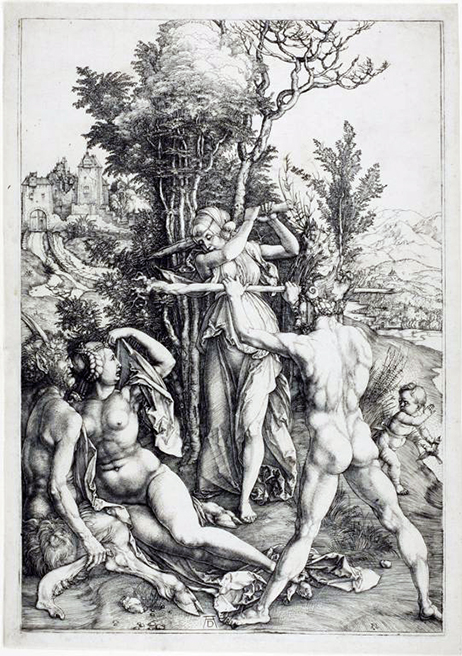
Xenophon’s Memorabilia of Socrates (371BCE) tells that when Hercules was approaching manhood, he was given a choice of a life of pleasure or a life of Virtue. While sitting at a crossroads and considering his future, he is approached by two immortal women, Virtue, in...
When Alfonso d’Este, the Duke of Ferrara, and his wife Lucrezia Borgia asked for a painting expressing worldly delights, drinking, and sensuality, Giovanni Bellini could not refuse the offer, though he was eighty-five and in failing health. The Feast of the Gods...
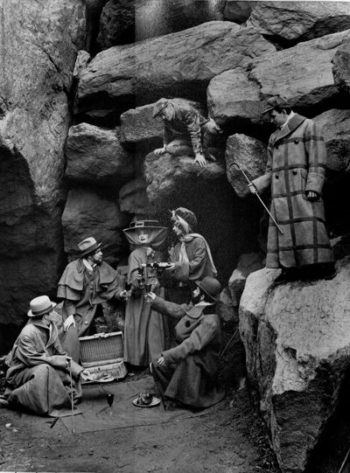
“The Story of a Panic” is one of several stories that Leonard Wolff complained were “Pan-ridden.” It was well-known that Pan was code for identifying gay men and women. Woolf’s complaint implies that a Pan story, such as “The Story...
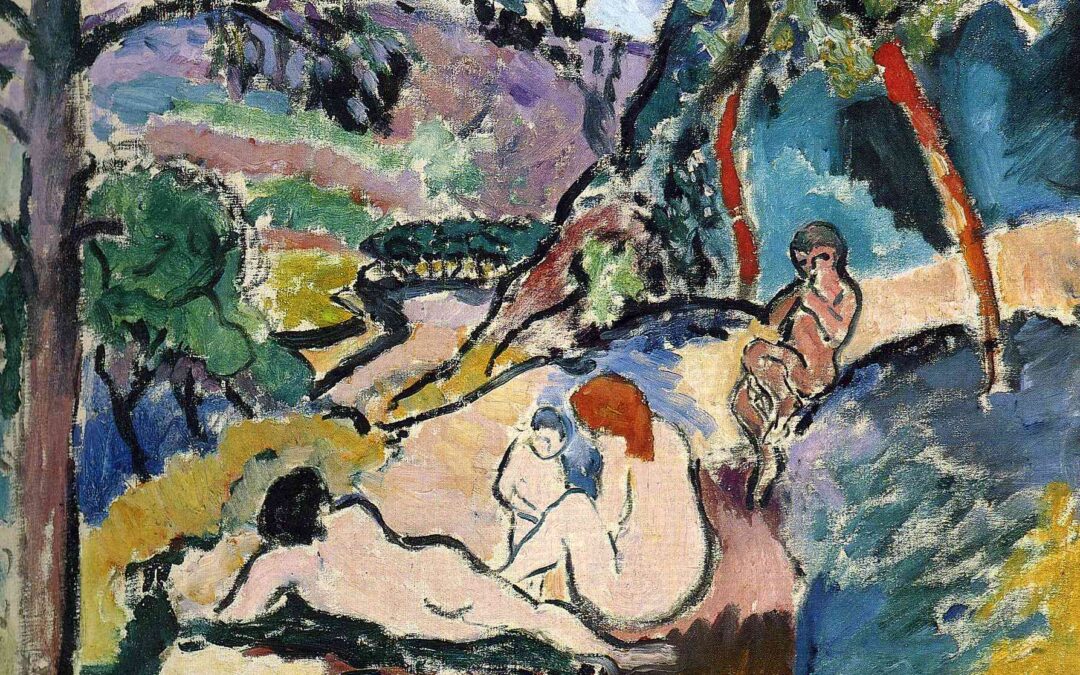
A pleasant picnicky scene in which Pan serenades a family. See Henri Matisse. Pastoral (1905), oil on canvas. Musée d’Art Moderne de la Ville de Paris, Paris. The painting was stolen in 2010 and not yet recovered.
Frederick Ashton’s Picnic at Tintagel is inspired by Mary Elizabeth Braddon’s popular Victorian novel Royal Mount, where sightseers picnic on Tintagel Castle’s ruins. (Discussion of Braddon’s Royal Mount is posted elsewhere on PicnicWit.com)...
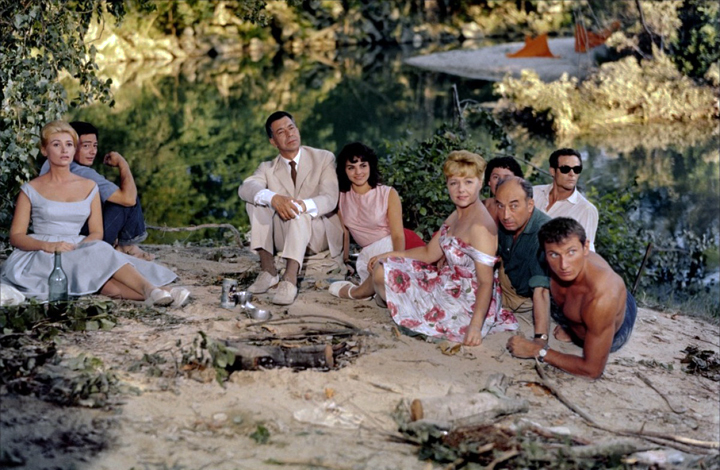
Jean Renoir’s Le déjeuner sur l’herbe and Édouard Manet’s Le déjeuner sur l’herbe share the same title, nothing more. Importantly, Renoir’s picnics, there are two of them, are comic jabs at Huxley’s dystopian Brave New World, which does not have a picnic. According...
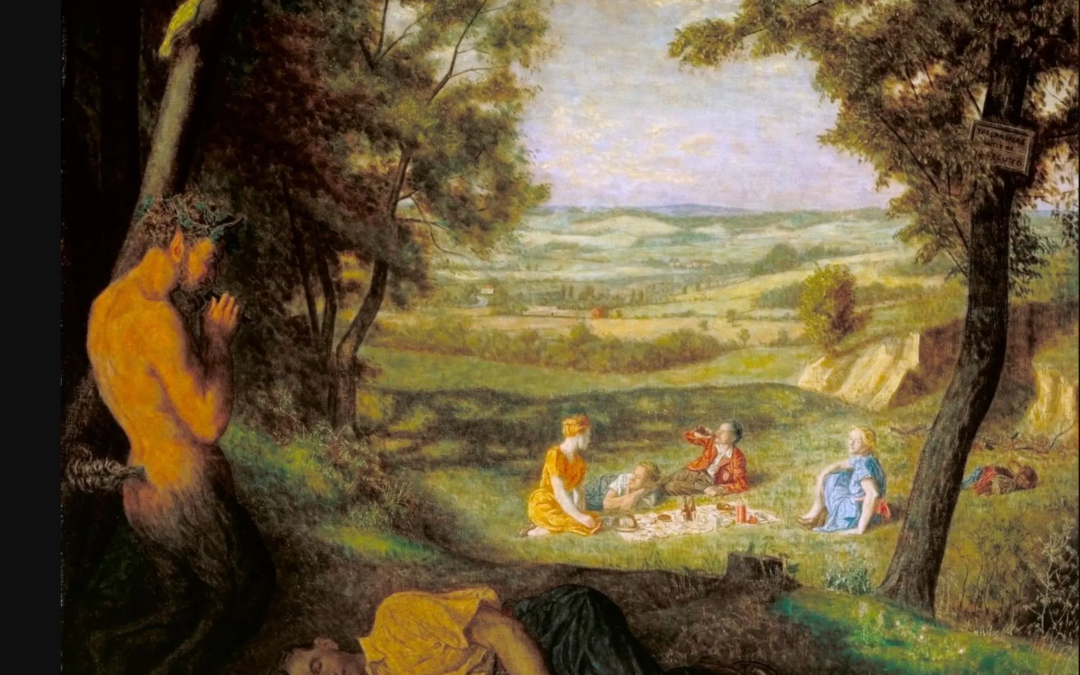
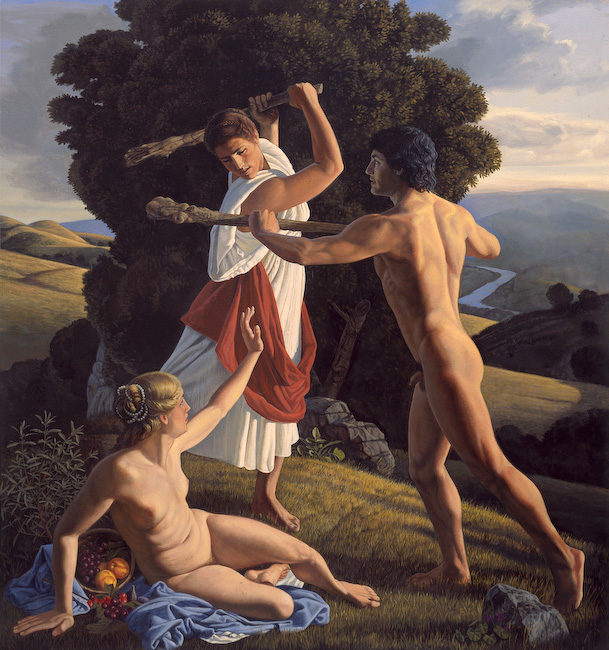
Hercules Protecting the Balance Between Pleasure and Virtue is Legare’s allusion to Albrecht Dürer’s Hercules at the Crossroads (1498c). But what Dürer implies, Ligare makes emphatic. His essential change is the picnic. He shows no food; instead, Ligare places...
Myth was a major resource for Renaissance painters, many of whom used Ovid’s Metamorphoses and Fasti. Best known is Giovanni Bellini, the story of the gods gathering as his source for The Feast of the Gods, and Piero di Cosimo, The Battle of the Centaurs and Lapiths....
Piero’s primary resource is Ovid’s Metamorphoses (XII). Ovid does not mention the wedding guests dining alfresco in a picnic style. But Piero prominently depicts a white embroidered picnic cloth in the center of the composition. In other details, Piero is...
Xenophon’s Memorabilia of Socrates (371BCE) tells that when Hercules was approaching manhood, he was given a choice of a life of pleasure or a life of Virtue. While sitting at a crossroads and considering his future, he is approached by two immortal women, Virtue, in...
When Alfonso d’Este, the Duke of Ferrara, and his wife Lucrezia Borgia asked for a painting expressing worldly delights, drinking, and sensuality, Giovanni Bellini could not refuse the offer, though he was eighty-five and in failing health. The Feast of the Gods...
“The Story of a Panic” is one of several stories that Leonard Wolff complained were “Pan-ridden.” It was well-known that Pan was code for identifying gay men and women. Woolf’s complaint implies that a Pan story, such as “The Story...
A pleasant picnicky scene in which Pan serenades a family. See Henri Matisse. Pastoral (1905), oil on canvas. Musée d’Art Moderne de la Ville de Paris, Paris. The painting was stolen in 2010 and not yet recovered.
Frederick Ashton’s Picnic at Tintagel is inspired by Mary Elizabeth Braddon’s popular Victorian novel Royal Mount, where sightseers picnic on Tintagel Castle’s ruins. (Discussion of Braddon’s Royal Mount is posted elsewhere on PicnicWit.com)...
Jean Renoir’s Le déjeuner sur l’herbe and Édouard Manet’s Le déjeuner sur l’herbe share the same title, nothing more. Importantly, Renoir’s picnics, there are two of them, are comic jabs at Huxley’s dystopian Brave New World, which does not have a picnic. According...
Hercules Protecting the Balance Between Pleasure and Virtue is Legare’s allusion to Albrecht Dürer’s Hercules at the Crossroads (1498c). But what Dürer implies, Ligare makes emphatic. His essential change is the picnic. He shows no food; instead, Ligare places...