
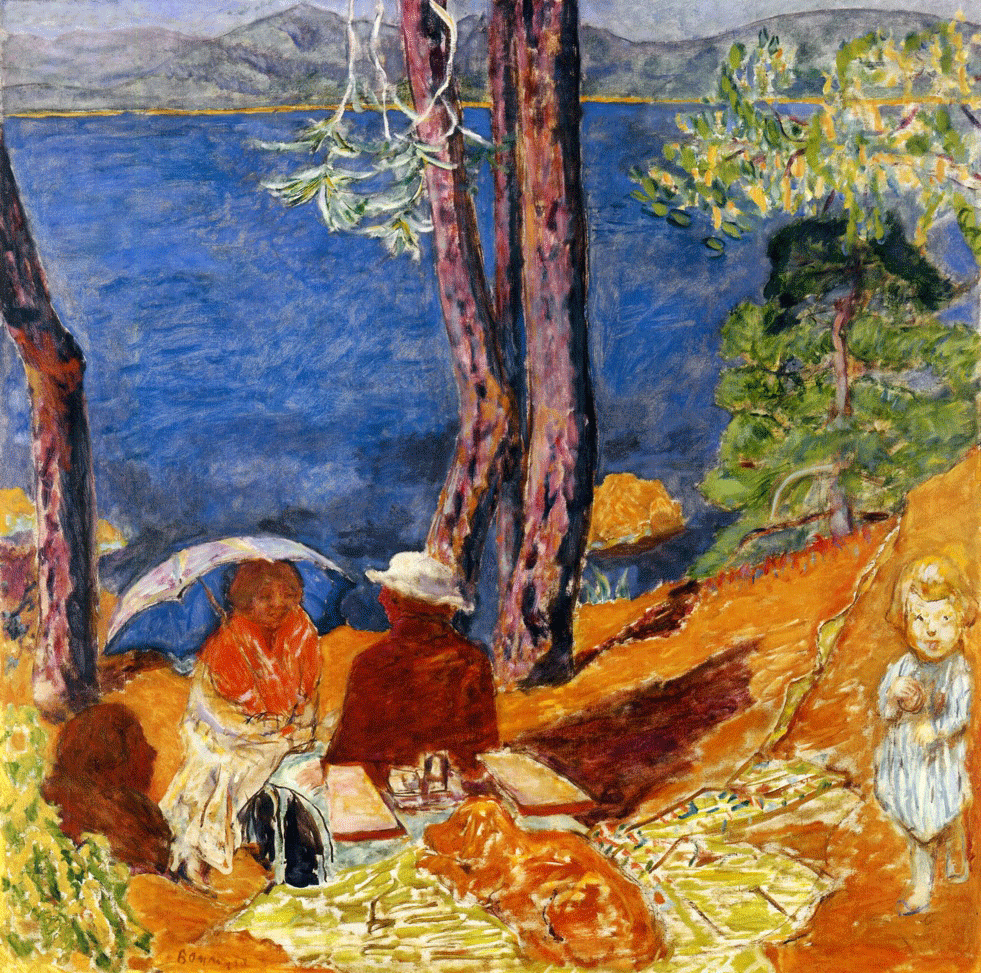
Situated on the bluff near St. Tropez overlooking the brilliant blue ocean, Pierre Bonnard’s By the Sea, Under the Pines is a picnic in a delightfully cheerful mood.
Everything is gold, yellow, brown, and green around the woman, a man, a child, and a recumbent dog. It’s a palette suggesting happiness and leisure.
The identity of the picnickers is unknown to me. Bonnard was not yet married to his mistress Marthe, and they had no children.
Bonnard’s colorful style shows the influence of a group of painters calling themselves Les Nabis, a term that means prophet in Hebrew but seems to defy meaning in their art. Their use of color tends towards ostentation (not reasonably). For example, compare, By the Sea with Bonnard’s earlier painting, The Family Claude Terrasse (1899), or better yet, Claude Monet’s Luxe, Calme, et Volunté.

The Family of Claude Terrasse (1899),
See By the Sea, Under the Pines (1921). Oil on canvas; Jean & Henry Dauberville, Bonnard, catalogue raisonné (1920-1939) B
Featured Image: Pierre Bonnard. By the Sea, Under the Pines; Bord de mer, sous les pins (1921)