
PicnicWit is a hybrid collection of picnics, some of which are from life, but most from literature, drama, film, painting, graphic arts, sculpture, music, ballet, opera, food and cookbook writers.
For millennia, what we call a picnic was not a picnic, but an unnamed outdoor social or celebratory entertainment. Now that we have a name, linguistic history is rewritten, and what was unnamed before is now referred to as picnics. Though picnic is derived from the French word pique-nique, coined in 1649, it was not until 1806 that an English publisher used pic-nic to denote an outdoor entertainment, in this instance a wedding dinner. Sometime after it was coined, Parisians developed an indoor dining style, un repas de pique-nique, as an indoor meal for which diners each contributed a share. When referring to outdoor dining and entertainment, they preferred expressions such as déjeuner sur l’herbe or une partie de campagne.
Never at a loss for words, William S. Gilbert’s libretto for Thespis or the Gods Grown Old includes a joyful declaration by a happy actor, “Bless you, my people, bless you. Let the revels commence. After all, for thorough, unconstrained unconventional enjoyment, give me a picnic.”
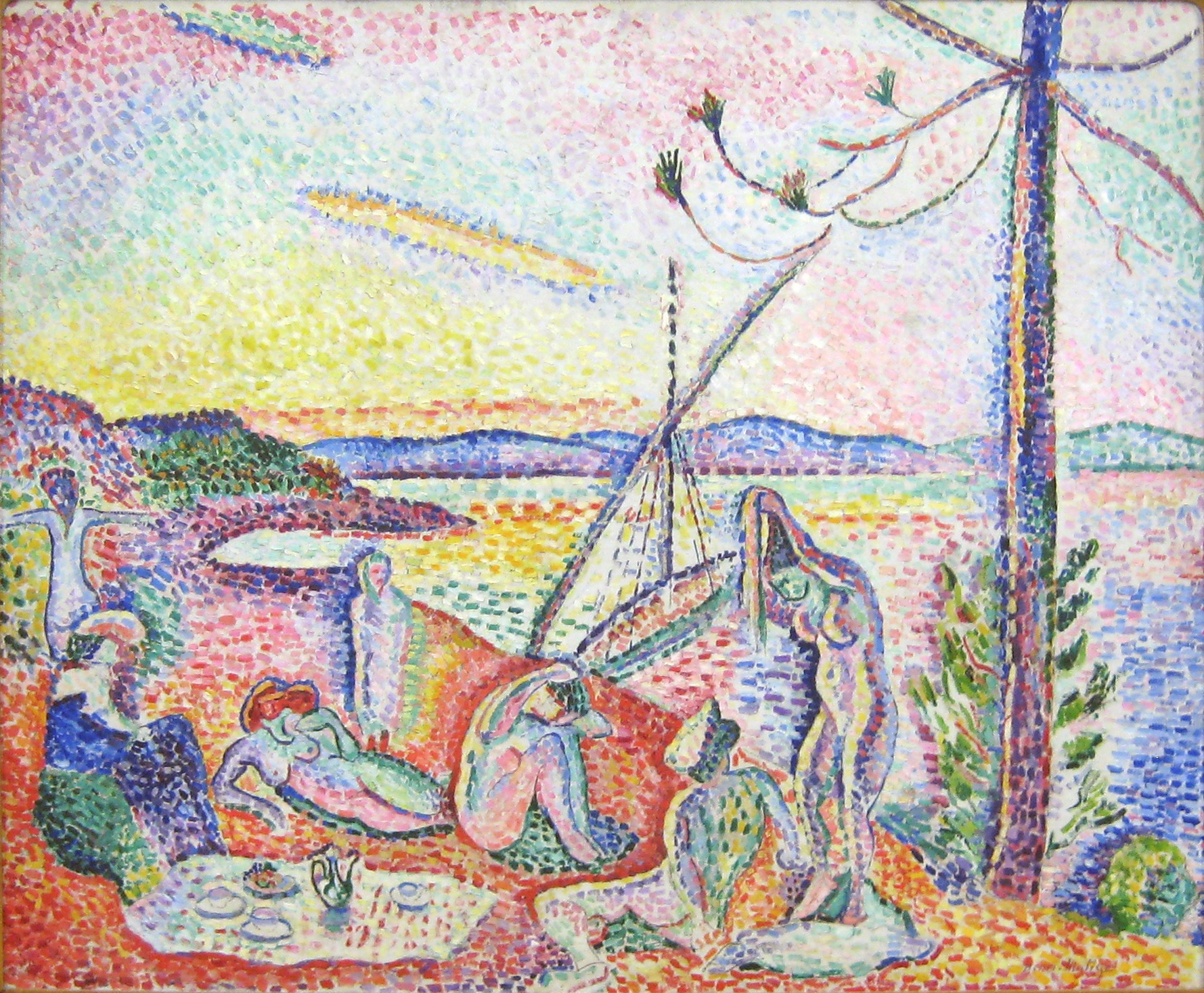
Featured Image: Henri Matisse. Luxe, Calme et Luxe, Calme, et Volupté, aka Luxury, Calm and Pleasure. oil on canvas (1904). Musée d’Orsay